
Introduction
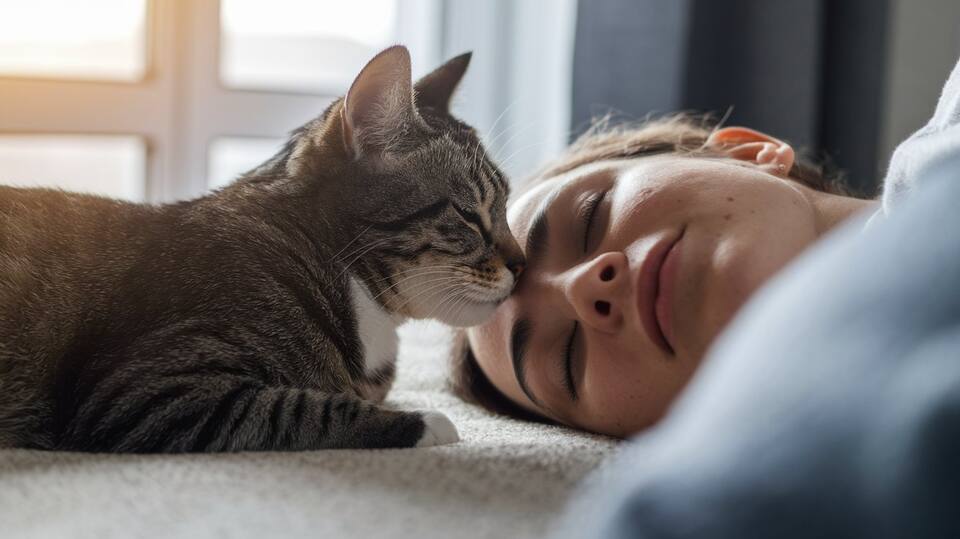
Every morning at exactly 6:47 AM, my tabby cat Luna performs what I’ve come to think of as our daily ritual. She’ll pad silently across the bed, position herself inches from my face, and begin the most thorough olfactory investigation you’ve ever witnessed. Her pink nose hovers millimeters from my cheek, her whiskers tickle my skin, and I can feel her gentle breath as she takes in whatever fascinating scents my face has to offer. If you’re wondering “why does my cat sniff my face” during these intimate moments, you’re experiencing one of the most meaningful displays of feline affection.
This seemingly simple behavior is actually incredibly complex and meaningful in the world of cat communication. Research shows that 73% of cat owners report regular face-sniffing behavior from their feline companions, yet many don’t fully understand the deep significance of these close encounters. Unlike dogs, who might enthusiastically lick faces or demand attention through more obvious behaviors, cats are subtle communicators who express their deepest feelings through carefully chosen intimate gestures.
Cat scent communication represents one of the most sophisticated aspects of feline behavior, involving complex chemical messaging systems that are largely invisible to humans. When your cat chooses to sniff your face, they’re engaging in behavior that requires vulnerability, trust, and genuine affection—making it one of the highest compliments a cat can give.
What makes face-sniffing particularly special is the level of trust it demonstrates. Cats are naturally cautious creatures who protect their personal space carefully. When a cat willingly puts their face close to yours and investigates your scent with focused attention, they’re telling you something profound about how they feel about you and your relationship together.
Feline olfactory system capabilities far exceed human understanding, with cats possessing roughly 200 million scent receptors compared to our mere 5 million. This means that when your cat sniffs your face, they’re gathering layers of information that would be impossible for humans to detect or comprehend. The experience is rich, detailed, and incredibly meaningful from a feline perspective.
In this exploration of cat smelling behavior, we’ll uncover five heartwarming reasons why cats choose to investigate their humans’ faces so intimately, helping you understand and appreciate these precious moments of connection with your feline friend.
Understanding Your Cat’s Incredible Sense of Smell
To truly appreciate why does my cat sniff my face, we need to understand the remarkable sensory world that cats inhabit—a world where scent provides information as detailed and meaningful as a novel.
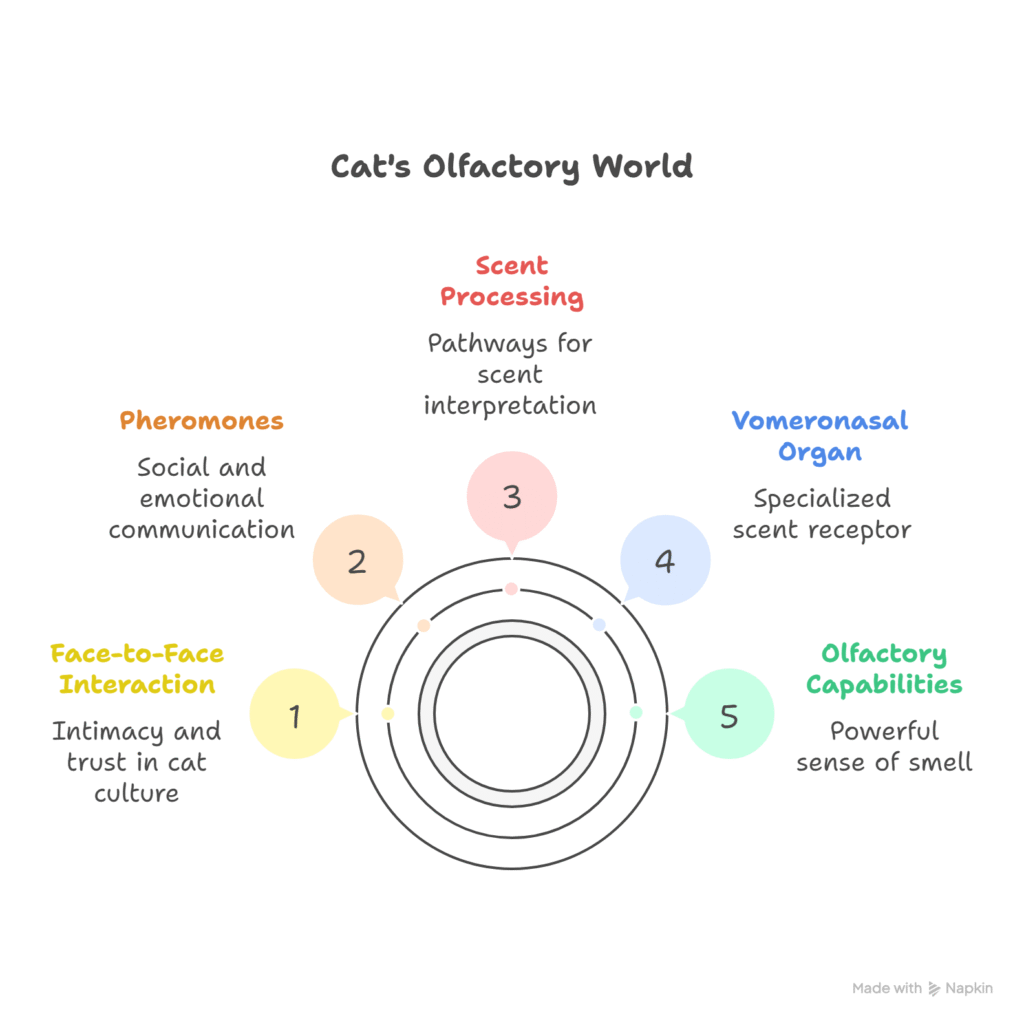
Cat olfactory capabilities are nothing short of extraordinary. While humans have approximately 5 million olfactory receptors, cats possess around 200 million, giving them a sense of smell that’s 14 times more powerful than ours. But it’s not just about quantity—cats process scent information in fundamentally different ways that make their olfactory experiences incredibly rich and complex.
The vomeronasal organ, also known as Jacobson’s organ, represents a crucial component of feline scent processing that humans lack. Located in the roof of cats’ mouths, this specialized organ connects directly to the brain’s limbic system, allowing cats to “taste” scents and process them as emotional and social information. When you see your cat open their mouth slightly while sniffing, they’re using this organ to gather even more detailed scent information.
How cats process scent information involves multiple pathways that create a three-dimensional scent map of their environment. Unlike humans, who primarily use scent for pleasure or warning detection, cats use scent for navigation, social communication, emotional regulation, and relationship building. Each scent tells a story about who has been where, when they were there, what they were doing, and how they were feeling.
Pheromones play crucial roles in feline social behavior, carrying messages about identity, emotional state, reproductive status, territorial claims, and social relationships. When cats encounter human scents, they’re reading chemical signatures that tell them about our daily activities, emotional states, health status, and even our relationships with other people and animals.
Face-to-face interaction significance in cat culture cannot be overstated. In feline social structures, direct face contact represents the highest level of intimacy and trust. Wild cats and feral colonies reserve face-to-face interactions for their closest family members and most trusted companions. When your domestic cat chooses to sniff your face, they’re treating you as family in the most literal sense.
The concentration of scent-producing glands around the human face—particularly near the mouth, nose, and temples—makes this area particularly rich in scent information that cats find fascinating and meaningful. Your face essentially broadcasts a constantly updating story of your life that your cat finds endlessly interesting and deeply comforting.
Decoding Your Cat’s Affectionate Investigation
The intimate behavior of face-sniffing serves multiple purposes that reveal the depth of your cat’s emotional investment in your relationship. Here are the five most significant reasons behind this endearing behavior.
Your Face Tells the Story of Where You’ve Been
Gathering information about your daily adventures represents one of the most fascinating aspects of feline face-sniffing behavior. When your cat investigates your face with focused intensity, they’re essentially reading the day’s story written in scent molecules that have accumulated on your skin, hair, and breath.
How scents cling to human skin creates a detailed map of everywhere you’ve been and everyone you’ve encountered. That coffee shop where you grabbed your morning latte? Your cat knows. The colleague who gave you a hug at work? Detected. The new restaurant where you had lunch? Catalogued. Every environment leaves trace scents that your cat finds endlessly fascinating because they help them understand your world beyond the home you share.
Cats reading your daily adventures through smell satisfies their natural curiosity about their family members’ activities. In multi-cat households or feral colonies, cats regularly check each other’s scents to understand who has been where and what they’ve encountered. This behavior helps maintain social bonds and ensures group safety by monitoring each member’s experiences.
Detecting other animals and people you’ve encountered serves both curiosity and mild territorial assessment. Your cat wants to know about that friendly dog you petted, the new coworker whose perfume transferred during a conversation, or the child who hugged you at the grocery store. This information helps your cat understand your social world and their place within it.
Why faces are particularly interesting relates to the concentration of scent-rich areas around human heads. Our breath carries scents from food, beverages, and internal body chemistry. Our hair holds environmental scents from everywhere we’ve been. The skin around our faces produces oils and carries residues from products we use and things we’ve touched.
Evolutionary significance of information gathering through scent stems from cats’ survival instincts. Understanding family members’ daily experiences helps assess environmental safety, identify potential threats or opportunities, and maintain social cohesion within the family group. Your cat’s morning face-sniffing session is their way of getting caught up on your adventures and ensuring you’re safe and well.
Your Personal Feline Health Monitor
One of the most remarkable aspects of cat sniffing face meaning involves cats’ extraordinary ability to detect subtle changes in human health and well-being through scent analysis that often surpasses medical technology.
Cats’ ability to detect illness through scent changes has been documented in numerous scientific studies and anecdotal reports. Cats can identify alterations in body chemistry that occur days or even weeks before symptoms become apparent to humans or medical professionals. Changes in hormone levels, blood sugar, blood pressure, and cellular metabolism all produce scent signatures that cats can detect with remarkable accuracy.
Early disease detection capabilities in cats include identifying various conditions such as diabetes (through breath and skin scent changes), certain cancers (through chemical changes in body odor), seizure disorders (through pre-seizure chemical changes), and infections (through immune system responses that alter body chemistry). While cats can’t diagnose conditions, their increased attention to face-sniffing often coincides with developing health issues.
Hormonal changes cats can identify extend beyond illness to include pregnancy (often detected before human awareness), stress levels (through cortisol and adrenaline changes), medication effects (through chemical changes in breath and skin), and emotional states (through neurotransmitter-related scent changes). Many cat owners report their pets becoming more attentive during times of emotional upheaval or physical changes.
Why face-sniffing increases during illness relates to cats’ instinctual caregiving behaviors toward family members. Sick or vulnerable family members receive extra attention and monitoring from healthy group members. Your cat’s intensified face-sniffing during times when you’re unwell represents their version of checking on your condition and providing comfort.
Scientific studies supporting cats’ medical detection abilities include research on cats identifying seizures, cancer detection through scent, diabetic episode prediction, and emotional support for individuals with mental health conditions. While cats aren’t medical devices, their sensitivity to human health changes makes them valuable early warning systems for attentive owners.
This health monitoring aspect of face-sniffing demonstrates the depth of cats’ investment in their humans’ well-being and their sophisticated understanding of family member care that extends far beyond simple affection.
Creating a Shared Family Scent Signature
Scent mixing for family bonding represents one of the most intimate and meaningful aspects of feline social behavior, and face-to-face scent exchange constitutes the ultimate expression of family acceptance.
How cats create colony scents in multi-cat groups involves regular scent sharing through mutual grooming, cheek rubbing, and close contact that creates a unified group scent signature. This shared scent helps identify family members, provides comfort and security, and strengthens social bonds that keep the group cohesive and cooperative.
Face-to-face scent exchange between cats and humans follows the same principles, with cats actively working to blend their scent with yours to create a shared family signature. When your cat sniffs your face and then rubs against you or licks your skin, they’re participating in the ancient ritual of family scent creation that bonds you together as a social unit.
Building chemical bonds through scent sharing creates neurochemical responses in both cats and humans that strengthen emotional connections and increase feelings of security and belonging. The oxytocin release triggered by close, positive contact helps cement the relationship and creates positive associations with intimate interactions.
Why cats choose faces over other body parts for this important behavior relates to the facial area’s high concentration of scent glands and its significance in feline social communication. Face-to-face interaction represents the highest level of intimacy and trust in cat culture, reserved for the most important relationships.
Long-term relationship building through regular scent exchange creates cumulative bonding effects that deepen over time. Cats who regularly engage in face-sniffing behavior with their humans often show stronger attachment behaviors, increased affection displays, and greater trust in challenging situations. This daily scent ritual becomes a cornerstone of your relationship that provides security and connection for both participants.
Cultural significance in feline social structures shows that face-to-face scent sharing is typically reserved for parent-kitten relationships, mated pairs, and the closest friendships within social groups. When your cat chooses to share this intimate behavior with you, they’re placing you in their innermost circle of trust and affection.
The Ultimate Display of Feline Love
Showing affection and trust through face-sniffing requires cats to overcome their natural caution and vulnerability concerns to engage in behavior that demonstrates complete faith in their human companion’s safety and goodwill.
Vulnerability required for close face contact cannot be understated in understanding the significance of this behavior. Cats are naturally protective of their faces and heads, as these areas contain vital sensory organs and are difficult to defend if attacked. Choosing to place their face close to yours represents a profound act of trust that indicates your cat feels completely safe and secure in your presence.
Trust indicators in the body language accompanying face-sniffing include relaxed posture, soft eyes, gentle approach, purring or soft vocalizations, and willingness to linger in close proximity. These physical cues demonstrate that your cat is not only comfortable with the interaction but actively seeking and enjoying the close connection.
How face-sniffing compares to other feline affection displays reveals its special significance. While cats might show affection through purring, kneading, or following you around, face-sniffing requires the ultimate level of trust and represents the most intimate form of feline communication. It’s the equivalent of a cat saying “I love you” in their most sincere and meaningful way.
Building confidence through positive interactions occurs when cats receive appropriate responses to their face-sniffing behavior. Gentle acceptance, soft speaking, and calm reciprocation help cats feel secure in expressing their affection and encourage continued bonding behaviors that strengthen your relationship over time.
Recognition of this behavior’s significance helps cat parents appreciate and appropriately respond to their cats’ expressions of love. Understanding that face-sniffing represents trust, affection, and family bonding allows humans to receive this gift gracefully and respond in ways that deepen the relationship rather than inadvertently discouraging future intimate interactions.
Finding Security in Your Familiar Scent
Seeking comfort and reassurance through face-sniffing often intensifies during times of stress, change, or uncertainty, when cats turn to familiar scents and trusted relationships for emotional stability and security.
Stress relief through familiar scent exposure works because cats associate their humans’ scents with safety, comfort, and positive experiences. When faced with anxiety-provoking situations like household changes, new environments, or disrupted routines, cats often seek out their favorite humans for scent-based comfort that helps regulate their emotional state.
Why cats seek face contact during anxiety relates to the powerful calming effect of familiar, beloved scents combined with the security of close physical proximity to their trusted human. Face-sniffing allows cats to immerse themselves in comforting scent while receiving reassurance through gentle contact and soothing human presence.
Comfort-seeking behaviors and their triggers include situations such as moving to new homes, introducing new pets or people, recovering from illness or veterinary procedures, dealing with loud noises or disruptions, and adjusting to changes in household routines. During these times, cats often increase their face-sniffing behavior as a form of self-soothing and reassurance-seeking.
How consistent scent provides emotional stability works through cats’ powerful associative memories that connect specific scents with positive experiences, safety, and comfort. Your consistent scent becomes an anchor of familiarity that helps cats navigate challenging or uncertain situations with greater confidence.
Supporting anxious cats through scent familiarity can be enhanced by understanding and encouraging appropriate face-sniffing behavior during stressful times. Allowing cats to seek comfort through scent investigation while providing gentle reassurance helps them process difficult experiences and recover their emotional equilibrium more quickly.
The Right Way to Encourage This Bonding Behavior
Understanding how to respond appropriately to your cat’s face-sniffing advances can strengthen your bond and encourage continued expressions of feline affection and trust.
Appropriate responses that strengthen bonds include remaining still and relaxed during sniffing sessions, speaking softly or humming gently, offering your hand for additional sniffing if your cat seems interested, and allowing the interaction to continue at your cat’s pace. These responses signal acceptance and appreciation for your cat’s affectionate behavior.
Body language and positioning that encourage comfortable interactions involve sitting or lying at your cat’s level when possible, keeping your movements slow and deliberate, avoiding sudden gestures that might startle your cat, and maintaining an open, relaxed posture that invites approach rather than seeming defensive or unavailable.
What to avoid during face-sniffing sessions includes grabbing or restraining your cat, making loud noises or sudden movements, forcing the interaction to continue beyond your cat’s interest, using strong perfumes or scents that might overwhelm your cat’s sensitive nose, and turning away abruptly or rejecting the interaction in ways that might hurt your cat’s feelings.
Creating positive associations with close contact involves offering treats after particularly sweet face-sniffing sessions, providing gentle pets or scratches in your cat’s favorite spots, speaking lovingly during and after interactions, and generally ensuring that face-sniffing leads to pleasant experiences that your cat will want to repeat.
Respecting boundaries while encouraging affection means recognizing when your cat has had enough interaction, not forcing face contact when your cat seems stressed or uncomfortable, understanding that some cats are naturally less demonstrative than others, and appreciating whatever level of intimacy your individual cat feels comfortable providing.
Building trust over time through consistent, positive responses to face-sniffing behavior helps cats feel secure in expressing their affection and often leads to increased bonding behaviors, greater confidence in the relationship, and deeper emotional connections that benefit both cat and human.
Recognizing When Behavior Changes Signal Issues
While face-sniffing is typically a positive behavior, changes in patterns or intensity can sometimes indicate underlying health or emotional concerns that warrant attention.
Sudden increases in face-sniffing frequency might signal that your cat is detecting changes in your health or scent that concern them, that they’re experiencing increased anxiety or stress requiring extra reassurance, that household changes are making them seek more comfort and security, or that they’re developing separation anxiety or other attachment issues.
Obsessive or compulsive sniffing behaviors that seem excessive or interfere with normal activities could indicate stress-related behavioral issues, medical conditions affecting your cat’s brain or nervous system, medication side effects that alter behavior patterns, or environmental factors creating anxiety or discomfort that manifest as repetitive behaviors.
Changes in sniffing paired with other concerning symptoms such as appetite loss, litter box changes, hiding or withdrawal, excessive vocalization, or physical symptoms like lethargy require veterinary evaluation to rule out medical causes and determine appropriate treatment approaches.
Medical issues that might increase scent-seeking include cognitive dysfunction in senior cats, anxiety or depression requiring behavioral intervention, neurological conditions affecting normal behavior patterns, or physical discomfort that causes cats to seek extra comfort and reassurance from their humans.
When to consult veterinarians includes situations where behavior changes are sudden and dramatic, when face-sniffing becomes obsessive or interferes with eating or sleeping, when changes accompany other health concerns, or when you’re concerned about your cat’s overall well-being or mental health.
Understanding the difference between normal, healthy face-sniffing behavior and concerning changes helps cat parents provide appropriate care while enjoying the special bonding that this intimate behavior represents.
Face Sniffing in the Context of Feline Love Language
Cat affection displays work together as a comprehensive communication system, with face-sniffing being just one element of the complex ways cats express love and build relationships with their favorite humans.
Head bonking and cheek rubbing often accompany face-sniffing sessions, with cats using scent glands in their cheeks and foreheads to mark their humans while simultaneously investigating human scents. These behaviors work together to create mutual scent sharing that strengthens family bonds.
Nose-to-nose greetings represent another intimate feline behavior that some cats offer to their most trusted humans. This behavior mimics how cats greet each other and represents an invitation to mutual scent investigation and social bonding.
Licking faces and grooming behaviors sometimes follow face-sniffing sessions, with cats extending their investigation into active grooming that demonstrates care and affection. This progression from sniffing to grooming indicates deep trust and family-level bonding.
Slow blinking during close contact often occurs during face-sniffing sessions, with cats offering “cat kisses” that signal contentment, trust, and affection. Learning to return slow blinks during these intimate moments can enhance the bonding experience.
How behaviors work together creates a comprehensive feline love language that includes physical affection, scent sharing, vocal communication, and proximity seeking. Face-sniffing often serves as the foundation for other affectionate behaviors, setting the stage for deeper bonding interactions.
Understanding these interconnected behaviors helps cat parents recognize and appreciate the full spectrum of ways their cats express love, creating opportunities for stronger relationships and more meaningful interactions with their feline companions.
Conclusion
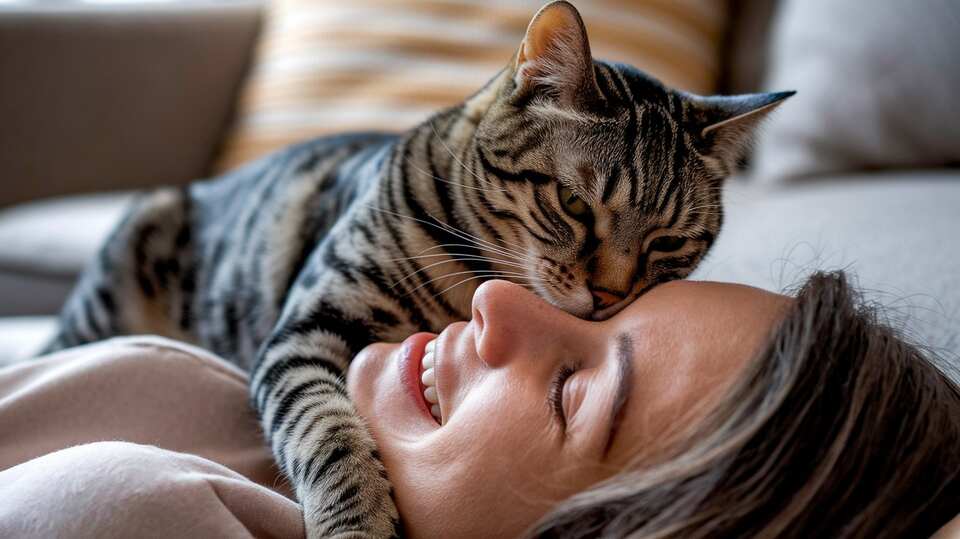
The question “why does my cat sniff my face” opens a window into the incredibly rich and meaningful world of feline communication and affection. What might seem like a simple behavior actually represents one of the most profound expressions of trust, love, and family bonding that cats can offer their human companions.
From gathering information about your daily adventures to monitoring your health and well-being, creating shared family scent signatures, expressing ultimate trust and affection, and seeking comfort in your familiar presence, face-sniffing serves multiple important functions that strengthen the bond between you and your cat.
Understanding the science behind your cat’s incredible olfactory abilities helps put this behavior in perspective, revealing the complex layers of information and emotion that cats experience through scent. When your cat chooses to investigate your face so intimately, they’re engaging all their sophisticated sensory systems in service of deepening your relationship.
The vulnerability and trust required for cats to engage in face-to-face contact makes this behavior particularly special. In choosing to sniff your face, your cat is treating you as family in the most literal and meaningful sense, extending the kind of intimate interaction typically reserved for the most important relationships in feline social structures.
Recognizing and appropriately responding to your cat’s face-sniffing behavior not only strengthens your current relationship but also encourages continued expressions of feline affection that can deepen your bond over time. These daily moments of intimate connection become the foundation for a relationship built on mutual trust, understanding, and genuine love.
The next time your cat approaches for their morning face-investigation ritual, take a moment to appreciate the profound compliment they’re paying you. In their world of subtle communication and carefully guarded affection, choosing to sniff your face represents one of the highest honors a cat can bestow—a recognition that you’re not just their caretaker, but truly their beloved family member.
Also Read - Cat Proofing Your Home: Easy DIY Tips for a Safe, Happy Feline
FAQs About Why Does My Cat Sniff My Face
Is it safe to let my cat sniff my face?
Yes, allowing your cat to sniff your face is generally safe and beneficial for bonding. However, avoid face contact if you’re sick with contagious illnesses, have open wounds on your face, or if your cat shows signs of aggression. Always supervise interactions with children and ensure both you and your cat are comfortable with the level of contact.
Why does my cat only sniff my face in the morning?
Morning face-sniffing often occurs because cats are naturally most active during dawn hours, you’ve accumulated interesting scents overnight from sleep and dreams, your cat missed you during sleep separation, and morning represents reunion time that triggers bonding behaviors. Many cats have established routines that include morning affection rituals.
Should I sniff my cat’s face back?
While your cat might tolerate gentle reciprocation, cats don’t typically expect humans to sniff back. Instead, respond with soft talking, gentle pets, or slow blinking. Some cats enjoy when you bring your face close for them to continue investigating, but let your cat guide the interaction level.
What if my cat suddenly stops sniffing my face?
Sudden changes in affectionate behavior can indicate illness, stress, changes in your scent (new medications, products, diet), household disruptions affecting your cat’s comfort level, or aging-related changes in behavior or sensory abilities. Monitor for other changes and consult your veterinarian if the behavior change persists or concerns you.
Why does my cat sniff my face but not other family members?
Cats often form strongest bonds with one primary person who provides most of their care, feeds them regularly, or matches their personality and energy level. Your cat may simply feel most comfortable with your scent and presence, or you may have developed the strongest trust relationship through consistent positive interactions.
Can face sniffing help detect if I’m sick?
Yes, cats can often detect illness through scent changes before symptoms become obvious to humans. Many cat owners report increased face-sniffing behavior before they realize they’re getting sick. While cats can’t diagnose conditions, their heightened attention to your scent can serve as an early warning system for health changes.
How do I encourage my shy cat to be more affectionate?
Build trust gradually by sitting quietly at your cat’s level, letting them approach you rather than forcing interaction, speaking softly and moving slowly, offering treats during positive interactions, and respecting their boundaries while consistently being available for contact when they’re ready.
What does it mean if my cat sniffs then pulls away?
This could indicate your cat detected something concerning in your scent (like illness or stress), you have unfamiliar scents that make them cautious, they’re satisfied with the information they gathered, or they’re not in the mood for extended contact. It’s usually normal behavior unless accompanied by signs of fear or distress.
Do all cats show affection by sniffing faces?
No, cats have individual personalities and ways of expressing affection. Some cats prefer head bonking, purring, kneading, or simply being near you. Face-sniffing is more common in cats with confident, social personalities who were well-socialized with humans during kittenhood.
Why does my cat sniff my face more when I’m upset?
Cats can detect stress-related chemical changes in your scent and often increase comforting behaviors when they sense you’re distressed. Your cat may be trying to provide comfort, gather information about your emotional state, or responding to their own concern about changes in your familiar scent and behavior patterns.


Thank you for your sharing. I am worried that I lack creative ideas. It is your article that makes me full of hope. Thank you. But, I have a question, can you help me?