

Health Warning: Plastic chewing can lead to life-threatening intestinal blockages. If your cat has ingested plastic, monitor closely for vomiting, lethargy, or loss of appetite and contact your veterinarian immediately.
Introduction
I discovered my cat Luna’s plastic obsession at 3 AM when the unmistakable sound of crinkling woke me from a dead sleep. Following the noise to the kitchen, I found her enthusiastically gnawing on a grocery bag with the dedication of a cat who’d found her true calling. What seemed like a quirky, harmless habit quickly became concerning when I researched the serious health risks associated with cat eating plastic behaviors.
If you’re wondering “why does my cat chew on plastic,” you’re not alone. Studies suggest that up to 20% of cat owners report some level of plastic-chewing behavior in their feline companions, with the behavior ranging from occasional nibbling to obsessive consumption that requires emergency veterinary intervention. What makes this behavior particularly concerning is that many cat parents dismiss it as a harmless quirk until their cat develops a life-threatening intestinal blockage.
Feline plastic chewing isn’t just annoying—it’s dangerous. Unlike dogs, who often vomit up indigestible materials relatively easily, cats’ digestive systems are more likely to become obstructed by plastic pieces. These blockages can require emergency surgery costing thousands of dollars and can be fatal if not caught in time. Additionally, the toxic chemicals in many plastics (BPA, phthalates, and other additives) can leach into cats’ systems, causing long-term health problems that may not become apparent for months or years.
Cats chewing plastic bags represents one of the most common and dangerous manifestations of this behavior. Grocery bags, garbage bags, and food packaging all hold particular appeal for cats due to residual food scents, interesting textures, and the satisfying crinkle sound they make. But this attraction can quickly turn deadly when cats ingest pieces of plastic that their bodies can’t process.
Understanding why cats engage in this behavior is the first step toward stopping it and preventing serious health consequences. The reasons range from medical issues requiring veterinary intervention to behavioral problems that can be addressed through environmental changes and enrichment strategies.
In this comprehensive guide, we’ll explore six evidence-based reasons cats chew plastic and provide proven strategies for stopping this dangerous habit before it leads to emergency situations that put your cat’s life at risk.
Why This Behavior Is More Serious Than You Think
Before diving into causes and solutions, it’s crucial to understand the real health dangers that make addressing cat plastic obsession an urgent priority rather than a minor annoyance.
Life-Threatening Health Risks
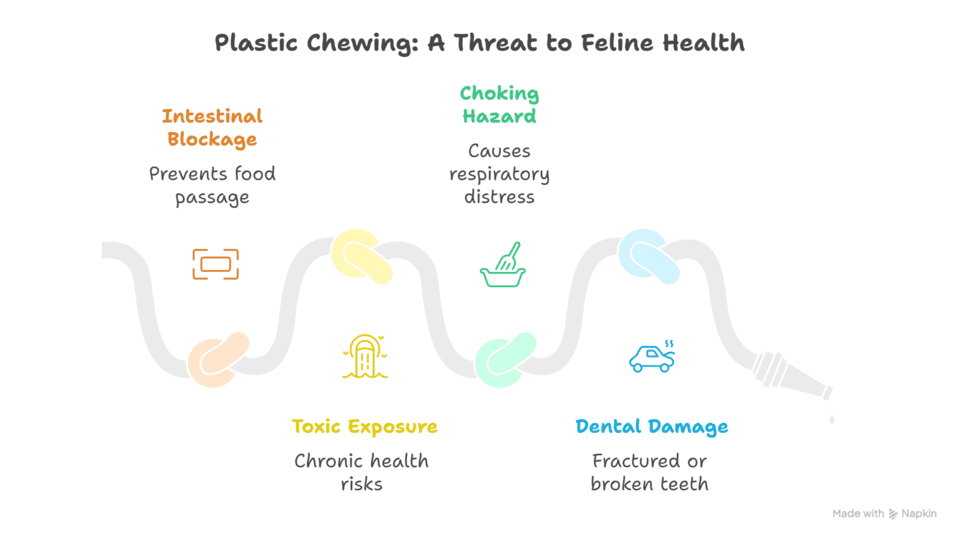
Intestinal blockage represents the most serious and immediate danger of plastic chewing. When cats swallow plastic pieces, these indigestible materials can:
- Become lodged in the stomach or intestines, preventing food passage
- Cause the intestines to “telescope” into themselves (intussusception)
- Perforate intestinal walls, leading to peritonitis
- Require emergency surgery with recovery times of 2-4 weeks
- Result in death if not treated promptly
Emergency surgery for intestinal blockages typically costs $2,000-$7,000, and even with intervention, complications can occur that lead to long-term digestive problems or require additional surgeries.
Toxic chemical exposure from plastics poses chronic health risks that accumulate over time:
- BPA (Bisphenol A) disrupts hormonal systems and may cause reproductive issues
- Phthalates affect liver and kidney function with repeated exposure
- Chemical plasticizers can accumulate in fatty tissues
- Manufacturing residues include heavy metals and other toxins
- Long-term exposure may contribute to cancer development
Choking hazards occur when cats bite off plastic pieces that become lodged in their throat or airway. This can cause:
- Immediate respiratory distress requiring emergency intervention
- Panic responses that make the situation worse
- Asphyxiation if the blockage isn’t cleared quickly
- Trauma to the throat and esophagus from attempts to clear the blockage
Dental damage from chewing hard plastic objects includes:
- Fractured or broken teeth requiring extraction
- Worn enamel leading to sensitivity and pain
- Gum trauma and increased infection risk
- Jaw soreness from excessive chewing behaviors
Emergency Warning Signs
Contact your veterinarian immediately if your cat shows any of these symptoms after chewing or ingesting plastic:
- Repeated vomiting or dry heaving
- Loss of appetite lasting more than 12 hours
- Lethargy or hiding behavior
- Abdominal pain (crying when touched, hunched posture)
- Constipation or inability to defecate
- Diarrhea, especially if bloody
- Excessive drooling or pawing at mouth
Time is critical with intestinal blockages—waiting even 24 hours can mean the difference between simple surgery and life-threatening complications.
Understanding the Root Causes of This Behavior
Identifying why does my cat chew on plastic requires understanding that this behavior stems from various medical, nutritional, and psychological causes that often overlap and reinforce each other.
Reason 1: When Plastic Chewing Signals Missing Nutrients
Pica—the consumption of non-food items—represents one of the most common medical causes of plastic chewing in cats. This condition often indicates underlying nutritional deficiencies that drive cats to seek minerals or compounds their diet lacks.
Nutritional deficiencies linked to pica include:
- Iron deficiency and anemia: Cats with low iron levels often develop unusual eating behaviors as their bodies attempt to obtain missing nutrients
- Fiber insufficiency: Cats may seek texture and bulk that plastic provides when their diet lacks adequate fiber
- Fatty acid deficiencies: Essential fatty acid shortages can trigger unusual oral behaviors
- Mineral imbalances: Deficiencies in zinc, calcium, or other minerals may drive plastic-seeking behavior
Diet quality impacts cannot be overstated. Cats fed low-quality foods with inadequate nutrients, excessive fillers, or poor protein sources show higher rates of pica behaviors. Switching to high-quality, complete cat foods often reduces or eliminates plastic chewing within 4-6 weeks.
Veterinary testing for nutritional deficiencies involves:
- Complete blood count (CBC) to check for anemia
- Chemistry panel assessing organ function and mineral levels
- Thyroid testing in cats over 7 years
- Comprehensive nutritional assessment
If testing reveals deficiencies, veterinarians can recommend dietary changes or supplements that address the underlying cause, often resolving the plastic-chewing behavior as nutritional balance is restored.
Reason 2: Oral Health Problems Driving the Behavior
Dental issues frequently contribute to plastic-chewing behaviors as cats seek relief from oral discomfort through the act of chewing.
Kittens teething experience discomfort as adult teeth emerge, leading them to chew anything that provides counter-pressure against sore gums. While this phase is temporary, allowing plastic chewing during teething creates habits that may persist after the discomfort resolves.
Adult dental disease affects over 70% of cats by age 3 and includes:
- Gingivitis: Inflamed, painful gums that may feel better with pressure
- Periodontal disease: Infection and deterioration of tooth-supporting structures
- Tooth resorption: Painful erosion of tooth structure unique to cats
- Fractured teeth: Broken teeth with exposed nerves causing chronic pain
How plastic texture appeals to cats with dental problems relates to the pressure and gum stimulation that temporarily relieves discomfort. The flexible-yet-firm texture of many plastics provides the “right” sensation for cats seeking oral relief.
Dental examination importance cannot be emphasized enough. Many cats hide dental pain effectively, showing no obvious symptoms while suffering from significant oral disease. Annual veterinary dental examinations with professional cleanings as needed are essential for maintaining oral health and preventing pain-driven behaviors like plastic chewing.
Reason 3: Understimulated Cats Seeking Entertainment
Boredom and lack of enrichment drive many destructive behaviors in indoor cats, with plastic chewing being a common manifestation of insufficient mental and physical stimulation.
Indoor cat enrichment deficits include:
- Insufficient interactive play sessions (cats need 15-30 minutes of active play twice daily)
- Lack of environmental complexity (climbing options, hiding spots, window views)
- Absence of hunting-simulating activities (puzzle feeders, treat-dispensing toys)
- Limited novelty and variety in daily experiences
Plastic as a readily available toy becomes appealing because it:
- Makes interesting crinkly sounds that stimulate play drive
- Moves unpredictably when batted, mimicking prey behavior
- Provides texture variety that engages multiple senses
- Is always accessible, unlike toys that roll under furniture
Connection between activity level and destructive behaviors shows that cats with adequate enrichment rarely develop plastic-chewing habits. Research indicates that cats receiving daily interactive play, environmental enrichment, and mental stimulation show 60-70% fewer destructive behaviors than understimulated cats.
Environmental enrichment solutions include:
- Scheduled play sessions using interactive toys (wands, laser pointers, balls)
- Rotating toy selection to maintain novelty
- Puzzle feeders that engage hunting instincts
- Cat trees, shelves, and window perches for climbing and observation
- Cardboard boxes and paper bags (supervised) for exploration
Reason 4: Emotional Triggers Behind Plastic Obsession
Stress, anxiety, and compulsive behaviors can manifest as plastic chewing when cats lack healthy coping mechanisms for emotional distress.
Stress-related oral fixations develop because:
- Chewing provides comfort similar to nursing behaviors from kittenhood
- Repetitive behaviors help cats self-soothe during anxiety
- Oral stimulation releases endorphins that temporarily reduce stress
- Plastic chewing becomes a learned stress-response pattern
Compulsive disorder manifestations occur when plastic chewing escalates beyond occasional behavior to obsessive patterns that cats seem unable to control. Signs of compulsive plastic chewing include:
- Chewing for extended periods (30+ minutes at a time)
- Becoming agitated or aggressive if prevented from chewing
- Prioritizing plastic chewing over eating, playing, or socializing
- Continuing to chew despite deterrents or consequences
Anxiety displacement behaviors emerge when cats face stressors they can’t control:
- Changes in household routine or family dynamics
- New pets or family members creating territorial stress
- Moving to new environments or home renovations
- Separation anxiety when left alone for extended periods
- Multi-cat household conflicts and competition
When behavior crosses into obsession, professional intervention becomes necessary. Veterinary behaviorists can prescribe anti-anxiety medications, develop behavior modification programs, and help identify and address underlying stressors triggering the compulsive behavior.
Reason 5: Why Certain Plastics Smell Irresistible
Scent and taste attraction explains why cats target specific plastic items while ignoring others—the answer lies in the chemical composition and residual scents that certain plastics carry.
Food residue and cooking oils make grocery bags particularly attractive:
- Meat juices and fats from packaged foods
- Fish oils that transfer to plastic during transport
- Vegetable oils used in food preparation and packaging
- Salt and seasonings that permeate thin plastic materials
Chemical additives cats find appealing include:
- Stearates (often derived from animal fats) used as plasticizers
- Fish oils sometimes incorporated into plastic manufacturing
- Cornstarch-based biodegradable plastics with appealing scents
- Chemical compounds that happen to mimic pheromones or prey scents
Why grocery bags are particularly attractive relates to their concentrated exposure to food scents combined with thin material that’s easy to chew and makes satisfying sounds.
Scent memory and learned associations mean that once cats discover plastic chewing provides interesting sensory experiences, they actively seek out similar materials. This learned behavior can persist even after the original trigger (like nutritional deficiency) is resolved.
Reason 6: Genetic Factors in Plastic Chewing
Wool sucking and breed predisposition reveal that some cats are genetically predisposed to fabric and plastic-chewing behaviors that go beyond simple behavioral issues.
Oriental breed tendencies show that Siamese, Burmese, Tonkinese, and other Oriental breeds display significantly higher rates of fabric and plastic chewing. Studies suggest that up to 50% of Siamese cats engage in some form of inappropriate chewing behavior.
Wool sucking syndrome extension describes the progression from nursing behaviors to chewing wool, fleece, or plastic items. This syndrome appears to have genetic components that are particularly common in Oriental breeds.
Early weaning connections show that kittens separated from their mothers before 8 weeks old have higher rates of oral fixation behaviors, including plastic chewing. These cats may be seeking comfort through oral behaviors that mimic nursing.
Genetic vs. environmental factors interact in complex ways:
- Cats with genetic predisposition need earlier and more intensive intervention
- Environmental enrichment can reduce (but may not eliminate) genetically-driven behaviors
- Understanding breed tendencies helps set realistic expectations for treatment outcomes
- Some cats may always need environmental management to prevent plastic access
Step-by-Step Strategy to End This Dangerous Habit
Successfully stopping cat plastic chewing requires a multi-faceted approach combining environmental management, behavioral intervention, and sometimes medical treatment.
Making Plastic Inaccessible
Complete plastic removal from accessible areas represents the most effective immediate intervention:
Storage solutions that work:
- Store grocery bags immediately in closed cupboards or drawers
- Use sealed containers for trash instead of plastic bags
- Replace plastic shower curtains with fabric alternatives
- Keep plastic food storage containers in closed cabinets
- Secure plastic packaging immediately after receiving deliveries
Creating plastic-free zones involves:
- Designating cat-accessible areas where no plastic items are ever left out
- Training family members to immediately store plastic items
- Conducting daily “plastic sweeps” to remove forgotten items
- Using alternative materials (paper, fabric, metal) whenever possible
Family education ensures consistency:
- Explain health dangers to all household members
- Establish clear rules about plastic storage
- Create accountability systems for maintaining plastic-free environments
- Involve children in age-appropriate ways to help keep cats safe
Providing Better Alternatives
Appropriate chew toy selection gives cats safe outlets for chewing urges:
Safe chewing alternatives include:
- Silvervine sticks: Natural wood sticks cats can safely chew
- Cat grass: Provides texture and nutrients cats may be seeking
- Dental treats: Crunchy treats designed for chewing satisfaction
- Rubber cat toys: Durable, food-safe rubber in various textures
- Cardboard scratchers: Safe to chew and satisfying to destroy
Interactive play schedules reduce boredom-driven plastic chewing:
- Morning play session (15-20 minutes) before work
- Evening play session (15-20 minutes) before bedtime
- Midday enrichment (puzzle feeders, treat hunts) if possible
- Weekend extended play and new activity introduction
Puzzle feeders and food enrichment engage hunting instincts:
- Treat-dispensing balls that require manipulation
- Puzzle boards with hiding spots for kibble
- Snuffle mats hiding scattered treats
- Cardboard boxes with holes for treat fishing
Rotating toy selection maintains interest:
- Keep 4-5 toys available, store the rest
- Rotate selection weekly to restore novelty
- Introduce new toys monthly
- Save favorite toys for special play sessions
Making Plastic Unappealing
Deterrent strategies make plastic less attractive when complete removal isn’t possible:
Safe deterrent products include:
- Bitter apple spray: Food-safe bitter coating for plastic items
- Citrus-based sprays: Natural deterrents cats typically dislike
- Commercial pet deterrents: Products specifically designed for this purpose
- Double-sided tape: Creates unpleasant texture cats avoid
Application techniques for maximum effectiveness:
- Reapply deterrents every 2-3 days initially
- Cover all surfaces cats might contact
- Test products on small areas to ensure they don’t damage materials
- Maintain consistency—one untreated plastic item undermines the entire approach
Important safety note: Never use essential oils directly on plastics or in areas cats might ingest them, as many essential oils are toxic to cats even in small amounts.
When to Seek Professional Help
Medical evaluation becomes necessary when:
- Plastic chewing appears suddenly in adult cats without previous history
- Behavior persists despite consistent environmental management
- Cat shows signs of nutritional deficiency (weight loss, poor coat condition)
- Dental problems are suspected (drooling, difficulty eating, bad breath)
- Behavior has compulsive qualities (obsessive, uncontrollable)
Comprehensive veterinary examination should include:
- Complete physical exam with focus on oral health
- Blood work to rule out medical causes
- Discussion of diet quality and possible nutritional gaps
- Evaluation for signs of anxiety or stress-related behaviors
Behavioral consultation helps with severe cases:
- Certified cat behaviorists can develop customized intervention plans
- Behavior modification programs address underlying psychological causes
- Anti-anxiety medications may be prescribed for compulsive behaviors
- Follow-up appointments track progress and adjust strategies
Nutrition’s Role in Stopping Plastic Chewing
Dietary solutions address nutritional causes of pica and plastic chewing:
High-quality diet importance:
- Choose foods with real meat as first ingredient
- Avoid foods with excessive fillers (corn, wheat, soy)
- Ensure food meets AAFCO standards for complete nutrition
- Consider grain-free options if fiber intake is adequate from other sources
Fiber content considerations:
- Some cats benefit from increased fiber (psyllium husk, pumpkin)
- Fiber helps satisfy chewing urges and aids digestion
- Too much fiber can cause other digestive issues
- Work with veterinarians to determine appropriate fiber levels
Supplements that may help:
- Omega-3 fatty acids: Support brain health and reduce anxiety
- Probiotics: Improve digestive health and nutrient absorption
- B-complex vitamins: Support nervous system function
- Iron supplements: Only if testing confirms deficiency
Cat grass and greens provide healthy alternatives:
- Plant cat grass (wheat grass, oat grass) indoors
- Offer fresh grass daily in accessible locations
- Many cats naturally seek plant material for fiber and nutrients
- Satisfies chewing urge with safe, digestible material
What Progress Actually Looks Like
Realistic timeline expectations help maintain motivation during behavior modification:
Week 1-2: Environmental management phase
- Complete plastic removal from accessible areas
- Introduction of appropriate alternatives
- Initial deterrent application
- Behavior typically continues but opportunities decrease
Week 3-4: Adjustment period
- Cat begins exploring provided alternatives
- Plastic-seeking behavior may temporarily increase (extinction burst)
- Consistency becomes crucial during this challenging phase
- First signs of interest in appropriate chew toys emerge
Week 5-8: Behavior shift
- Noticeable reduction in plastic-seeking behaviors
- Increased engagement with appropriate alternatives
- Fewer interventions needed as habits change
- Some cats show complete cessation, others continue occasional attempts
Month 3+: Long-term success
- New habits generally established
- Continued vigilance prevents relapse
- Some cats always require environmental management
- Success defined as manageable behavior rather than perfect cessation
Celebrating small victories includes:
- Each day without plastic chewing incidents
- Interest shown in appropriate chew toys
- Reduced intensity of plastic-seeking behaviors
- Longer intervals between plastic-chewing attempts
Emergency Response Guide
If your cat ingests plastic, immediate action may be required:
Signs requiring emergency veterinary care:
- Witnessed ingestion of large plastic pieces
- Vomiting repeatedly over 2-3 hours
- Refusing food or water for 12+ hours
- Lethargy or hiding behavior
- Visible distress (crying, pacing, restlessness)
- Abdominal pain when touched
- Straining to defecate without producing stool
What to tell your veterinarian:
- Type and amount of plastic ingested
- Time since ingestion occurred
- Symptoms observed
- Cat’s medical history
- Current medications or supplements
Home monitoring guidelines for minor ingestion:
- Small pieces of thin plastic may pass naturally
- Monitor litter box for plastic in stool
- Watch for behavioral changes or distress signs
- Ensure cat continues eating and drinking normally
- Contact vet if any concerning symptoms develop within 48 hours
Never try to induce vomiting at home—this can cause more harm than benefit and should only be done under veterinary guidance.
Conclusion
Understanding why does my cat chew on plastic reveals a behavior driven by complex factors ranging from nutritional deficiencies and dental problems to boredom, anxiety, and genetic predisposition. The key to successfully stopping this dangerous habit lies in identifying the underlying cause affecting your individual cat and implementing appropriate solutions.
The six reasons we’ve explored—nutritional deficiencies, dental issues, boredom, stress and anxiety, scent attraction, and genetic factors—often overlap and reinforce each other. This means that effective intervention typically requires addressing multiple factors simultaneously through environmental management, enrichment strategies, dietary improvements, and sometimes medical treatment.
Remember that plastic chewing isn’t just an annoying habit—it poses serious health risks including life-threatening intestinal blockages, toxic chemical exposure, and dental damage. Taking this behavior seriously and implementing immediate interventions protects your cat from potentially fatal consequences.
The most successful approach combines making plastic completely inaccessible, providing appropriate alternatives that satisfy the same urges, addressing any underlying medical or nutritional causes, and creating an enriched environment that reduces boredom and stress. While change won’t happen overnight, most cats show significant improvement within 4-8 weeks of consistent intervention.
Stay patient and persistent even when progress seems slow. Some cats, particularly those with genetic predispositions or long-established habits, may always require careful environmental management to prevent plastic access. This ongoing vigilance is a small price to pay for protecting your cat’s health and potentially saving their life.
If you’re struggling to stop the behavior despite consistent efforts, don’t hesitate to seek professional help from your veterinarian or a certified cat behaviorist. They can identify factors you might have missed and develop customized strategies for your specific situation.
Also Read - Why Do Cats Headbutt Humans? The Sweet Science of Feline Affection
FAQs About Why Does My Cat Chew on Plastic
Is plastic chewing ever harmless or should I always intervene?
Always intervene. Even occasional plastic chewing poses serious health risks including intestinal blockage, toxic exposure, and choking hazards. There’s no “safe” amount of plastic consumption for cats. What seems like harmless nibbling can quickly escalate to dangerous ingestion.
Can I train my cat to stop chewing plastic completely?
With consistent intervention, most cats can stop plastic chewing entirely within 2-3 months. However, cats with genetic predispositions or severe compulsive behaviors may always require environmental management to prevent access. Success depends on identifying and addressing underlying causes rather than just treating symptoms.
What type of plastic is most dangerous for cats?
All plastic is dangerous, but thin plastic bags pose the highest risk because cats can easily bite off and swallow pieces. Hard plastics can cause dental damage and choking. Plastics containing food residue are most attractive to cats and therefore most dangerous due to increased exposure likelihood.
Why does my cat only chew specific types of plastic?
Cats target specific plastics due to residual food scents, chemical composition (some plastics contain compounds cats find appealing), texture preferences, and scent memory from previous positive experiences. Grocery bags are most commonly chewed due to concentrated food scents.
How long does it take to break the plastic chewing habit?
Most cats show improvement within 2-4 weeks of consistent intervention, with significant behavior change occurring by 6-8 weeks. Complete cessation may take 3-6 months depending on how long the behavior has been established and its underlying causes. Some cats always require environmental management.
Are there safe chew toys that feel like plastic?
Food-safe rubber toys, silicone chew toys designed for cats, and dental treats provide safe alternatives. However, most experts recommend redirecting to completely different textures (silvervine sticks, cat grass) rather than trying to replicate plastic feel, which may reinforce the original behavior.
What if my cat seems addicted to chewing plastic?
Compulsive plastic chewing requires professional intervention. Consult a veterinary behaviorist who can assess for obsessive-compulsive disorder, prescribe anti-anxiety medications if appropriate, and develop comprehensive behavior modification programs. This level of obsession won’t resolve without professional help.
Can plastic chewing indicate serious illness?
Yes. Sudden onset of plastic chewing in adult cats may indicate anemia, nutritional deficiencies, diabetes, hyperthyroidism, or gastrointestinal disease. Any new or escalating plastic-chewing behavior warrants veterinary examination to rule out medical causes.
Should I punish my cat for chewing plastic?
Never punish your cat. Punishment increases stress and anxiety, often worsening the behavior. Instead, focus on prevention (removing plastic access), redirection (offering appropriate alternatives), and addressing underlying causes. Positive reinforcement for appropriate behaviors works better than punishment for unwanted ones.
What’s the difference between chewing and eating plastic?
Chewing involves mouthing or gnawing without swallowing, while eating means actually ingesting plastic pieces. Both are dangerous—chewing can lead to accidental ingestion, and even small amounts of swallowed plastic can cause blockages. Treat all plastic interaction as dangerous and requiring intervention.

Can you be more specific about the content of your article? After reading it, I still have some doubts. Hope you can help me.