Introduction
You’ve always dreamed of having a cat, those adorable toe beans, the comforting purrs, the hilarious antics. But there’s one problem: you’re allergic. Maybe you’ve resigned yourself to a cat-free life, scrolling through cat videos and living vicariously through your pet-owning friends. But what if I told you that cat ownership might still be within reach? The good news is that some cats produce fewer allergens than others, and when you combine these low-allergen breeds with beginner-friendly temperaments, you get the perfect match for first-time owners dealing with allergies.
Finding the right cat breeds for first time owners with allergies involves understanding both the allergy side of the equation and what makes a cat suitable for beginners. You need a feline friend who won’t trigger constant sneezing fits but also won’t overwhelm you with demanding care needs or difficult personality traits. The perfect cat for you exists, it just takes knowing which breeds to consider, understanding that “hypoallergenic” doesn’t mean allergen-free, and being willing to implement some allergy-management strategies. In this comprehensive guide, I’ll introduce you to the best breeds that combine lower allergen production with easy-going, beginner-friendly temperaments, plus give you practical tips for making cat ownership work despite your allergies. Let’s find your perfect feline companion!
Understanding Cat Allergies: The Basics
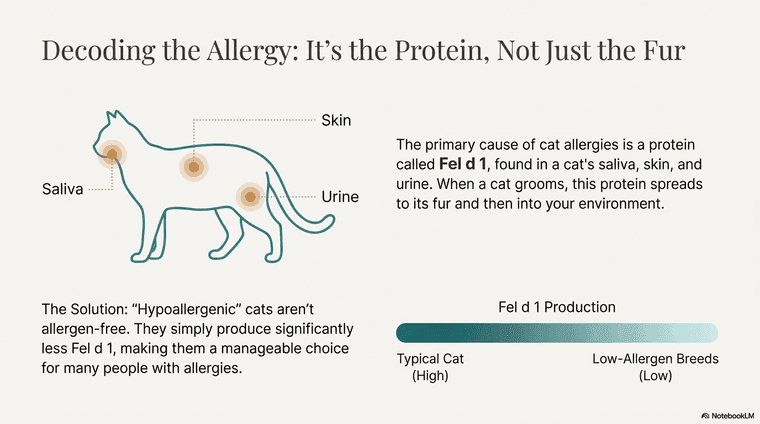
Before we dive into specific breeds, it’s important to understand what you’re actually allergic to, because it’s not what most people think.
What Causes Cat Allergies
Here’s the surprising truth: you’re not allergic to cat fur. The primary culprit is a protein called Fel d 1, which is produced in cats’ saliva, skin glands, and to a lesser extent, urine. When cats groom themselves (which they do constantly), they spread this protein all over their fur. As the saliva dries, the protein becomes airborne and lands on furniture, carpets, clothing, and every surface in your home.
This is why even “hairless” cats can trigger allergies; they still produce Fel d 1. However, some cats produce significantly less of this protein than others, and certain breeds are known for lower allergen production. That’s the key to finding suitable cat breeds for first time owners with allergies.
The Truth About “Hypoallergenic” Cats
Let’s be clear right from the start: no cat is 100% hypoallergenic. Any website, breeder, or advertisement claiming otherwise is misleading you. What does exist are breeds that produce lower levels of the Fel d 1 protein, which can make a significant difference for people with mild to moderate allergies.
Think of it this way: instead of being exposed to 100 units of allergen, you might be exposed to 20-30 units with a low-allergen breed. For many people, this reduction is enough to manage symptoms with medication, air purifiers, and good cleaning habits. However, if you have severe cat allergies, the kind that land you in the emergency room, even low-allergen breeds might not be sufficient.
Factors That Affect Allergen Levels
Even within low-allergen breeds, individual cats vary in how much Fel d 1 they produce:
- Gender matters: Intact male cats produce more allergens than females and neutered males
- Coat color might matter: Some studies suggest darker-colored cats may produce more allergens (though this is debated)
- Individual variation: Two cats of the same breed can have different allergen levels
- Age: Kittens produce fewer allergens than adults
- Spaying/neutering: Reduces allergen production, especially in males
This is why spending time with the specific cat you’re considering adopting is crucial, breed alone doesn’t guarantee compatibility.
What Makes a Good Breed for First-Time Owners
Beyond allergies, you need a cat that won’t overwhelm you as a beginner. The best first-time cat breeds typically share these characteristics:
Temperament traits:
- Friendly and social with humans
- Forgiveness of handling mistakes
- Adaptable to various living situations
- Not overly demanding or high-maintenance
- Generally healthy without breed-specific complications
Practical considerations:
- Reasonable grooming requirements
- Moderate energy levels (not destructively hyperactive)
- Good with being alone during work hours
- Clear communication of needs
- Affordable veterinary care (no breed-specific health crises)
The sweet spot is finding breeds that are both lower in allergens and possess these beginner-friendly qualities, and fortunately, several breeds fit this criteria perfectly.
Top 10 Cat Breeds for First Time Owners with Allergies
Here are the best options that combine lower allergen production with easy-going, beginner-friendly personalities.
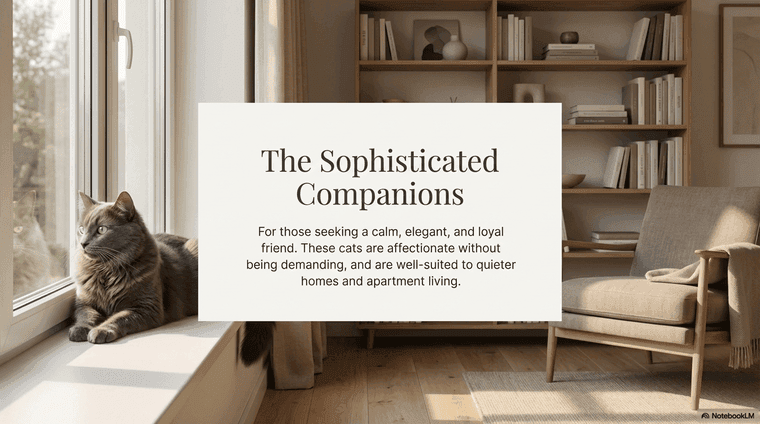
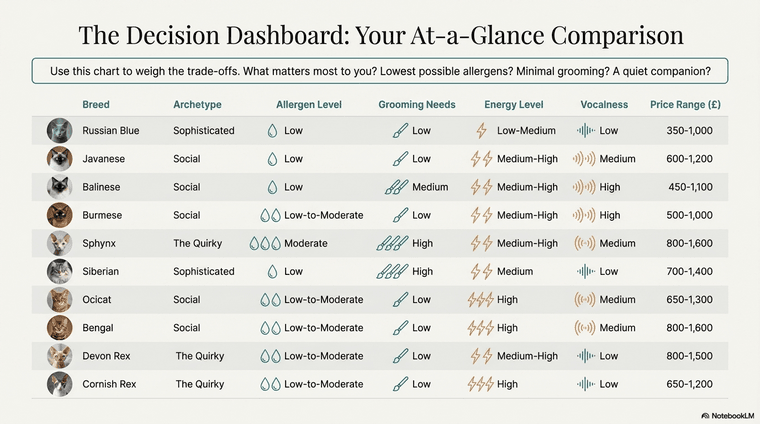
1. Russian Blue
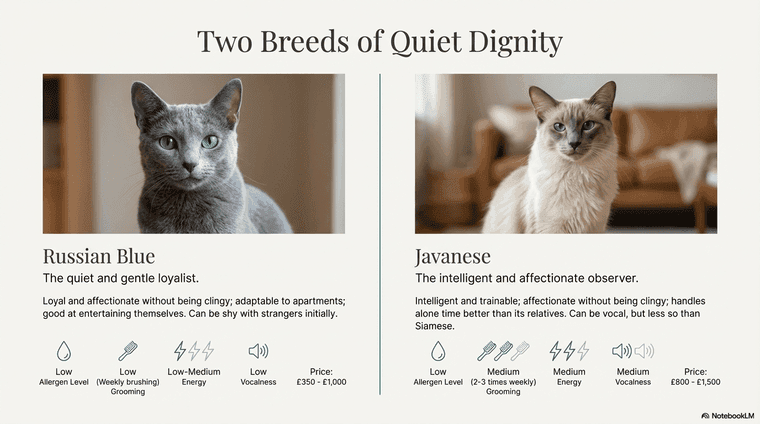
Allergen level: Low – Russian Blues produce less Fel d 1 than most breeds
Why they’re great for beginners: Russian Blues are the poster children for cat breeds for first time owners with allergies. These gorgeous gray cats with striking green eyes are:
- Quiet and gentle (not overly vocal)
- Loyal and affectionate without being clingy
- Adaptable to apartment living
- Good at entertaining themselves
- Relatively healthy with few genetic issues
Care requirements: Their short, dense coat needs weekly brushing. They’re intelligent and appreciate interactive toys but aren’t demanding.
Considerations: They can be shy with strangers initially but warm up with time. They bond strongly with their families.
Price range: $400-$1,200 from reputable breeders
2. Javanese
Allergen level: Low – Single coat produces less allergen
Why they’re great for beginners: Similar to Balinese with slightly different traits:
- Intelligent and trainable
- Affectionate without being clingy
- Playful and entertaining
- Medium energy level
- Social and friendly
Care requirements: Moderate grooming (2-3 times weekly). They appreciate interaction but can handle alone time better than Balinese.
Considerations: Can be vocal but less so than Siamese relatives.
Price range: $1,000-$1,800
3. Balinese
Allergen level: Low to moderate – Despite long fur, they produce less Fel d 1
Why they’re great for beginners: Often called “long-haired Siamese,” Balinese cats are surprisingly good for allergy sufferers. They’re:
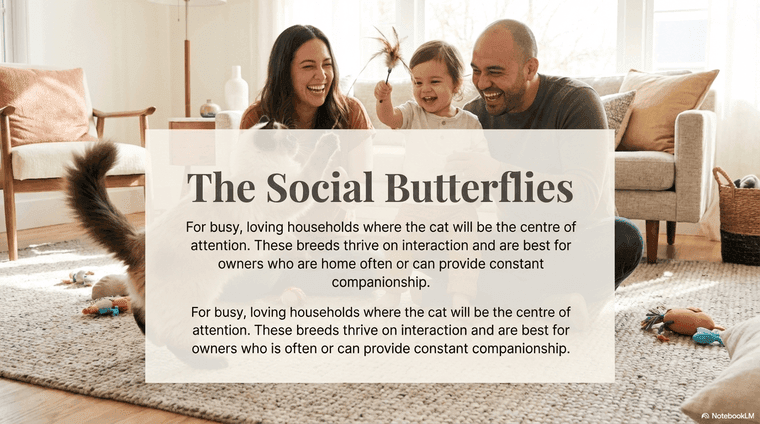
- Extremely social and people-oriented
- Playful and entertaining
- Smart and trainable
- Affectionate lap cats
- Generally healthy
Care requirements: Their silky coat doesn’t mat easily and needs brushing 2-3 times weekly. They’re vocal (like Siamese) and love interaction.
Considerations: They don’t like being alone for long periods. Best for people who work from home or can provide companionship.
Price range: $800-$1,500
4. Burmese
Allergen level: Moderate – Not the lowest but manageable for many
Why they’re great for beginners: Excellent temperament makes up for moderate allergen levels:
- Extremely affectionate and people-oriented
- Social with everyone
- Playful but not hyperactive
- Low grooming needs
- Adaptable and easy-going
Care requirements: Short coat needs minimal grooming. They’re social and shouldn’t be alone too long, consider two cats or work-from-home situation.
Considerations: Can be quite vocal and demanding of attention. Don’t like being ignored.
Price range: $600-$1,200
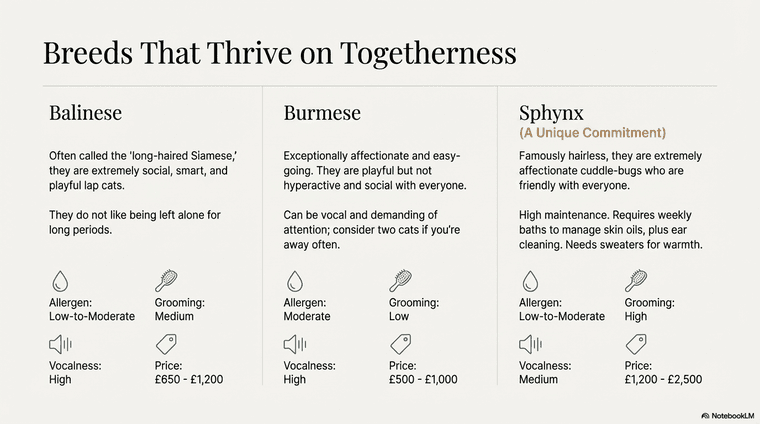
5. Sphynx
Allergen level: Low to moderate – Hairless but still produces Fel d 1
Why they’re great for beginners: Controversial choice but surprisingly suitable:
- Extremely affectionate and social
- Loves warmth and cuddling
- Friendly with everyone
- Entertaining personality
- No fur to shed around the house
Care requirements: Higher maintenance than expected, need weekly baths to remove oil buildup, ear cleaning, and nail trimming. Need warmth (sweaters in winter).
Considerations: Not truly hypoallergenic despite lack of fur. Unique appearance isn’t for everyone. Higher grooming commitment.
Price range: $1,500-$3,000

6. Siberian
Allergen level: Low – Many Siberian cats naturally produce low levels of Fel d 1
Why they’re great for beginners: Siberians are perfect for people wanting a sturdy, affectionate, dog-like cat:
- Friendly and adaptable personality
- Get along with children and other pets
- Playful but not hyperactive
- Loyal and devoted
- Hardy and generally healthy
Care requirements: Despite their thick triple coat, they need only moderate grooming (2-3 times weekly). They’re active and appreciate cat trees and play.
Considerations: Some individuals have higher allergen levels, so test before committing. They’re larger cats (12-17 pounds).
Price range: $1,200-$2,000
7. Ocicat
Allergen level: Low to moderate – Short coat and moderate shedding
Why they’re great for beginners: Wild appearance with domestic temperament:
- Outgoing and social
- Adaptable to various households
- Gets along with kids and pets
- Playful but not overwhelming
- Easy to care for
Care requirements: Weekly brushing is sufficient. Active cats that appreciate play but are also content to relax.
Considerations: Despite wild appearance, they’re fully domestic and gentle.
Price range: $800-$1,500
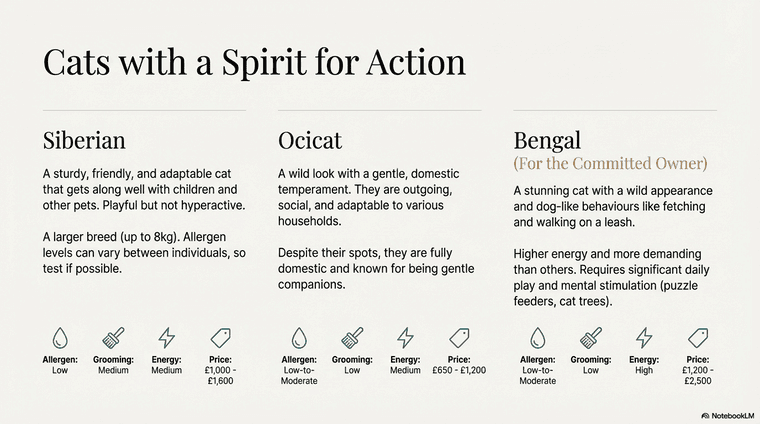
8. Bengal
Allergen level: Low to moderate – Short coat and less grooming means less allergen spread
Why they’re great for beginners (with caveats): Bengals are more demanding but manageable with commitment:
- Stunning wild appearance
- Intelligent and trainable
- Active and entertaining
- Less grooming needed
- Dog-like in behavior (plays fetch, walks on leash)
Care requirements: Need significant daily play and mental stimulation. Interactive toys, puzzle feeders, and climbing structures essential.
Considerations: Higher energy and more demanding than others on this list. Best for active people who want an engaging cat.
Price range: $1,500-$3,000

9. Devon Rex
Allergen level: Low to moderate – Short, sparse coat means less allergen spread
Why they’re great for beginners: These impish-looking cats with huge ears are delightful first pets:
- Extremely social and friendly
- Playful and energetic (but manageable)
- Loves being with people
- Easy to handle and transport
- Adaptable personality
Care requirements: Their short, curly coat is very low-maintenance. They need warmth (love heated beds) and daily play but are otherwise easy.
Considerations: Can be mischievous and curious, cat-proof your home! They get cold easily.
Price range: $1,000-$1,800
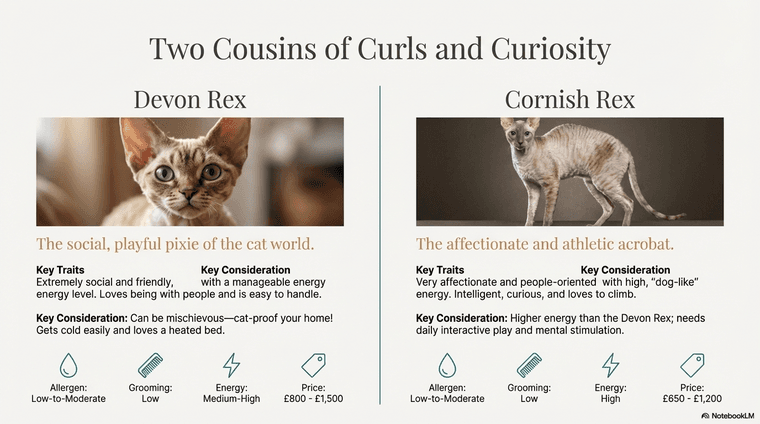
10. Cornish Rex
Allergen level: Low to moderate – Fine, curly coat with minimal shedding
Why they’re great for beginners: Similar to Devon Rex but with slightly different personality:
- Active and playful (think dog energy)
- Very affectionate and people-oriented
- Intelligent and curious
- Loves to climb and jump
- Social and friendly
Care requirements: Minimal grooming needed for their unique coat. Regular nail trimming and ear cleaning important. Need interactive play daily.
Considerations: Higher energy than some breeds, need mental stimulation. Can be demanding of attention.
Price range: $800-$1,500
Testing Before Committing
Before bringing home any cat, even from these recommended cat breeds for first time owners with allergies, take these crucial steps:
Spend Time with the Breed
Visit breeders, breed-specific rescues, or friends who own these breeds. Spend at least 2-3 hours in close contact (touching, holding, being in the same room). Do this multiple times over several weeks if possible.
Meet the Specific Cat
Individual variation matters more than breed. Spend extended time with the actual cat you’re considering:
- Visit multiple times
- Interact closely (petting, holding, playing)
- If possible, bring a piece of the cat’s bedding home to see how you react
- Take antihistamines during visits to see if they effectively manage symptoms
Trial Periods
Many reputable breeders offer trial periods (often 1-2 weeks) where you can return the cat if allergies are unmanageable. Some rescues offer foster-to-adopt programs. These are invaluable for determining compatibility.
Medical Testing
Consult an allergist about:
- Confirming your specific allergy (is it definitely cat dander?)
- Allergy shot therapy (immunotherapy)
- Prescription medications more effective than over-the-counter options
- Realistic assessment of whether cat ownership is feasible
Managing Allergies with Any Cat
Even with low-allergen breeds, implementing these strategies significantly improves your quality of life:
Environmental Controls
- Air purifiers: HEPA filters in main rooms and bedroom (essential investment)
- Regular cleaning: Vacuum with HEPA filter 2-3 times weekly
- Hard floors: Easier to clean than carpet, which traps allergens
- Washable surfaces: Leather or vinyl furniture over fabric
- Bedroom restrictions: Keep cats out of your bedroom for allergen-free sleep
Grooming Strategies
- Regular brushing: Have a non-allergic person brush your cat outdoors or in bathroom 2-3 times weekly
- Bathing: Some cats tolerate monthly baths (use cat-safe products)
- Allergen-reducing wipes: Daily wiping can reduce surface allergens
- Professional grooming: Groomers can bathe and brush, reducing your exposure
Medical Management
- Daily antihistamines: Preventive use is more effective than reactive
- Nasal sprays: Prescription options work better than over-the-counter
- Immunotherapy: Allergy shots can provide long-term relief (discuss with allergist)
- Emergency medication: Have rescue inhalers if you have asthma
Products That Help
- Purina Pro Plan LiveClear cat food (reduces active allergen in cat saliva by 47% on average)
- Allerpet solution (applied to cat’s fur)
- HEPA vacuum cleaners (Miele, Dyson)
- Air purifiers (Blueair, IQAir, Levoit)
Cost Considerations
Understanding the financial commitment helps you make informed decisions about cat breeds for first time owners with allergies.
Initial Costs
Purebred from breeder:
- Russian Blue: $400-$1,200
- Siberian: $1,200-$2,000
- Sphynx: $1,500-$3,000
- Other breeds: $600-$1,800
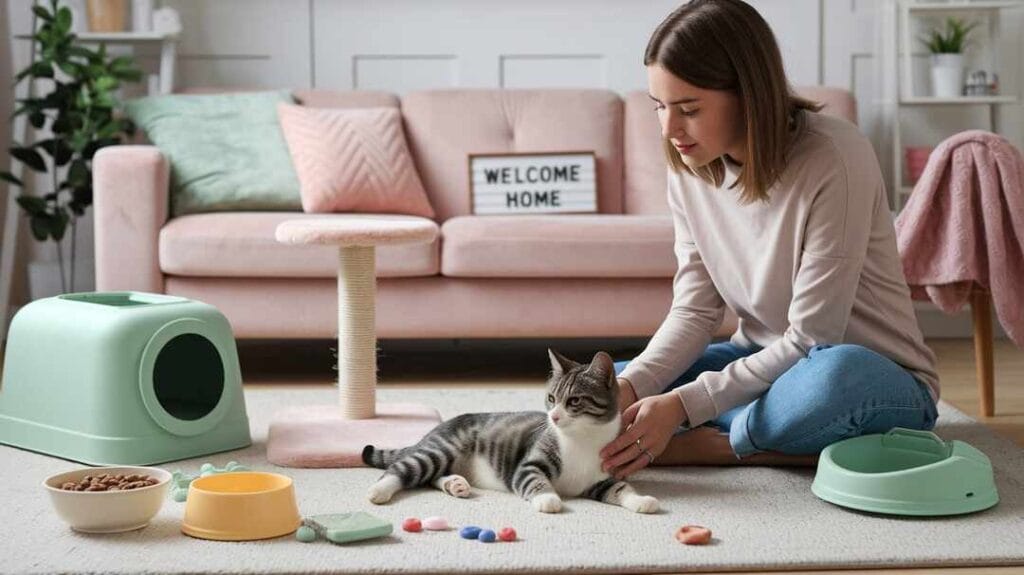
Initial supplies: $200-$500 (litter box, food/water bowls, food, toys, scratching post, carrier, bed)
First vet visit: $100-$300 (exam, vaccines, fecal test)
Spay/neuter: $50-$300 (if not included by breeder/rescue)
Ongoing Monthly Expenses
- Food: $30-$80 (quality matters)
- Litter: $15-$40
- Preventive care: $20-$50 (flea/tick prevention, supplements)
- Pet insurance: $20-$50 (highly recommended)
Annual total: $1,000-$2,000 for basic care, plus unexpected expenses
Allergy-Management Costs
- Air purifiers: $100-$600 (initial) plus filter replacements
- HEPA vacuum: $200-$600 (one-time)
- Allergy medications: $20-$100/month (without insurance)
- Specialty cat food: $50-$80/month (if using allergen-reducing formula)
- Professional grooming: $50-$100/session (if needed)
Budget for both cat care and allergy management to ensure success.
Where to Find These Breeds
Reputable Breeders
Finding ethical breeders is crucial:
What to look for:
- TICA or CFA registration
- Health guarantees and genetic testing
- Let you visit and meet parent cats
- Ask YOU questions about your home and experience
- Provide references from previous buyers
- Return policy if allergies are unmanageable
Red flags:
- Won’t let you visit
- Multiple breeds available (jack-of-all-trades breeders)
- Unusually cheap prices
- No health documentation
- Pressure to buy immediately
Breed-Specific Rescues
Most breeds have dedicated rescue organizations. Benefits:
- Lower adoption fees ($100-$300)
- Adult cats (you know exactly what you’re getting)
- Already spayed/neutered and vaccinated
- Often fostered (personality known)
- Still purebred but more affordable
Search “[Breed Name] Rescue” or check Petfinder with breed filters.
General Shelters
You can find low-allergen cats in regular shelters:
- Ask about Russian Blues or short-haired cats
- Request allergy testing period
- Consider mixed breeds with hypoallergenic traits
- Adult cats often better than kittens (known personalities)
Making the Final Decision
Choosing the right cat involves balancing multiple factors:
Match Lifestyle to Breed
Active lifestyle? Bengal, Devon Rex, or Cornish Rex might be perfect
Quiet, low-key home? Russian Blue or Burmese might be better
Work from home? Balinese or Javanese (who need companionship) work well
Frequent travel? Choose a more independent breed like Russian Blue
Small apartment? Most breeds adapt, but avoid highest-energy cats
Be Realistic About Commitment
Cats live 15-20 years. Consider:
- Will allergies worsen over time? (They often improve with consistent exposure)
- Can you afford both cat care and allergy management long-term?
- Are you prepared for potential vet emergencies?
- Will major life changes (moving, marriage, kids) affect cat care?
Trust Your Gut
When you meet the right cat, you’ll know. Chemistry and connection matter as much as breed characteristics. If a particular cat doesn’t trigger your allergies during visits and you feel that spark of connection, that’s your match, regardless of whether it’s your first-choice breed.
Conclusion
Finding the perfect cat breeds for first time owners with allergies is absolutely possible with the right knowledge and realistic expectations. Breeds like Russian Blues, Siberians, Balinese, and Devon Rex combine lower allergen production with beginner-friendly temperaments, making them ideal for allergy-suffering first-time cat parents. However, remember that “hypoallergenic” means lower allergens, not zero, and individual testing with specific cats is essential before committing. Combined with proper allergy management strategies, air purifiers, regular cleaning, grooming routines, and medication, these breeds offer genuine hope for people who thought cat ownership was impossible.
The journey to cat ownership with allergies requires more research, preparation, and ongoing management than allergy-free ownership, but thousands of people successfully navigate this path every day. Start by visiting breeders or rescues with these recommended breeds, spend significant time with individual cats, implement environmental controls, and work with both your allergist and veterinarian. Your perfect feline companion is out there waiting, and with patience and the right approach, you can make the dream of cat ownership a beautiful, sneeze-free reality!
Also Read - Why Does My Cat Lick My Face When I Sleep: The Nighttime Affection Explained
Frequently Asked Questions
Are any cats truly hypoallergenic for people with severe allergies?
No cat is 100% allergen-free, so no breed is truly “hypoallergenic” in the technical sense. All cats produce Fel d 1 protein, the primary allergen. However, breeds like Russian Blues, Siberians, and Balinese produce significantly less, often 50-70% less than high-allergen breeds. For people with mild to moderate allergies, this reduction combined with management strategies (air purifiers, medication, grooming) often makes ownership possible. If you have severe allergies that cause anaphylaxis or severe asthma, even low-allergen breeds may not be safe. Always test with the specific cat and consult your allergist before committing.
Which is better for allergies: a hairless cat or a long-haired low-allergen breed?
It depends on your specific situation. Hairless cats like Sphynx still produce Fel d 1 in their saliva and skin oils, you’re just not dealing with fur spreading it around. However, they require regular bathing to remove oil buildup, which actually helps control allergen levels. Long-haired breeds like Siberians or Balinese produce less Fel d 1 protein from the source, but their fur can spread what they do produce. Many allergy sufferers actually do better with long-haired low-allergen breeds than hairless cats. The best approach is testing with both types to see which works better for your body.
How much do hypoallergenic cat breeds typically cost?
Prices vary significantly by breed, breeder reputation, and location. Russian Blues range from $400-$1,200, while Siberians and Sphynx can cost $1,200-$3,000 from reputable breeders. Bengals often reach $1,500-$3,000. Adoption from breed-specific rescues is much more affordable at $100-$300 and includes spay/neuter and vaccinations. Remember that initial cost is only part of the equation, factor in ongoing expenses for quality food, vet care, and allergy management (air purifiers, medications, specialty products), which add $1,500-$3,000+ annually.
Can I develop tolerance to my cat’s allergens over time?
Many people do develop tolerance with consistent exposure over 6-12 months, though this isn’t guaranteed. The phenomenon, called “tolerance through exposure,” works for roughly 60-70% of cat owners with allergies. Your immune system can gradually become less reactive to the specific allergens from your individual cat. However, this doesn’t mean you’ll tolerate all cats, just your own. Some people’s allergies remain constant or even worsen. Using immunotherapy (allergy shots), taking preventive medications, and maintaining good allergy management practices increases your chances of successful adaptation. Never rely on developing tolerance as your only strategy.
Should I get a kitten or adult cat as a first-time owner with allergies?
Adult cats are generally better for first-time owners with allergies for several reasons: you can test your allergic reaction to the specific cat before adopting, their personality is fully developed (no surprises), they produce more allergens than kittens (so if you’re okay with an adult, you’re truly compatible), and they’re usually calmer and require less intensive supervision than kittens. However, kittens allow you to establish routines from the start and generally adapt to homes more easily. If you choose a kitten, spend extensive time with the parents to gauge your likely reaction, since kittens produce fewer allergens initially but will eventually produce adult levels.