Introduction
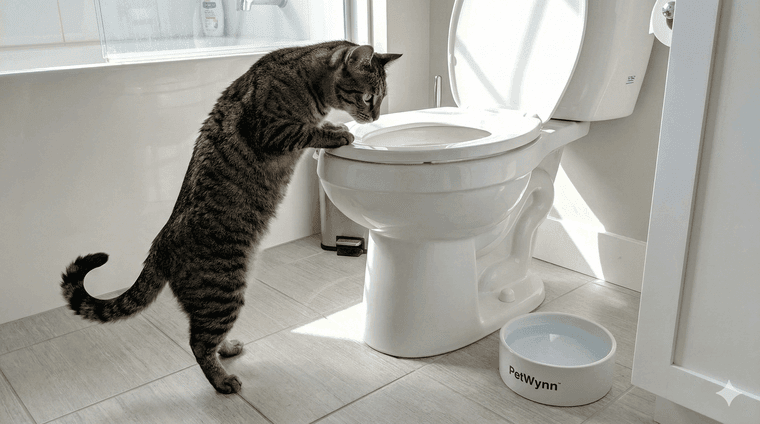
You spent good money on a nice water bowl, maybe even a fancy one with cute designs. You fill it with fresh, clean water every day. You place it in a convenient spot. And yet, you find your cat ignoring it completely, instead making a beeline for the bathroom to drink from the toilet. You stand there, bewildered, watching your cat enthusiastically lap up toilet water while their perfectly good bowl sits untouched. What gives?
If your cat drinks from toilet but not water bowl, you’re experiencing one of the most common and frustrating feline behaviors that puzzle cat owners. It seems illogical. Why would a cat choose toilet water over clean bowl water? But from your cat’s perspective, the toilet is actually the superior water source, and understanding why helps you redirect this behavior. While it might seem like just a quirky habit, toilet drinking poses genuine health risks from chemical cleaners, bacteria, and contamination.
The good news is that this behavior is completely fixable with the right approach. In this comprehensive guide, we’ll explore exactly why cats prefer toilet water, the potential dangers involved, and most importantly, proven solutions that will convince your cat that their water bowl is actually the better choice. Let’s solve this perplexing problem together!
Why Cats Are Drawn to Toilet Water
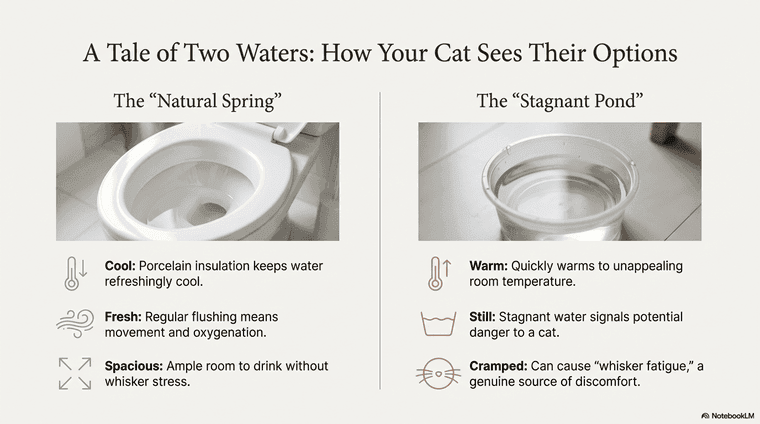
Understanding the appeal of toilet water is the first step in redirecting your cat to better alternatives. From a feline perspective, toilets have several attractive features.
Freshness and Temperature
Cats are incredibly sensitive to water freshness and temperature, much more so than humans. When your cat drinks from toilet but not water bowl, temperature often plays a major role. Here’s why toilets win:
Cooler temperature: Toilet water stays significantly cooler than room-temperature bowl water because:
- Porcelain is an excellent insulator that maintains cool temperatures
- Water sits in a large reservoir that resists temperature changes
- Bathrooms often have tile floors and cooler ambient temperatures
- Bowl water, especially in metal or plastic containers, warms to room temperature quickly
Perceived freshness: To a cat, toilet water seems “fresher” because:
- It’s regularly replenished through flushing (movement = fresh to cats)
- The large volume means less concentration of any odors or tastes
- Your cat may have observed you flushing, associating it with fresh water arriving
- Bowl water sits stagnant for hours between changes
Cats evolved drinking from streams, rivers, and other flowing water sources. Their instincts tell them that moving water is safer than stagnant water, which can harbor bacteria and parasites in the wild.
Oxygenation and Movement
Running or moving water contains more oxygen and simply tastes better to cats. Every time you flush the toilet, you create:
- Ripples and movement that attract attention
- Oxygenation of the water
- Visual interest (cats are attracted to motion)
- Sound of flowing water (triggers drinking instinct)
Even when the toilet isn’t being flushed, the large surface area allows for more air contact and subtle water movement from household vibrations. Your cat’s water bowl, sitting still on the floor, just can’t compete with this appeal.
Size and Depth
Toilets offer a drinking experience that bowls simply cannot match:
Larger water surface: A toilet provides a much bigger water source. Cats can approach from different angles, lean in comfortably, and choose their preferred drinking position.
Depth advantage: The depth of toilet water allows cats to drink without their sensitive whiskers touching the sides. “Whisker fatigue” is a real phenomenon where repeated contact with bowl edges causes discomfort and stress. Whiskers are loaded with nerve endings, and when they’re constantly pressed against bowl sides while drinking, it’s genuinely uncomfortable.
Accessibility: Toilets are at a height where cats can comfortably drink without excessive neck bending, especially for larger cats or those with arthritis.
Location and Accessibility
Bathroom placement often works in the toilet’s favor:
- Temperature controlled: Bathrooms tend to be cooler, especially with tile floors
- Quiet and private: Less foot traffic than kitchens where bowls typically sit
- Away from food: Cats instinctually prefer their water source separate from their food (we’ll explore this more)
- Multiple options: If you have multiple bathrooms, your cat has several “watering holes”
The “Forbidden Fruit” Factor
Never underestimate feline curiosity and the appeal of the forbidden. If you typically keep bathroom doors closed, the toilet becomes that much more intriguing when your cat does gain access. Additionally, your cat observes you using the bathroom, anything humans do regularly becomes interesting to cats who see us as colony members.
Health and Safety Concerns
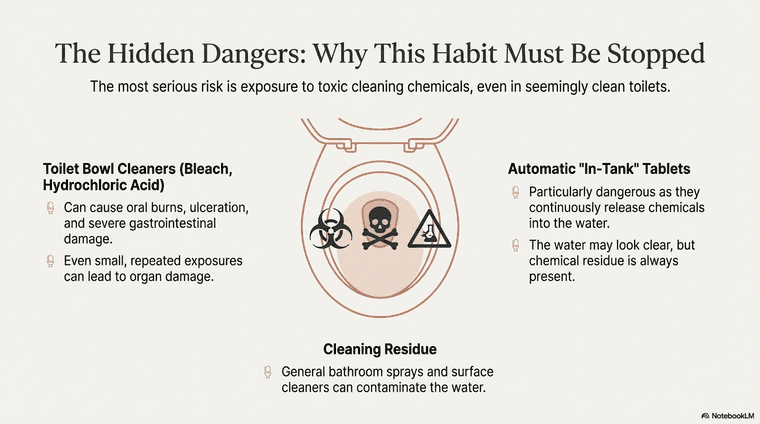
Before we dismiss this as harmless quirky behavior, let’s address why redirecting your cat away from toilet drinking is genuinely important.
Chemical Exposure Risks
This is the most serious concern when your cat drinks from toilet but not water bowl. Common toilet chemicals are highly toxic:
Toilet bowl cleaners: Products like Lysol Toilet Bowl Cleaner, Clorox, or similar contain:
- Bleach and sodium hypochlorite
- Hydrochloric acid
- Quaternary ammonium compounds
- Fragrances and dyes
Even small amounts can cause:
- Oral burns and ulceration
- Gastrointestinal damage
- Vomiting and diarrhea
- Difficulty breathing
- Organ damage with repeated exposure
Automatic toilet tablets: Those blue tablets in the tank are particularly dangerous because they continuously release chemicals. Even if the water looks clear, chemical residue remains.
In-tank cleaners: These are even more concentrated and dangerous than bowl-only products.
Cleaning product residue: Even if you don’t use dedicated toilet cleaners, general bathroom cleaners sprayed near toilets can contaminate the water.
Bacteria and Contamination
Toilets harbor bacteria even in the cleanest homes:
- E. coli from fecal contamination
- Salmonella and other intestinal bacteria
- Potential parasites
- Bacteria from hands and bathroom surfaces
While cats have relatively robust digestive systems, they’re not immune to bacterial infections, especially kittens, senior cats, or those with compromised immune systems.
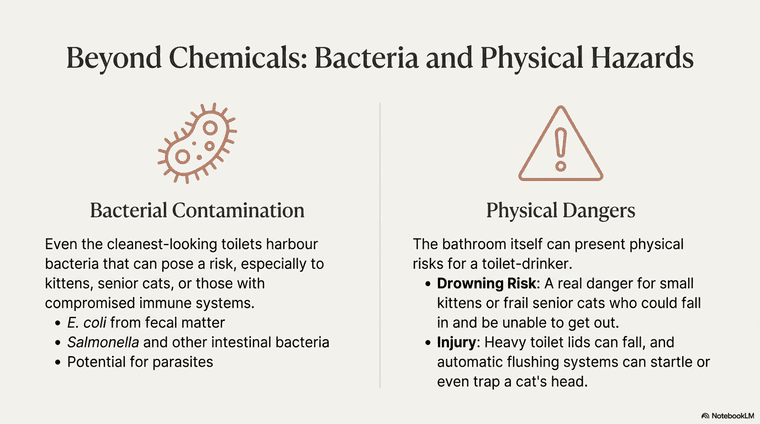
Physical Hazards
Beyond toxins and bacteria:
- Drowning risk: Kittens and senior cats can lose balance and fall in
- Automatic flushing toilets: Can startle or trap a cat’s head
- Toilet seat injuries: Heavy lids falling on cats
- Getting stuck: Smaller cats might struggle to escape if they fall in
When Toilet Drinking Indicates Health Issues
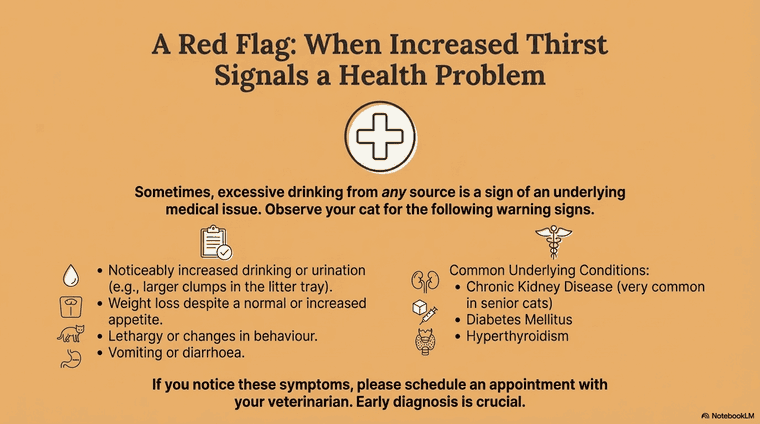
Sometimes excessive water consumption, from any source, signals medical problems:
- Diabetes: Causes increased thirst and urination
- Kidney disease: Very common in senior cats, increases drinking
- Hyperthyroidism: Metabolic disorder causing increased thirst
- Urinary tract infections: Can increase drinking behavior
If your cat suddenly starts drinking much more than usual (regardless of source) or shows other symptoms like weight loss, increased urination, lethargy, or appetite changes, schedule a veterinary appointment.
Understanding Your Cat’s Water Bowl Rejection
To solve this problem, we need to understand why your cat specifically rejects their bowl. Often it’s not that they love toilets, it’s that they hate their bowl.
Water Bowl Location Problems
Location is everything in real estate and cat water bowls:
Too close to food: Cats instinctively avoid drinking near their food. In the wild, water near a kill site could be contaminated. The ideal distance is at least 3-5 feet, but many people place food and water bowls side-by-side.
High-traffic areas: Busy kitchens or hallways where people constantly walk by make cats feel vulnerable while drinking.
Near litter boxes: Would you eat dinner next to a bathroom? Neither would your cat want to drink near their toilet.
Next to noisy appliances: Dishwashers, washing machines, and refrigerators that suddenly make noise can startle drinking cats, creating negative associations.
Bowl Material Issues
The bowl itself might be the problem:
Plastic bowls are the worst:
- Retain odors even after washing
- Develop scratches that harbor bacteria
- Can leach chemicals (especially cheap plastic)
- May cause feline acne on chins
- Often too light and slide around
Metal bowls can be off-putting:
- Reflect light in ways cats find strange
- Can conduct cold or heat uncomfortably
- May retain metallic taste
Best options:
- Ceramic: Heavy, doesn’t retain odors, dishwasher safe
- Stainless steel: Durable, sanitary, though some cats dislike reflections
- Glass: Excellent but breakable
Water Quality and Freshness
How often are you really changing that water?
Most cats need:
- Fresh water at least twice daily
- In hot weather or with multiple cats, even more frequently
- Complete bowl washing daily (not just refilling)
Water quality issues:
- Strong chlorine taste in tap water
- Mineral content your cat dislikes
- Contamination from food particles or debris
- Room temperature water when they prefer cool
Bowl Size and Whisker Fatigue
If your bowl is deep and narrow, every time your cat drinks, their whiskers press against the sides. After weeks or months of this discomfort, they’ll avoid the bowl.
Optimal bowl specifications:
- Wide and shallow (at least 5-6 inches diameter)
- No more than 2-3 inches deep
- Smooth edges
- Heavy enough not to slide
Effective Solutions to Stop Toilet Drinking
Now for the practical solutions. Most successful approaches combine multiple strategies.
Solution 1: Keep Toilet Lid Closed (Always)
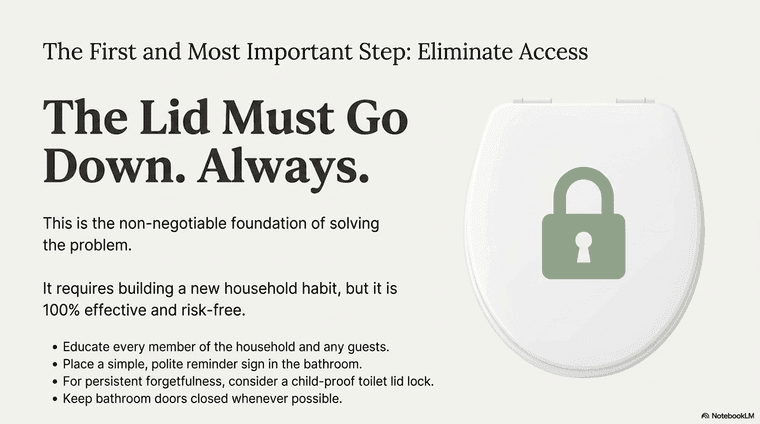
This is the foundation of solving the problem. If your cat drinks from toilet but not water bowl, eliminating toilet access is non-negotiable.
Making it work:
- Close lids immediately after every use
- Post reminder signs in bathrooms
- Educate all household members and guests
- Consider toilet lid locks if you struggle with consistency
- Keep bathroom doors closed when possible
Yes, it requires building new habits, but it’s the most effective single change you can make.
Solution 2: Provide Cat Water Fountain
This is the game-changer for most cats. Water fountains address almost every reason cats prefer toilets:
Why fountains work so well:
- Continuously moving water (appeals to instinct)
- Built-in filtration (cleaner, better-tasting water)
- Oxygenated water (tastes fresher)
- Cooler water (many have large reservoirs)
- Quiet sound of flowing water (attractive to cats)
- Interesting to watch (encourages drinking)
Choosing a fountain:
- Material: Ceramic or stainless steel over plastic
- Capacity: Larger for multiple cats or if you travel
- Noise level: Read reviews, some pumps are loud
- Filter type: Replaceable carbon filters are standard
- Cleaning ease: Dishwasher-safe parts are a huge plus
- Pump quality: Longer-lasting pumps save money
Top-rated options: Catit Flower Fountain, PetSafe Drinkwell, Pioneer Pet Raindrop (ceramic options)
Cost: $20-$60 initially, plus $10-20/year for filters and occasional pump replacement
Solution 3: Multiple Water Stations
Don’t put all your eggs (or water) in one basket. Create several drinking options:
Strategic placement:
- One in a quiet corner away from food and litter
- One in a bedroom or less-trafficked area
- One on a different floor level if you have stairs
- Variety of bowls and possibly a fountain
This increases the odds that at least one location appeals to your cat and ensures they always have easy access to water.
Solution 4: Optimize Water Bowl Setup
If you’re sticking with traditional bowls, optimize everything:
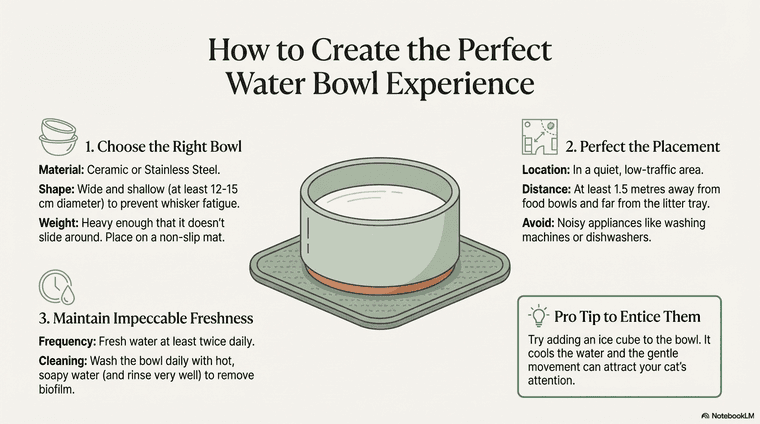
The perfect setup:
- Wide, shallow ceramic or stainless steel bowl
- Placed 5+ feet from food bowls
- In quiet, low-traffic location
- On a mat to prevent sliding
- Cleaned daily with hot, soapy water (rinse thoroughly)
- Fresh water twice daily minimum
- Room temperature or slightly cool water
Try adding appeal:
- Drop an ice cube in the water (creates movement and cools it)
- Use filtered water instead of tap
- Add a tiny bit of tuna water (just a few drops) to encourage drinking initially
- Place the bowl slightly elevated (some cats prefer this)
Solution 5: Improve Water Quality
If your tap water tastes heavily of chlorine or minerals, your cat notices more than you do.
Water quality improvements:
- Use a Brita or similar filter for your cat’s water
- Let tap water sit out overnight (chlorine evaporates)
- Try bottled water to see if preference changes
- Consider a water fountain with built-in filtration
Solution 6: Increase Overall Water Intake
Beyond changing where they drink, focus on overall hydration:
Wet food is key: Canned cat food is 70-80% water. Cats eating exclusively dry food often don’t drink enough supplemental water. Switching to wet food or adding it to their diet significantly increases hydration.
Other strategies:
- Add water or low-sodium chicken broth to food
- Offer ice cubes as treats
- Provide water-rich treats
- Multiple water sources increase overall consumption
Solution 7: Positive Reinforcement
Encourage bowl drinking through rewards:
- Place treats near water bowl initially
- Praise and pet your cat when you see them drinking from their bowl
- Make the bowl area a positive, calm space
- Never punish toilet drinking, just redirect and reward good behavior
Choosing the Right Water Solution for Your Cat
Let’s dig deeper into selecting the best products since this investment is crucial for success.
Cat Fountain Buyer’s Guide
Not all fountains are created equal. Consider:
Material:
- Ceramic: Best overall, doesn’t retain odors, heavy (won’t slide), easy cleaning, attractive
- Stainless steel: Very hygienic, durable, but can be noisy and some cats dislike reflections
- Plastic: Cheapest but retains bacteria, develops scratches, may cause feline acne
Capacity:
- Single cat: 50-70 oz sufficient
- Multiple cats: 100+ oz recommended
- Frequent travelers: Larger capacity means less frequent refilling
Filtration:
- Carbon filters standard (removes impurities, improves taste)
- Triple-filtration systems available in premium models
- Filter costs: $10-20 for 3-6 months supply
Noise:
- Pump quality varies dramatically
- Read reviews specifically mentioning noise levels
- Adjustable flow rates help reduce noise
Cleaning:
- Dishwasher-safe parts are essential
- Simple designs clean faster
- Weekly cleaning recommended
- Monthly deep cleaning with vinegar
Water Bowl Selection
If you’re going the traditional route:
Best materials:
- Ceramic: #1 choice, wide variety available, heavy, attractive
- Stainless steel: Second best, very sanitary
- Glass: Good but breakable
Avoid plastic: Unless your cat absolutely refuses other materials, skip plastic entirely.
Size guidelines:
- Minimum 5-6 inches diameter
- 2-3 inches deep maximum
- Wide and shallow beats deep and narrow
Cost Comparison
Initial investment:
- Basic ceramic bowl: $10-20
- Quality fountain: $30-60
- Premium fountain: $60-100+
Ongoing costs:
- Bowls: negligible (just water and soap)
- Fountains: $15-30/year (filters, occasional pump replacement)
- Electricity: Fountain pumps use about $2-5/year in electricity
For most people, the fountain investment pays off in successfully redirecting toilet drinking.
Transitioning Your Cat to New Water Sources
Change takes time. Here’s a realistic timeline for when your cat drinks from toilet but not water bowl and you’re implementing solutions.
Step-by-Step Transition Plan
Week 1: Introduction and Access
- Start closing toilet lids consistently
- Introduce fountain or optimized bowl setup
- Don’t panic if cat still seeks toilets initially
- Monitor to ensure cat is drinking from somewhere
- Check litter box output to confirm adequate hydration
Week 2: Encouragement
- Actively guide your cat to new water sources
- Reward bowl/fountain drinking with treats and praise
- Try adding appeal factors (ice cubes, filtered water)
- Maintain absolute consistency with closed toilet lids
- Watch for signs of dehydration (lethargy, dry gums)
Week 3: Habit Formation
- By now, most cats start accepting new sources
- Continue positive reinforcement
- Some cats remain stubborn, stay patient
- Experiment with bowl locations if still resisting
Week 4: Maintenance
- New habits should be forming
- Maintain cleaning schedules
- Don’t get complacent about toilet lids
- Celebrate success!
Expected timeline: Most cats adapt within 2-4 weeks. Particularly stubborn cats may take 6-8 weeks.
Dealing with Resistance
If your cat is extremely resistant:
Try these troubleshooting steps:
- Move water source to different location
- Switch from fountain to bowls or vice versa
- Use filtered or bottled water
- Add small amount of tuna water to encourage first drinks
- Ensure wet food provides supplemental hydration
- Verify no medical issues increasing thirst
Important: Monitor your cat closely during transition. If they’re not drinking adequately (check litter box for normal urination), consult your vet.
When Medical Issues Are the Real Problem
Sometimes the toilet drinking is a symptom of an underlying health condition.
Signs of Excessive Thirst
Normal cats drink approximately 4 ounces per 5 pounds of body weight daily. If your cat is drinking significantly more:
Warning signs:
- Noticeably increased drinking from any source
- Much more frequent urination (bigger clumps in litter box)
- Weight loss despite normal eating
- Increased appetite
- Lethargy or behavior changes
- Vomiting or diarrhea
Conditions Causing Increased Thirst
Common culprits:
- Diabetes mellitus: Blood sugar regulation problem
- Chronic kidney disease: Very common in senior cats
- Hyperthyroidism: Overactive thyroid (common in older cats)
- Urinary tract infections: Can increase drinking behavior
- Liver disease: Affects fluid balance
If you notice excessive drinking combined with other symptoms, schedule a veterinary appointment. These conditions require professional diagnosis and treatment.
Conclusion
Understanding why your cat drinks from toilet but not water bowl is the first step to solving this behavior. The toilet wins because it offers cooler, fresher, moving water in a large container that doesn’t trigger whisker fatigue, essentially, it’s the superior water source from your cat’s perspective. However, the health risks from chemical cleaners, bacteria, and potential physical hazards make redirecting this behavior essential. The most effective solution combines keeping toilet lids closed consistently with providing an appealing alternative like a cat water fountain or optimized bowl setup with fresh, cool water in appropriate locations away from food.
Most cats successfully transition to better water sources within 2-4 weeks using these strategies, though stubborn individuals may require more time and experimentation with different approaches. Remember that patience and consistency are your best tools, don’t give up if your cat doesn’t immediately embrace their new water source. With the right combination of eliminating toilet access, providing attractive alternatives, and maintaining high water quality and cleanliness standards, your cat will learn that their designated water source is actually the better choice. The investment in a quality water fountain or proper bowl setup is small compared to the peace of mind knowing your cat is drinking clean, safe water!
Also Read - How to Transition Cat to New Litter Box Location Without Accidents?
Frequently Asked Questions
Is it dangerous for my cat to drink from the toilet?
Yes, toilet drinking poses several risks to cats. The most serious is chemical exposure from cleaners, which can cause oral burns and gastrointestinal or organ damage. Toilets also harbor harmful bacteria like E. coli and salmonella. Physical hazards include the risk of drowning, being startled by automatic flushes, and falling toilet seats. While a single drink from a clean toilet may not be harmful, regular toilet drinking must be prevented.
Will a cat water fountain really make my cat stop drinking from the toilet?
Yes, for most cats! Fountains provide moving, oxygenated, cooler, and fresher water, mimicking the flowing water cats instinctually prefer. This addresses the main reason cats choose the toilet. You must also consistently keep toilet lids closed. About 80-90% of cats readily switch, though stubborn cats may need a 2-4 week transition. Combining a fountain with other strategies (proper location, filtered water, wet food) yields the best results.
How often should I change my cat’s water bowl water?
Change water at least twice daily (morning/evening); 3-4 times is better in hot weather, with multiple cats, or for sensitive cats. Wash the bowl with hot, soapy water daily to prevent bacterial biofilm. For fountains, follow cleaning schedules (weekly quick clean, monthly deep clean) and change filters every 2-4 weeks. Cats’ sensitive senses mean “fine” water to you may be unacceptable to them.
My cat only drinks from the toilet at night, why?
Nighttime toilet drinking is common because the bowl water is often stale after 12+ hours, the toilet water is cooler, the quiet house makes them feel safer, and cats are naturally more active (crepuscular) at night. To stop it, refresh water before bed, use a continuous fountain, close toilet lids, or place an extra water source near their sleeping area.
Can I put something in the toilet to stop my cat from drinking from it?
Adding anything to toilet water to deter cats is risky, as even “pet-safe” additives can cause illness and many are toxic. The safest, 100% effective, and risk-free solution is consistently closing the lid. If that fails, install a childproof toilet seat lock. Motion-activated deterrents can work but might create negative bathroom associations. Prioritize making alternative water sources more appealing over making the toilet dangerous.