Introduction
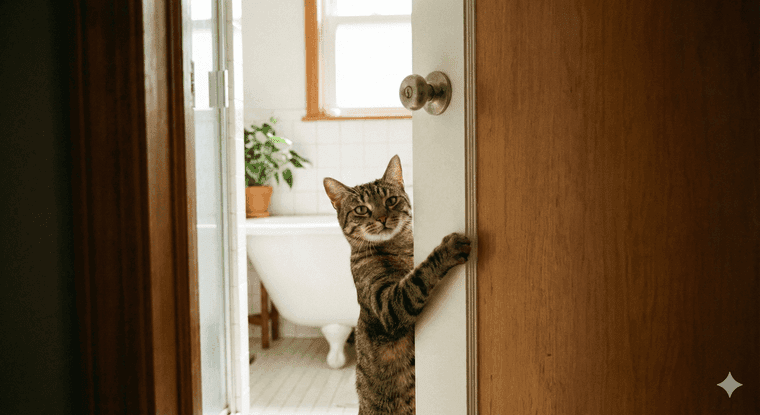
You’re heading to the bathroom, minding your own business, and suddenly you’ve got a furry shadow hot on your heels. Before you can even close the door, your cat has squeezed through, claimed a spot on the bath mat, and settled in to watch you like you’re the most fascinating thing in the world. Sound familiar?
If you’ve ever wondered, “Why does my cat follow me to the bathroom?” you’re definitely not alone. This is one of the most common, and honestly, most endearing, cat behaviors that pretty much every cat parent experiences. Some cats even cry at the door if you dare to close it without them!
The good news? There are actually several perfectly logical reasons why your cat does this, and most of them are pretty sweet when you understand what’s really going on. In this article, we’ll explore the science and psychology behind this quirky behavior, when it’s normal (spoiler: almost always), and what you can do if you really need a few minutes of privacy. Let’s dive in!
The Main Reasons Your Cat Follows You to the Bathroom
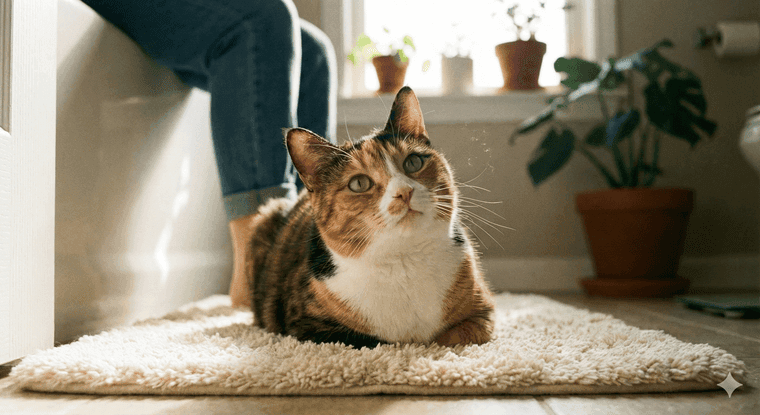
Let’s get to the heart of the matter. Why does your cat follow you to the bathroom every single time? Here are the top reasons behind this adorable stalking behavior.
1. You’re a Captive Audience (And They Know It)
Here’s the thing, your cat is smart. Like, really smart. They’ve figured out that when you’re in the bathroom, you’re not going anywhere for at least a few minutes. You can’t suddenly get up and walk away, you can’t start doing other tasks, and you’re unlikely to ignore them.
From your cat’s perspective, this is prime interaction time. Whether they want pets, conversation (yes, those meows are them talking to you), or just some quality companionship, the bathroom offers a guarantee you’ll actually pay attention. It’s genius when you think about it.
2. Curiosity and Routine Observation
Cats are incredibly curious creatures. They want to understand everything that happens in their environment, and that includes your daily routines. When you disappear into a room and close the door, they naturally want to know what’s going on in there.
Your bathroom routine involves interesting sounds, running water, toilet flushing, cabinets opening and closing. There are intriguing smells from soap, toothpaste, and other products. All of these sensory experiences fascinate your cat, and they want to be part of the action. They’re basically conducting a scientific study on human bathroom behavior, and you’re their research subject.
3. Vulnerability and Protection Instinct
This might sound a bit dramatic, but hear me out. In the wild, animals are at their most vulnerable when they’re eliminating waste. They can’t run away quickly, they’re distracted, and predators know this.
Even though your house cat isn’t worried about predators, that instinct is still hardwired into their DNA. Some experts believe that when your cat follows you to the bathroom, they’re actually standing guard and protecting you during what their instincts tell them is a vulnerable moment. They’re watching your back, literally. It’s their way of saying, “Don’t worry, I’ve got you covered while you’re occupied.”
This behavior is especially common in cats who are deeply bonded with their humans. They see you as part of their family unit, and family members look out for each other.
4. Bonding and Affection
Sometimes the answer to “why does my cat follow me to the bathroom” is simply: because they love you. Cats follow the people they’re bonded with. It’s not limited to the bathroom, you’ve probably noticed your cat shadowing you from room to room throughout the day.
The bathroom just happens to be another destination in your daily movement pattern, and your cat wants to be where you are. For them, being near you is comforting and enjoyable. They’re not trying to invade your privacy; they’re just expressing affection in the most feline way possible, by never leaving your side.
5. FOMO (Fear of Missing Out)
Let’s be real: cats hate closed doors. If there’s a door closed in the house, your cat absolutely must know what’s behind it. They don’t want to be excluded from anything, even if that “anything” is just you brushing your teeth.
This is especially true if your cat has separation anxiety or is particularly attached to you. Every time you close a door, they worry they’re missing something important. What if you’re eating treats in there? What if there’s a fun new game happening? What if, gasp, you’re petting another cat?
The bathroom door is no exception. In fact, because you go there multiple times a day, it’s one of the most mysterious rooms in the house from your cat’s perspective.
6. The Bathroom is Actually Interesting
From a cat’s point of view, bathrooms are pretty exciting places. Think about it:
- Running water: Many cats are obsessed with faucets and sinks. The sound and movement of water is endlessly fascinating.
- Echo-y acoustics: The tile and porcelain make sounds bounce around differently than other rooms. Your cat’s meows sound more dramatic in there.
- Cool surfaces: Bathroom floors are usually tile or linoleum, which feel nice and cool, especially great for cats who tend to run warm.
- Small, den-like space: Many bathrooms are relatively small and enclosed, which cats find cozy and secure.
- Interesting smells: From shampoo to soap to (let’s be honest) toilet smells, there’s a lot for their sensitive noses to investigate.
- Fun textures: Toilet paper is basically a built-in toy, bath mats are perfect for kneading, and shower curtains make satisfying crinkly sounds.
7. Learned Behavior and Positive Reinforcement
Here’s where you might have accidentally trained your cat without realizing it. Think back to the first few times your cat followed you to the bathroom. Did you pet them? Talk to them? Give them attention?
If so, you positively reinforced the behavior. Your cat learned: “When I follow my human to the bathroom, good things happen. I get pets, attention, or conversation.” Now it’s become part of their daily routine.
Additionally, your morning bathroom routine often happens right before breakfast. Your cat has connected these dots. Bathroom time = almost feeding time, so they definitely want to be present to remind you about that important upcoming meal.
8. Territory Patrol
Cats are territorial animals, and your entire home is part of their territory. They have an instinctual need to regularly patrol and monitor their domain to ensure everything is as it should be.
When you move from room to room, your cat is essentially doing their security rounds. They’re checking that their territory is secure, that no intruders have entered, and that all their favorite humans are safe and accounted for. The bathroom is just another checkpoint on their patrol route.
Your cat is also engaging in scent-marking behavior. When they rub against your legs while you’re in the bathroom, they’re depositing their scent on you, reinforcing that you belong to them and they belong to you.
Is This Behavior Normal or Should I Be Concerned?
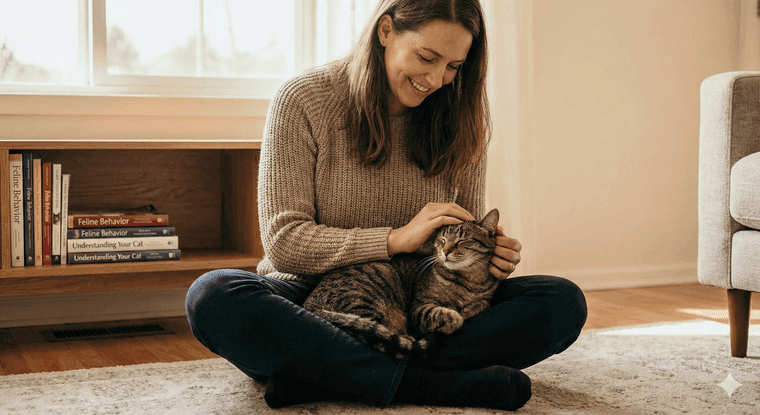
If you’re wondering whether it’s weird that your cat follows you to the bathroom, let me put your mind at ease.
When It’s Completely Normal
This behavior is totally normal for the vast majority of cats. In fact, it’s so common that it’s basically a universal experience among cat parents. If your cat does this, it generally means:
- They trust you and feel secure with you
- They’re curious and engaged with their environment
- They have a healthy bond with you
- They see you as part of their social group
There’s usually nothing to worry about. It’s just cats being cats.
When It Might Indicate Separation Anxiety
However, there’s a difference between normal attachment and separation anxiety. You might want to look deeper if your cat:
- Follows you literally everywhere, including from room to room constantly
- Becomes extremely distressed when you’re out of sight (excessive crying, destructive behavior)
- Shows signs of stress when alone (inappropriate elimination, overgrooming, loss of appetite)
- Can’t settle down or relax unless you’re present
- Exhibits destructive behavior when you leave home
True separation anxiety is relatively rare in cats but does happen, especially in cats who were orphaned very young, have experienced trauma, or have gone through multiple rehoming situations. If you suspect your cat has separation anxiety beyond normal attachment, consult with your vet or a feline behaviorist.
Other Behavioral Red Flags
You should also pay attention if:
- This behavior starts suddenly in an older cat who never did it before (could indicate cognitive decline or medical issues)
- Your cat seems agitated or anxious rather than curious and content
- There’s aggression if you try to keep them out of the bathroom
- The behavior is obsessive or compulsive in nature
Sudden behavioral changes can sometimes signal underlying health problems, so when in doubt, schedule a vet checkup.
The Science Behind Cat Attachment and Following Behavior
Let’s get a bit nerdy for a minute and talk about what’s actually happening in your cat’s brain when they follow you around.
Cat Social Structure
There’s a persistent myth that cats are solitary, aloof animals who barely tolerate humans. This couldn’t be further from the truth! While cats are more independent than dogs, they’re actually quite social creatures who form strong bonds.
Research has shown that domestic cats form attachment bonds with their humans similar to the bonds children form with parents. A 2019 study published in Current Biology found that cats display secure and insecure attachment styles, just like human children do in their relationships with caregivers.
Wild and feral cats often live in colonies with complex social structures. They groom each other, share food resources, and cooperate in raising kittens. Domestic cats have simply transferred these social behaviors onto their human families.
Imprinting and Socialization
When kittens are very young (typically between 2-7 weeks old), they go through a critical socialization period. During this time, they learn who’s safe, who’s family, and what’s normal in their environment.
Kittens who are handled gently by humans during this period tend to bond more strongly with people throughout their lives. In many ways, you become a pseudo mother figure, a source of food, comfort, security, and affection. This is why bottle-fed kittens or those separated from their mothers very early often become particularly attached to their humans.
Your cat following you everywhere, including to the bathroom, is partly an extension of this early bonding. They learned that being near you equals safety and good things.
Territorial Behavior
Understanding why does my cat follow me to the bathroom also requires understanding how cats view space. Your home isn’t just where your cat lives, it’s their territory, and they take that seriously.
Cats have an instinctual need to know what’s happening in every corner of their domain. Closed doors are particularly troublesome because they represent an unknown. What’s behind that door? Is everything okay in there? Is there a threat?
By following you into the bathroom, your cat is simply completing their territorial patrol. They’re ensuring their territory is secure and that you (an important resource and family member) are safe.
Different Personalities: Why Some Cats Are More Clingy Than Others
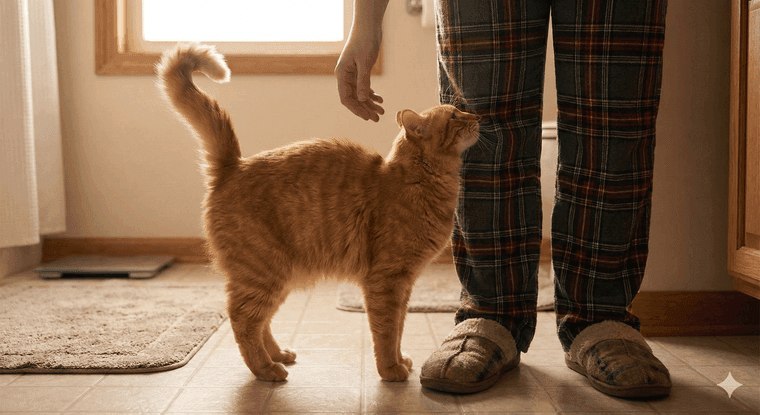
Not all cats follow their humans to the bathroom with the same enthusiasm. Some cats act like your personal bodyguard, while others couldn’t care less where you go. Here’s why.
Breed Tendencies
While individual personality matters most, some breeds are known for being more social and “dog-like” in their attachment:
- Siamese and Oriental breeds: Notoriously vocal and clingy, these cats often form intense bonds
- Ragdolls: True to their name, they love being with and on their humans
- Maine Coons: Despite their size, they’re gentle giants who enjoy human company
- Burmese: Extremely people-oriented and affectionate
- Sphynx: These hairless cats seek warmth and companionship constantly
On the flip side, breeds like Russian Blues, Norwegian Forest Cats, and some Scottish Folds tend to be more independent (though there are always exceptions).
Early Life Experiences
Your cat’s background plays a huge role in how clingy they are. Cats who:
- Were bottle-fed by humans often bond more intensely
- Had positive early socialization with people tend to be more trusting and attached
- Were raised as only kittens without littermates sometimes become more human-focused
- Experienced trauma or abandonment might either become very clingy or very independent
Rescue cats can go either way. Some become extremely attached to their new humans out of gratitude and security, while others remain more cautious and independent.
Age and Life Stage
Kittens follow their humans everywhere because they’re still dependent and learning. As cats mature into adults (1-10 years), they often become more independent while still maintaining their bonds.
Interestingly, senior cats (11+ years) often become more clingy again. They may feel less confident, have declining senses that make them more reliant on you, or simply have decided after years of companionship that you’re worth sticking close to.
Your Cat’s Individual Personality
At the end of the day, personality matters more than anything else. Just like people, every cat is unique. Some are social butterflies who want to be involved in everything you do. Others are content to check in occasionally while maintaining their independence.
Neither personality type is better or worse, they’re just different. A cat who follows you to the bathroom isn’t necessarily more loving than one who doesn’t; they just express their affection differently.
What Your Cat Is Actually Doing in the Bathroom With You
So your cat has successfully infiltrated your bathroom sanctuary. Now what? Let’s decode what all those behaviors actually mean.
Sitting and staring at you: This is supervision mode. Your cat is observing your routine, making sure you’re doing everything correctly. Those unblinking eyes aren’t creepy, they’re just deeply interested in your activities.
Rubbing against your legs: This is prime scent-marking opportunity. Your cat has scent glands on their face and body, and by rubbing against you, they’re mixing their scent with yours. It’s both affectionate and territorial, you’re “theirs.”
Playing with toilet paper: Can you really blame them? It’s right there at cat height, it unrolls in a satisfying way, and it makes fun sounds. This is pure entertainment from their perspective.
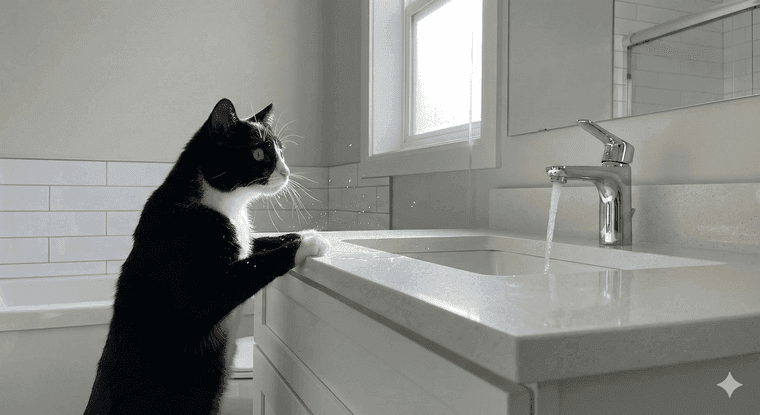
Drinking from the faucet: Many cats prefer running water to still water. If your cat jumps on the sink and stares expectantly, they’re asking you to turn on their personal drinking fountain.
Meowing or talking to you: Cats don’t typically meow at other cats, they meow at humans. Your cat is having a conversation with you, whether they’re commenting on your activities, asking for attention, or just checking in.
Sitting on your lap or nearby items: If you’re sitting, that’s an invitation for cuddle time as far as your cat is concerned. They’re also drawn to warm, recently vacated spots (like your clothes).
Investigating the bathtub or shower: The tub is full of interesting water smells and residue. Some cats are fascinated by wet surfaces and will even sit in the tub after you shower.
Should You Let Your Cat Follow You to the Bathroom?
This is the million-dollar question, and honestly, there’s no single right answer. It depends entirely on your personal preferences and your cat’s needs.
The Case for Allowing It
Most cat behavior experts say there’s no harm in letting your cat join you. In fact, there are benefits:
- Strengthens your bond: Spending time together, even in mundane situations, reinforces your relationship
- Meets their social needs: Cats are more social than we give them credit for
- Prevents door scratching: If you lock them out, many cats will scratch, cry, or otherwise protest
- Makes your cat happy: It’s a simple thing that brings them joy and security
- It’s natural behavior: Fighting against natural cat behavior often creates more stress than just accepting it
The Case for Setting Boundaries
On the other hand, you’re absolutely entitled to privacy. Valid reasons to keep your cat out include:
- Personal preference: You simply prefer bathroom privacy, and that’s okay
- Hygiene concerns: Especially if you have a cat who likes to jump on counters
- Multiple people in the household: Different family members have different comfort levels
- Helping an anxious cat learn independence: Sometimes gently encouraging independence is healthier
There’s no shame in wanting a few minutes alone. You’re not a bad cat parent if you close the door.
Finding the Right Balance
The ideal approach? Do what works for you and your cat. Some ideas:
- Let them in sometimes but not always, so they learn flexibility
- Install a cat door so they can come and go without the main door being fully open
- Create a compromise where they can peek in but not fully enter
- Use bathroom time strategically when you know they’re napping or occupied elsewhere
How to Discourage the Behavior (If You Want To)
If you’ve decided you need bathroom privacy and want to gently discourage your cat from following you, here are some strategies that work without causing stress or damaging your bond.
Important Note
First things first: this behavior is harmless, and most experts say there’s no need to stop it unless it’s causing you significant stress. Make sure you’re not trying to change your cat’s behavior because someone told you it’s “weird”, it’s not.
Gentle Redirection Strategies
If you do want to discourage bathroom following, the key is redirection, not punishment:
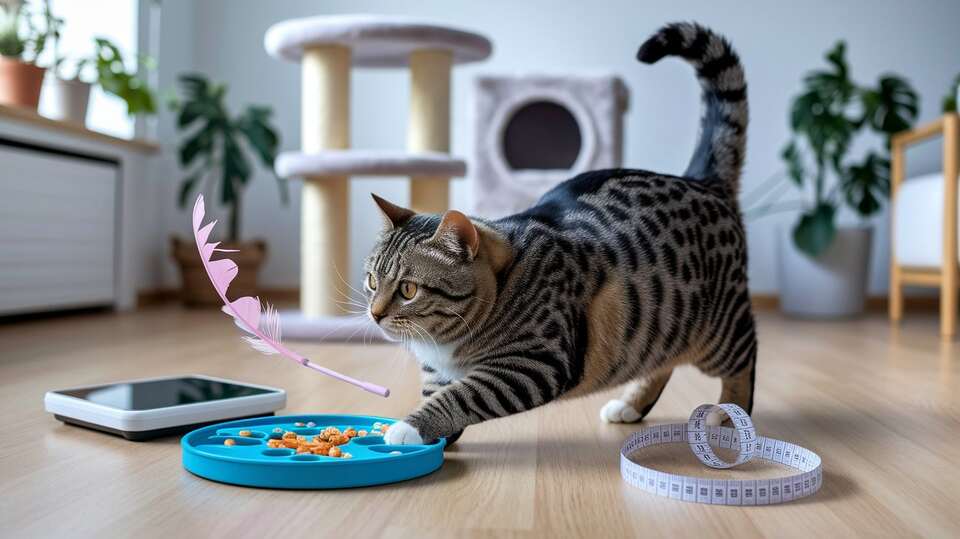
Engage them before you go: Right before heading to the bathroom, initiate a play session or offer an interactive toy. A cat busy hunting a feather wand is less likely to notice you slipping away.
Food puzzles are your friend: Set out a puzzle feeder or hide treats around the house right before bathroom time. The mental stimulation keeps them occupied.
Create an appealing alternative spot: Set up a cozy perch near a window or a heated bed in another room. Make it so comfortable that your cat chooses to stay there instead of following you.
Tire them out: A well-exercised cat is a cat who’s more likely to rest when you’re in the bathroom. Try play sessions before the times you typically use the bathroom.
Setting Boundaries Without Causing Stress
Consistency is crucial when teaching any new behavior:
- Don’t punish: Never yell at, spray, or physically punish your cat for following you. This damages trust and doesn’t actually teach them anything useful.
- Redirect calmly: If your cat tries to follow, gently redirect them to a toy or treat before closing the door.
- Start small: Begin with just a minute or two of door-closed time, then gradually increase.
- Stay calm through protests: If your cat meows or scratches at the door, stay silent. Responding reinforces the behavior. Wait until they’re quiet, then exit and reward the quiet behavior.
- Make departures boring: Don’t make a big deal about leaving the room. The more dramatic you are, the more interesting it becomes.
When Professional Help Might Be Needed
If your cat’s following behavior is truly obsessive, meaning they can’t function without you, show extreme distress, or the behavior is interfering with their quality of life, it might be time to consult a professional.
A certified feline behaviorist can help with:
- Severe separation anxiety
- Obsessive-compulsive disorders
- Behavioral issues stemming from trauma
- Creating a customized behavior modification plan
Your vet can also check for underlying medical issues that might be causing clingy behavior.
Conclusion
So, why does my cat follow me to the bathroom? As we’ve explored, the reasons range from protective instincts and territorial behavior to simple affection and curiosity. Your bathroom-stalking cat isn’t weird or overly clingy, they’re just being a cat. They love you, they’re curious about your activities, and they want to be part of your daily routine, even the mundane parts.
Whether you choose to embrace this behavior or gently set boundaries, remember that it comes from a place of trust and attachment. Your cat sees you as family, and family members stick together. That’s something worth celebrating, even if it means you’ll probably never have complete bathroom privacy again!
Also Read - 10 Cat Breeds for First Time Owners with Allergies: Complete Guide
Frequently Asked Questions
Why does my cat meow at me in the bathroom?
Your cat is talking to you! Cats meow primarily to communicate with humans, not other cats. They might be asking for attention, commenting on what you’re doing, requesting water from the faucet, or simply engaging in social interaction. Some cats are just more vocal than others and see bathroom time as conversation time.
Is my cat trying to protect me when they follow me to the bathroom?
Quite possibly, yes. Cats instinctively know that bathroom activities (elimination) make animals vulnerable to predators. Even though you’re safe in your home, your cat’s protective instincts kick in. They may be standing guard to ensure you’re safe during this “vulnerable” time. It’s actually quite sweet when you think about it.
Why does my cat only follow me and not other family members to the bathroom?
Cats often bond more strongly with one person in the household, usually whoever feeds them, spends the most time with them, or whose personality meshes best with theirs. If your cat only follows you, it means you’re their chosen person. They trust you most and want to be near you specifically.
Should I be worried if my cat suddenly starts following me more than usual?
Sudden behavioral changes can sometimes indicate health issues, especially in older cats. Increased clinginess might signal pain, cognitive decline, vision or hearing loss, or other medical problems. If your cat’s following behavior has dramatically increased without an obvious cause (like a recent move or schedule change), schedule a vet checkup to rule out underlying issues.
How can I get bathroom privacy without upsetting my cat?
Start by making other areas more appealing, set up window perches, use puzzle feeders, or engage them in play right before you go. Close the door calmly without making a big deal of it. If they protest, wait for quiet moments before emerging, which rewards calm behavior. Gradually, they’ll learn that you always come back and that closed doors aren’t scary. Consistency is key, and remember that some cats simply won’t adjust to being excluded, and that’s okay too.