Introduction
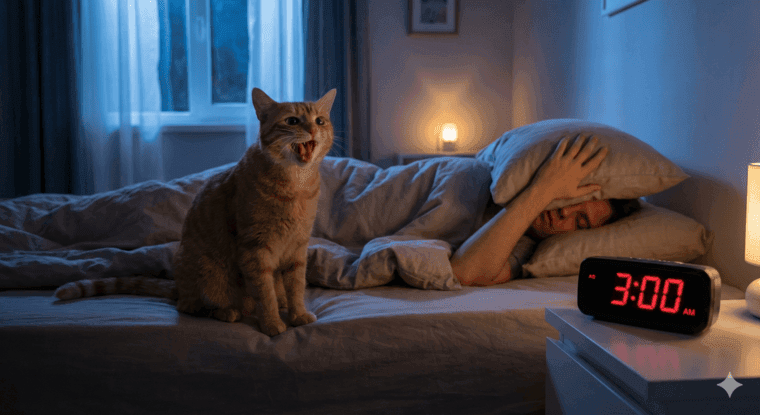
It’s 3 AM. You’re finally in deep sleep, dreaming peacefully, when suddenly, “MEOOOOOW!” Your cat is at your bedroom door (or worse, on your bed) singing the song of their people at full volume. You try to ignore it. “MEOW! MEOW! MEOOOOOW!” Nope, they’re not stopping. Welcome to one of the most common and frustrating challenges of cat parenthood.
If you’ve been asking yourself, “Why does my cat meow at night?” you’re definitely not alone. Nighttime meowing is one of the top complaints among cat parents, and it can seriously impact your sleep quality and overall well-being. The good news? There are real reasons behind this behavior, and more importantly, there are solutions that actually work.
In this article, we’ll explore the cat crying at night meaning, uncover the most common causes behind those 3 AM serenades, and give you practical, proven strategies for how to stop cat meowing at night. Let’s help both you and your feline friend get a better night’s sleep!
Understanding Cat Vocalization and Nighttime Behavior
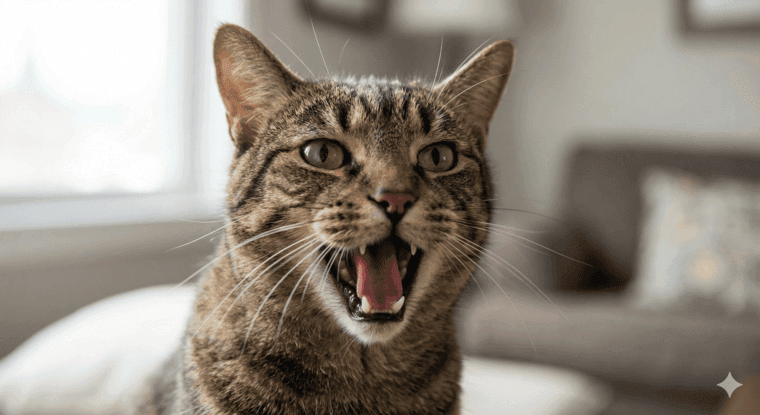
Before we dive into why your cat is meowing at night, it helps to understand how cats communicate and why nighttime is particularly challenging.
Why Cats Meow at Humans
Here’s an interesting fact: adult cats don’t typically meow at other cats. They communicate with each other through body language, scent marking, and occasionally hissing or growling in confrontations. But meowing? That’s almost exclusively reserved for humans.
Kittens meow at their mothers to communicate needs, hunger, cold, and fear. But as cats grow up, they generally stop meowing at other cats. Except domestic cats have figured out that meowing at humans gets results. We respond to it! So they’ve essentially retained this kitten behavior into adulthood, specifically to communicate with us.
This means that when your cat meows at night, they’re deliberately trying to tell you something or get you to do something. They’ve learned that meowing works, and they’re putting that knowledge to use, even if it’s inconvenient for your sleep schedule.
The Cat Crying at Night Meaning: Decoding Different Meows
Not all meows are created equal. Understanding the type of vocalization can give you clues about what your cat needs:
- Short, frequent meows: Usually demanding something (food, attention, door opening)
- Long, drawn-out wails: Can indicate distress, loneliness, or pain
- Loud yowling: Often related to mating behavior (intact cats) or serious discomfort
- Plaintive crying sounds: May indicate confusion, especially in senior cats
- Chirps and trills: Generally friendly communication or excitement
Pay attention to the quality and intensity of your cat’s nighttime meowing. This can help you identify the underlying cause and find the right solution.
Cats’ Natural Activity Cycles
Cats are crepuscular, meaning they’re naturally most active during dawn and dusk. In the wild, this is when their prey (small rodents and birds) are most active, so cats evolved to hunt during these times.
For indoor cats, this natural rhythm often translates to bursts of energy in the early morning hours (4-6 AM) and evening (dusk). Unfortunately, this doesn’t align well with human sleep schedules. While you’re trying to sleep from 11 PM to 7 AM, your cat’s internal clock is saying “It’s hunting time!”
Understanding this biological reality helps you approach the problem with more patience. Your cat isn’t trying to torment you, they’re just following their natural instincts.
Common Reasons: Why Does My Cat Meow at Night?
Let’s explore the most common causes behind nighttime meowing. Identifying which reason applies to your cat is the first step in solving the problem.
1. Hunger and Food-Related Meowing
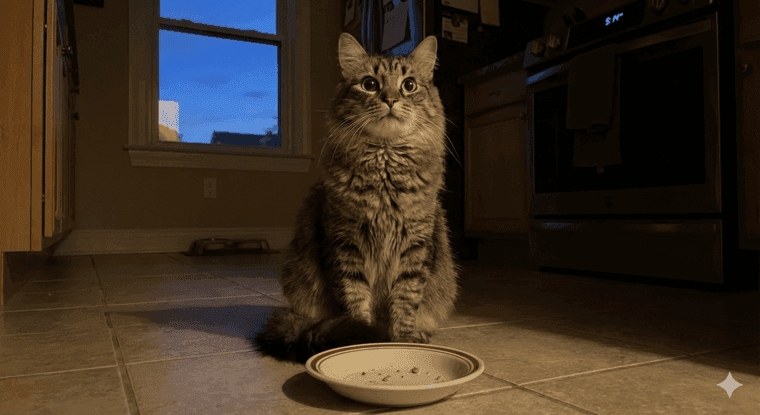
This is probably the number one reason cats meow at night. Your cat has learned that if they meow persistently enough, you’ll get up and feed them. Maybe you did it once when they seemed genuinely hungry, and boom, you’ve created a monster.
Cats are smart. If meowing at 4 AM got them breakfast once, they’ll try it again. And again. And again. This is classic operant conditioning, the behavior (meowing) leads to a reward (food), so the behavior increases.
Food-motivated cats are particularly prone to this. They might finish their evening meal and then spend the entire night thinking about breakfast. By 4 AM, they’re convinced they’re starving and need to alert you immediately.
2. Loneliness and Desire for Attention
Cats are more social than many people realize. If your cat spends all day alone while you’re at work, they might be craving interaction when you’re home, even if “home” means sleeping at 2 AM.
Some cats develop separation anxiety, especially if they’re strongly bonded to their humans. When you close the bedroom door at night, they feel isolated and distressed. The meowing is their way of saying, “Hey! Where did you go? Come back!”
This is particularly common in single-cat households where the cat has no other feline companionship. You are their entire social world, and being separated from you, even just by a bedroom door, can be genuinely upsetting for them.
3. Boredom and Lack of Stimulation
An under-stimulated cat is a cat looking for something to do at night. If your cat doesn’t get enough physical exercise and mental enrichment during the day, they’ll have excess energy to burn at night.
Think about it from your cat’s perspective: they’ve been napping all day (because there’s nothing else to do), and now they’re wide awake and ready for action. Unfortunately, the only interesting thing in their environment at 3 AM is you. So they meow to engage you in play or activity.
Indoor cats without sufficient enrichment often develop behavioral issues, and nighttime meowing is one of the most common. They’re basically bored out of their minds and letting you know about it.
4. Medical Issues and Pain
This is the serious one, and it’s why you should always rule out medical causes before assuming your cat’s nighttime meowing is purely behavioral.
Several health conditions can cause increased vocalization, especially at night:
Hyperthyroidism: Common in senior cats, causes increased appetite, restlessness, and vocalization. Affected cats often meow more at night due to hunger and hyperactivity.
Cognitive Dysfunction Syndrome (CDS): Essentially dementia in cats, more common in cats over 11 years old. Affected cats become confused about day vs. night and may vocalize due to disorientation.
Kidney Disease: Can cause increased thirst and urination, leading to nighttime meowing to access water or litter box.
Arthritis and Pain: Painful conditions can make cats more vocal, especially when trying to settle down for sleep.
High Blood Pressure: Can cause disorientation and anxiety, leading to increased vocalization.
Urinary Issues: Painful urination or urgency can cause distressed meowing.
Red flags that warrant a vet visit:
- Sudden onset of nighttime meowing in a previously quiet cat
- Meowing that sounds distressed or painful
- Other symptoms like appetite changes, weight loss, excessive thirst, or litter box issues
- Senior cats with new or increased vocalization
- Meowing that’s constant and doesn’t respond to interaction
5. Senior Cat Confusion and Disorientation
Older cats deserve their own category because age-related changes are so common and distinctive. If you have a senior cat (11+ years) who suddenly starts meowing at night, cognitive decline is a strong possibility.
Cats with cognitive dysfunction may:
- Forget where they are or become confused
- Lose their sense of day and night
- Feel anxious or insecure, especially in the dark
- Vocalize as an expression of distress or confusion
- Show other signs like staring at walls, getting “lost” in familiar spaces, or changes in litter box habits
This isn’t the cat being difficult, they’re genuinely confused and possibly scared. They might not recognize their surroundings or understand why it’s dark and quiet. The meowing is often a plaintive cry for help or reassurance.
6. Stress, Anxiety, and Environmental Changes
Cats are creatures of habit, and changes to their environment or routine can trigger stress-related behaviors, including nighttime vocalization.
Common stressors include:
- New pets or people in the household
- Moving to a new home
- Furniture rearrangement
- Changes in your work schedule
- Construction or renovations
- Outdoor cats visible through windows
- Unfamiliar sounds or smells
When cats feel stressed or anxious, they often express it through increased vocalization. At night, when the house is quiet and they have fewer distractions, that anxiety can become more pronounced.
7. Breeding Behavior (Intact Cats)
If your cat isn’t spayed or neutered, hormones could be driving the nighttime concerts. Female cats in heat will yowl, loudly and persistently, to attract males. Male cats can sense females in heat from quite a distance and will yowl in response, hoping to reach them.
This vocalization is instinctual and incredibly difficult to stop through behavioral modification alone. It’s also one of the best arguments for spaying and neutering, which eliminates these hormone-driven behaviors and has numerous health benefits.
8. They’ve Trained You (Learned Behavior)
Let’s be honest: many cats meow at night because it works. If you’ve ever gotten up to feed your cat, pet them, play with them, or even just yell at them (yes, negative attention is still attention), you’ve reinforced the behavior.
Cats are excellent at training humans. They learn patterns quickly: “If I meow at the bedroom door for 10 minutes, my human gets up and gives me treats.” Once this pattern is established, it becomes incredibly difficult to break because the cat knows persistence pays off.
Inconsistency makes this worse. If you sometimes ignore the meowing and sometimes respond, you’ve created a variable reinforcement schedule, the most powerful type of behavioral reinforcement. Your cat will meow even more persistently because they never know which attempt will succeed.
How to Stop Cat Meowing at Night: Effective Solutions
Now for what you really want to know: how do you actually stop this behavior? Here are proven strategies that work, though they require patience and consistency.
Before Implementing Solutions: Rule Out Medical Issues
I cannot stress this enough: before assuming your cat’s nighttime meowing is behavioral, schedule a vet checkup. This is especially crucial if:
- The meowing is a new behavior
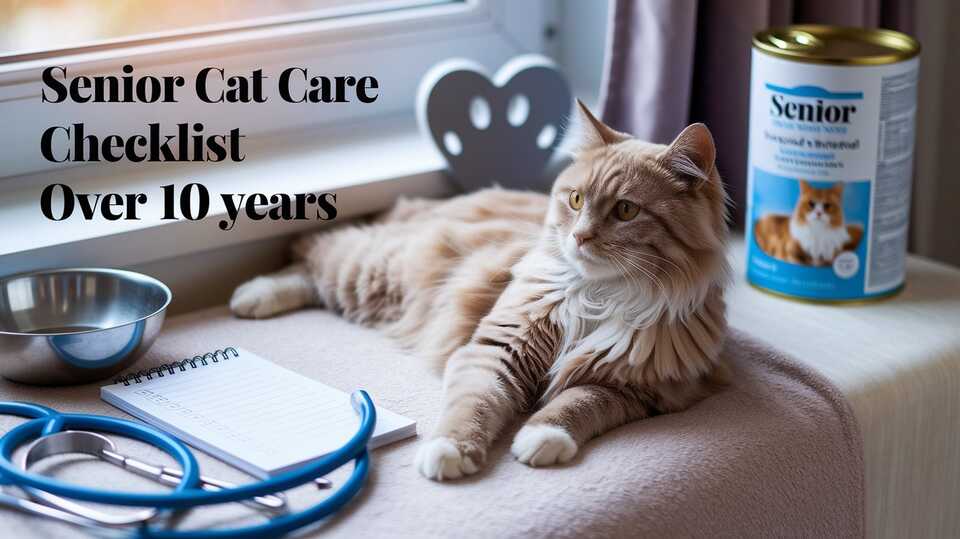
- Your cat is a senior (over 10 years)
- The meowing sounds distressed
- There are any other behavioral or physical changes
Tell your veterinarian about the nighttime meowing, when it started, how frequent it is, and any other symptoms you’ve noticed. They may recommend blood work, urinalysis, blood pressure check, or other diagnostics to rule out medical causes.
Once medical issues are ruled out or addressed, you can focus on behavioral solutions.
Solution 1: Establish a Consistent Routine
Cats thrive on predictability. A consistent daily routine helps them know what to expect and when, which reduces anxiety and helps regulate their internal clock.
Create a schedule that includes:
- Regular feeding times (same time every day)
- Scheduled play sessions (morning and evening)
- Bedtime routine that signals it’s sleep time
- Consistent wake-up time (yes, even on weekends)
Stick to this schedule as closely as possible. Within 2-3 weeks, your cat’s body will adjust to the routine, and they’ll be less likely to wake you at odd hours.
Solution 2: Increase Daytime Activity and Play
A tired cat is a quiet cat. One of the most effective ways to reduce nighttime meowing is to ensure your cat is getting adequate exercise during the day, especially in the evening.
Implement these play strategies:
- Two structured play sessions daily: 15-20 minutes each, morning and evening
- Evening play is crucial: Schedule an intense play session 1-2 hours before your bedtime
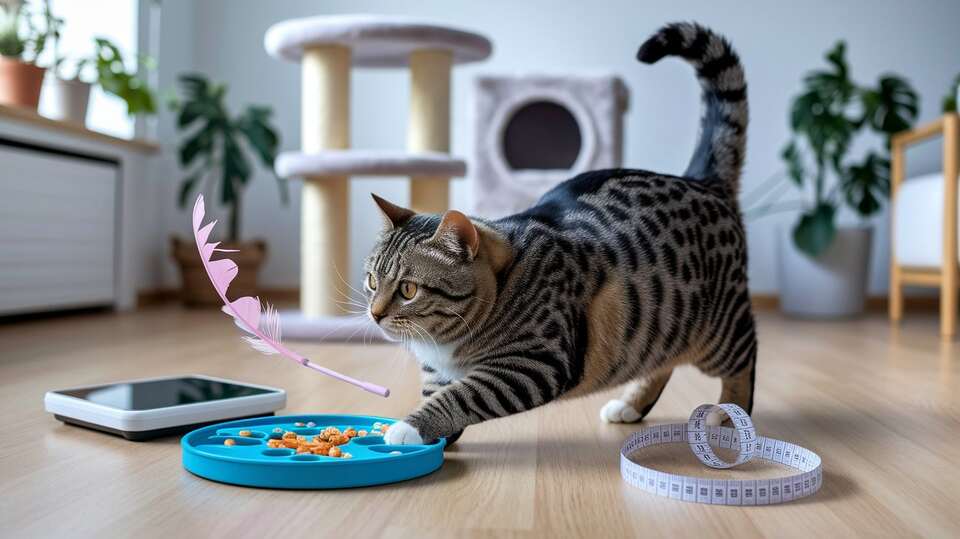
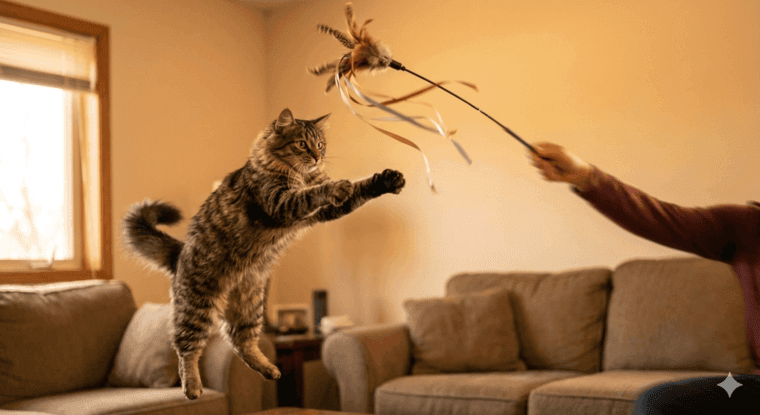
- Make it real: Use interactive toys that mimic prey, feather wands, fishing pole toys, laser pointers (always end with a catchable toy)
- Let them “hunt”: Allow your cat to stalk, chase, pounce, and “catch” the prey
- Let them win: End play sessions with your cat catching and “killing” the toy
- Wind down: After intense play, offer water and then a calm petting session
The goal is to tire your cat out so they’re ready to sleep when you are. A good play session can make an enormous difference in nighttime behavior.
Solution 3: Feed a Substantial Meal Before Bed
Cats naturally sleep after eating (think post-hunt rest in the wild). Use this to your advantage by feeding your cat’s largest meal shortly before your bedtime.
Feeding strategies:
- Feed dinner 30-60 minutes before you go to bed
- Make this meal larger than breakfast (split daily food 40/60 or 30/70)
- Choose high-protein food (promotes satiety)
- Consider an automatic feeder for early morning (set it for 5-6 AM instead of 3 AM)
If your cat is waking you for breakfast at 4 AM, an automatic feeder can be a game-changer. Your cat learns the feeder dispenses food at a specific time, not that meowing at you does.
Solution 4: Provide Nighttime Enrichment
Give your cat appropriate things to do at night that don’t involve waking you up.
Enrichment ideas:
- Puzzle feeders with a few treats hidden inside
- Toys that can be played with independently (balls, mice, crinkle toys)
- Cat-safe videos or “Cat TV” on a tablet
- Window perches for nighttime watching (if safe)
- Rotate toys weekly to maintain interest
The goal is to make nighttime interesting enough that your cat has alternatives to demanding your attention.
Solution 5: Ignore the Meowing (Consistently)
This is the hardest solution but often the most effective for learned behavior. If your cat has trained you to respond to meowing, you need to break that association.
How to implement extinction:
- Never respond to nighttime meowing: No getting up, no talking to your cat, no feeding, no engagement, nothing
- Be prepared for the extinction burst: The behavior will get worse before it gets better. Your cat will meow louder and longer because they’re confused why it’s not working
- Stay consistent: Even one instance of giving in resets all your progress
- Use earplugs or white noise: For your own sanity during the transition
- Expect 2-4 weeks: That’s typically how long it takes for the behavior to significantly decrease
This method requires serious commitment. If you can’t commit to complete consistency, don’t start, inconsistency makes the problem worse.
Solution 6: Environmental Modifications
Make adjustments to your home environment that reduce nighttime meowing triggers.
Consider these modifications:
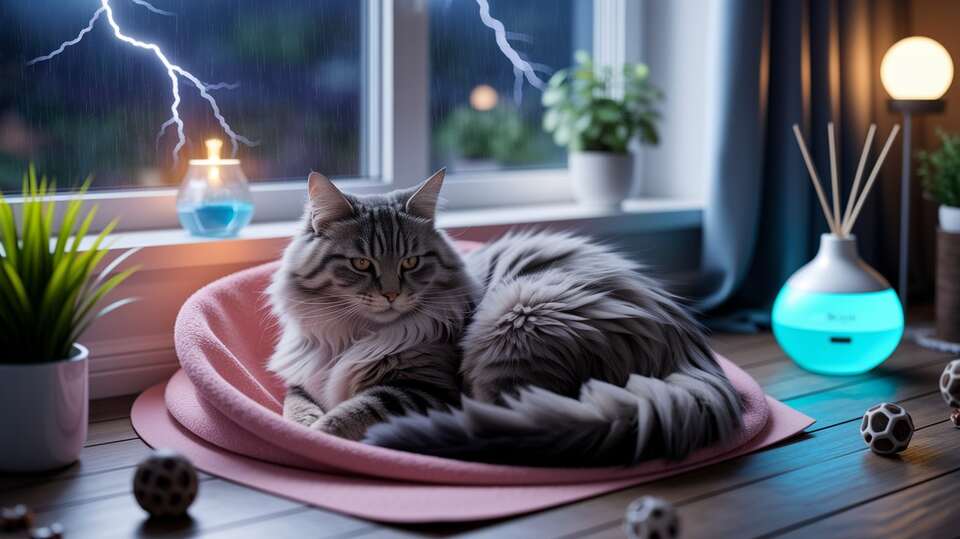
- Nightlights: Especially helpful for senior cats with vision issues or cognitive dysfunction
- White noise machine: Can mask outside sounds that might trigger vocalization
- Comfortable sleeping areas: Multiple cozy spots throughout the home
- Easy access to resources: Water, litter box, and a few treats available at night
- Close curtains/blinds: Prevent your cat from seeing outside cats or wildlife
For senior cats with cognitive issues, leaving a radio or TV on low volume can provide comforting background noise.
Solution 7: Consider a Companion Cat
If your cat’s nighttime meowing stems from loneliness and you’re open to it, a second cat can be a wonderful solution. Cats keep each other company, play together, and generally sleep better when they have feline companionship.
Important considerations:
- Not all cats want a companion, some prefer being solo
- Proper introductions are essential (expect several weeks)
- Two cats mean double the resources needed
- Personality matching matters (consider getting advice from shelter staff)
- This doesn’t work for all nighttime meowing causes
A companion cat is a big decision, so think carefully about whether it’s right for your situation.
Solution 8: Calming Aids and Supplements
For cats with anxiety-related nighttime meowing, calming products can help.
Options to consider:
- Feliway diffusers: Synthetic pheromones that promote calm
- Calming supplements: L-theanine, chamomile, or other natural calming ingredients (consult your vet first)
- Prescription medications: For severe anxiety or cognitive dysfunction, your vet might prescribe medication
Never give your cat any supplement or medication without veterinary approval. What’s safe for humans isn’t always safe for cats.
What NOT to Do When Your Cat Meows at Night
Some common responses actually make nighttime meowing worse. Avoid these mistakes:
Don’t:
- Yell or punish: This creates fear and anxiety but doesn’t stop the behavior. Cats don’t understand punishment
- Give inconsistent responses: Responding sometimes but not others creates confusion and actually increases meowing
- Give in “just this once”: Every time you respond, you reinforce the behavior and reset progress
- Spray water: This damages trust without addressing the underlying cause
- Lock your cat away without preparation: Suddenly confining a cat can create severe anxiety
- Ignore potential medical issues: Always rule out health problems first
Remember, your cat isn’t being spiteful or deliberately annoying you. They’re communicating a need or responding to instinct. Punishment doesn’t address the root cause and often makes things worse.
Special Situations and Specific Solutions
Some scenarios require tailored approaches.
New Kitten Meowing at Night
Kittens cry at night because they’re scared, lonely, or adjusting to their new environment. This is normal and usually temporary.
Help your kitten adjust:
- Provide a warm, safe sleeping area (consider a heated bed)
- Include items with your scent
- Consider keeping them in your bedroom initially
- Use a ticking clock or heartbeat toy to mimic mother’s presence
- Be patient, most kittens adjust within 1-2 weeks
Don’t reward excessive crying, but do ensure they feel secure.
Senior Cat Suddenly Meowing at Night
If your older cat develops nighttime vocalization, prioritize a veterinary exam. Cognitive dysfunction and other age-related conditions are common and treatable.
Support your senior cat:
- Nightlights throughout the house
- Easy access to food, water, and litter
- Veterinary-prescribed supplements or medications for cognitive support
- Extra patience and reassurance
- Consistent routine
- Comfortable, easily accessible sleeping spots
Senior cats with cognitive issues may always have some nighttime vocalization, but it can often be minimized with proper management.
Multi-Cat Household Dynamics
Sometimes one cat starts the nighttime chorus and others join in. Identify which cat is initiating the behavior and address their specific cause.
You may need to separate cats overnight if one is disturbing others, but ensure each cat has access to necessary resources.
Creating a Cat-Friendly Sleep Schedule
The ideal daily routine for reducing nighttime meowing looks like this:
Morning (7-8 AM):
- Wake up at consistent time
- Light play session (5-10 minutes)
- Breakfast
Daytime:
- Provide enrichment (puzzle toys, window perches)
- Access to resources
- If home, midday play session
Evening (6-8 PM):
- Intensive play session (15-20 minutes)
- Dinner
Before Bed (9-10 PM):
- Final play session (10-15 minutes)
- Large meal
- Calm bonding time
- Establish bedtime routine
Bedtime:
- Lights off, quiet environment
- Ignore any meowing
- Consistency every night
This schedule aligns your cat’s peak activity times (dawn/dusk) with when you’re awake, leaving nighttime for sleep.
When Professional Help is Needed
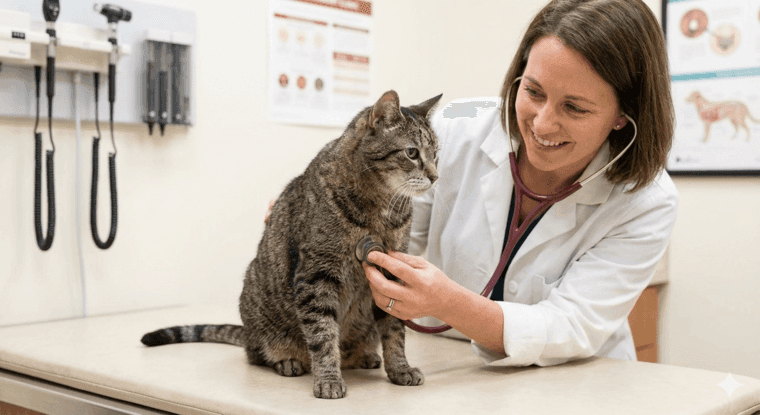
Sometimes DIY solutions aren’t enough. Consult professionals if:
- The meowing is excessive and constant despite consistent efforts
- Your cat shows signs of distress or pain
- Behavioral interventions haven’t helped after 4-6 weeks
- Your cat has been diagnosed with cognitive dysfunction or anxiety
- The situation is affecting your wellbeing seriously
A veterinary behaviorist can provide specialized guidance, prescribe appropriate medications if needed, and create a customized behavior modification plan for complex cases.
Conclusion
Understanding “why does my cat meow at night?“ is the first step toward solving this exhausting problem. Whether your cat is hungry, bored, lonely, or dealing with medical issues, there’s a solution that can help. The key is identifying the specific cause, ruling out health problems, and then implementing appropriate strategies with consistency and patience. Learning how to stop cat meowing at night isn’t about punishing your cat, it’s about meeting their needs in healthier ways and establishing routines that work for everyone.
Remember that change takes time, especially when you’re undoing learned behaviors. Most cats can adjust to new routines within a few weeks if you stay consistent. You deserve good sleep, and your cat deserves appropriate enrichment and care. With the right approach, peaceful nights are absolutely achievable for both of you!
Also Read - Cat Making Weird Breathing Noises When Purring: Should You Worry?
Frequently Asked Questions
Why does my cat meow at my bedroom door at night?
Your cat likely wants access to you for attention, comfort, or because they’ve learned that meowing at the door gets a response. This is very common. Solutions include ignoring the behavior consistently, providing enrichment elsewhere in the home, tiring your cat out before bed, or allowing them to sleep in your room if you’re comfortable with that.
Is it cruel to ignore my cat’s meowing at night?
No, as long as you’ve ruled out medical issues and ensured your cat’s basic needs are met (food, water, clean litter box, safe environment). Ignoring attention-seeking meowing is actually the kindest long-term solution because it teaches your cat a healthier sleep schedule. Responding reinforces the behavior and prevents both you and your cat from getting proper rest.
How long will it take to stop nighttime meowing?
This depends on the cause and your consistency. For learned behavior, expect 2-4 weeks of consistent ignoring before seeing significant improvement. During this time, the meowing may temporarily increase (extinction burst) before decreasing. Medical issues may resolve faster with proper treatment. Senior cognitive issues may require ongoing management rather than complete resolution.
Should I leave food out at night to stop the meowing?
Free-feeding isn’t ideal for most cats and often doesn’t solve meowing because food-motivated cats will still wake you when they want fresh food. A better solution is feeding a large meal before bed and using an automatic feeder for early morning (5-6 AM) so your cat learns the feeder provides food, not meowing at you.
My senior cat meows loudly at night, is this normal?
Increased nighttime vocalization in senior cats can be normal age-related cognitive changes, but it can also indicate medical issues like hyperthyroidism, high blood pressure, or pain. A veterinary exam is essential to rule out treatable conditions. If it’s cognitive dysfunction, your vet can recommend supplements, environmental modifications, and sometimes medication to help manage symptoms.