Introduction
You pick up your cat and notice they feel… heavier than usual. You look down at them from above and realize you can’t see a waist anymore. You try to feel their ribs and… well, there seems to be a bit more cat than there used to be. If this sounds familiar, you’re not alone. Over 60% of cats in the United States are overweight or obese, and indoor cats are particularly susceptible to weight gain.
The good news? You can absolutely help your cat lose weight safely at home. It doesn’t require expensive programs or complicated regimens, just knowledge, consistency, and commitment. In this comprehensive guide, we’ll share indoor cat weight loss tips at home that actually work, covering everything from diet adjustments to exercise strategies and environmental changes.
Your cat’s health and longevity are worth the effort, and with the right approach, you’ll have a healthier, more active feline friend. Let’s get started!
Understanding Cat Obesity: Why Indoor Cats Gain Weight
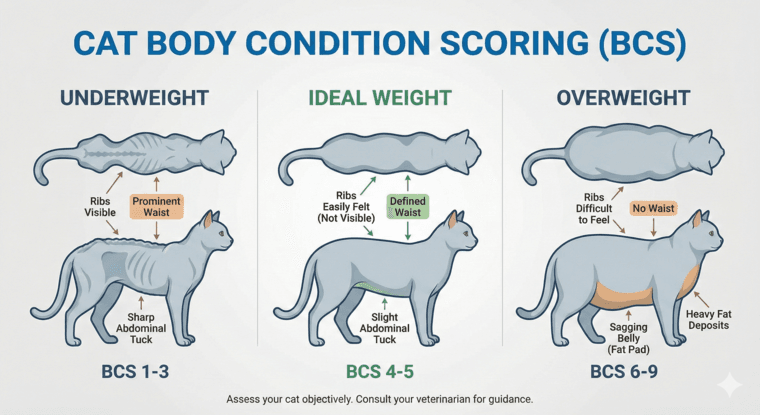
Before diving into solutions, it’s important to understand why indoor cats are prone to weight gain in the first place.
The Indoor Cat Weight Challenge
Indoor cats face a unique set of circumstances that contribute to obesity:
- Limited natural activity: No hunting, patrolling territory, or escaping predators
- Calorie surplus: They consume more calories than they burn through normal activity
- Free-feeding habits: Many cat parents leave food out all day, leading to overeating
- Boredom: Lack of stimulation can lead to eating for entertainment
- Age and metabolism: Older cats have slower metabolisms but often eat the same amounts
- Post-spay/neuter changes: Altered cats have reduced caloric needs
Essentially, indoor cats live sedentary lifestyles while often having unlimited access to food. It’s a recipe for weight gain.
Health Risks of Overweight Cats
Cat obesity isn’t just about appearance, it’s a serious health issue. Overweight cats are at higher risk for:
- Diabetes mellitus: Extra weight affects insulin sensitivity
- Arthritis and joint problems: Extra pounds stress joints and bones
- Fatty liver disease (hepatic lipidosis): Can develop rapidly in overweight cats who stop eating
- Heart disease: Increased strain on the cardiovascular system
- Urinary problems: Obesity increases risk of bladder issues
- Shortened lifespan: Studies show obese cats live an average of 2 years less than healthy-weight cats
- Reduced quality of life: Less mobility, grooming difficulties, decreased playfulness
These risks make weight management crucial for your cat’s wellbeing.
How to Tell if Your Cat is Overweight
You might think you know if your cat is overweight, but it’s helpful to assess objectively:
The rib test: Run your hands along your cat’s sides. You should be able to feel their ribs easily without pressing hard, but they shouldn’t be visibly protruding.
Waist check: Look at your cat from above. There should be a visible waist (narrowing) behind the ribs. If they’re straight or wider, they’re likely overweight.
Belly tuck: View your cat from the side. The belly should tuck up slightly from chest to hips. A sagging belly indicates excess weight.
Breed standards: Different breeds have different healthy weight ranges. A Maine Coon should weigh more than a Siamese, for example.
When in doubt, consult your veterinarian. They can provide a body condition score and tell you exactly how much weight your cat needs to lose.
Why Slow Weight Loss is Crucial
Here’s something critical: cats cannot safely lose weight quickly. Rapid weight loss in cats can trigger hepatic lipidosis (fatty liver disease), a potentially fatal condition where fat accumulates in the liver.
Safe weight loss for cats:
- 1-2% of body weight per week maximum
- For a 15-pound cat, that’s 0.15-0.3 pounds per week
- Expect weight loss to take several months
- Never drastically cut calories or starve your cat
Patience is essential. This is a marathon, not a sprint.
Step 1: Consult Your Veterinarian First
Before starting any weight loss program, schedule a vet visit. This isn’t optional, it’s essential for safe, effective weight loss.
Why Professional Guidance is Essential
Your veterinarian will:
- Rule out medical causes of weight gain (hypothyroidism, Cushing’s disease)
- Determine your cat’s ideal target weight
- Calculate appropriate daily calorie intake
- Check for complications like diabetes or arthritis
- Create a safe timeline for weight loss
- Provide guidance on the best diet for indoor cats to lose weight
What to Expect at the Vet Visit
During the appointment, your vet will:
- Weigh your cat accurately
- Perform a body condition assessment
- Discuss your cat’s current diet and activity level
- Calculate calorie needs for weight loss
- Recommend specific foods or feeding strategies
- Schedule follow-up appointments for monitoring
Setting Realistic Goals
Your vet will help you set achievable targets. For example, a 15-pound cat with an ideal weight of 11 pounds should lose about 0.2 pounds per week, taking approximately 20 weeks to reach goal weight.
Having professional guidance keeps your cat safe and increases the likelihood of success.
Best Diet for Indoor Cats to Lose Weight: Nutrition Strategies
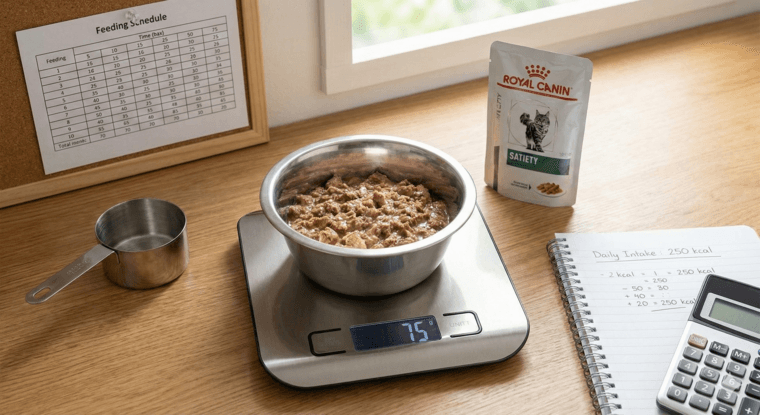
Diet is the foundation of any weight loss plan. You can’t out-exercise a bad diet, and the same is true for cats.
Understanding Cat Nutritional Needs
Cats are obligate carnivores, meaning they require animal protein to thrive. When choosing the best diet for indoor cats to lose weight, remember:
- High protein is essential: Maintains muscle mass while losing fat
- Moderate fat: Provides energy and satiety
- Low carbohydrates: Cats have limited ability to process carbs
- Adequate water: Hydration supports metabolism and overall health
Weight loss food should keep your cat feeling satisfied while reducing calories.
Choosing the Right Weight Loss Food
You have several options:
Prescription weight loss diets: Veterinary formulas specifically designed for weight loss, like Hill’s Metabolic or Royal Canin Weight Control. These are scientifically formulated but more expensive.
High-quality commercial foods: Look for foods with:
- 40%+ protein content
- Limited carbohydrates
- Real meat as first ingredient
- Minimal fillers
Wet food vs. dry food: Wet food generally has fewer calories per volume, more protein, and higher water content. Many vets recommend switching to primarily or all wet food for weight loss.
Current food with portion control: If your cat is on quality food, you might just need to reduce portions rather than switch foods.
Calculating and Measuring Portions
This is where most cat parents go wrong. “Eyeballing” portions doesn’t work.
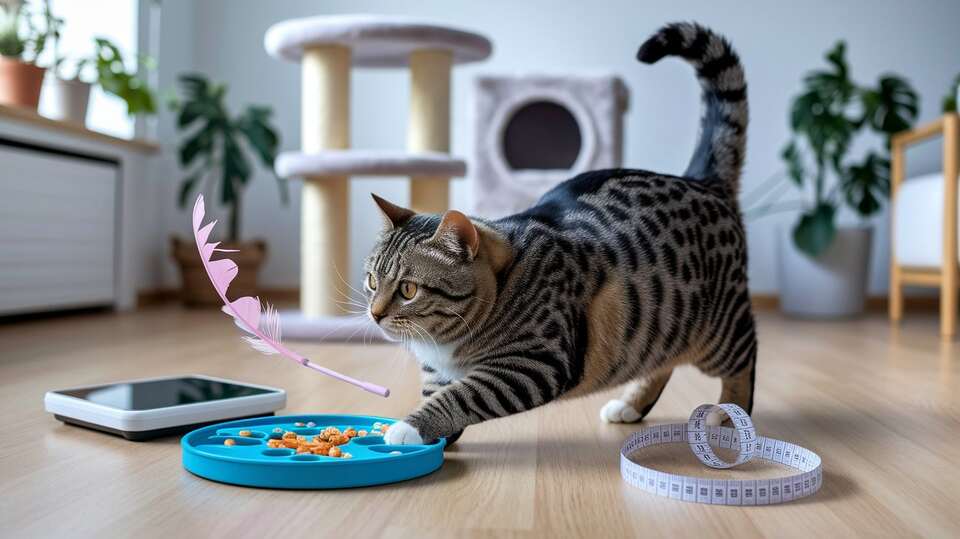
Get a kitchen scale: Measure food in grams, not cups. Cup measurements are notoriously inaccurate.
Calculate daily calories: Your vet will provide this, but generally:
- Multiply ideal weight (in pounds) by 20-30 calories
- For weight loss, use 20 calories per pound of ideal weight
- Example: 11-pound ideal weight × 20 = 220 calories per day
Divide into multiple meals: Split daily food into 3-4 small meals rather than one or two large ones. This keeps metabolism active and reduces begging.
Track everything: Every piece of food, every treat, it all counts.
The Meal Schedule Approach
If your cat has been free-feeding, transitioning to scheduled meals is one of the most effective indoor cat weight loss tips at home you can implement.
Benefits of scheduled feeding:
- Complete control over portions
- Prevents grazing and overeating
- Establishes routine
- Makes multi-cat feeding easier
- Allows monitoring of appetite
Implementation:
- Gradually reduce food availability (don’t go cold turkey)
- Establish 3-4 set feeding times
- Offer food for 20-30 minutes, then remove
- Stay consistent with timing
- Ignore begging between meals
Treats and Snacks: What’s Allowed
Treats can derail weight loss plans quickly. Follow these rules:
- Limit to 10% of daily calories maximum
- Use your cat’s regular food kibble as “treats”
- Try low-calorie options like small pieces of cooked chicken or freeze-dried meat
- Never give in to begging, it only reinforces the behavior
- Consider using play and affection as rewards instead of food
Remember: Your cat doesn’t need treats to be happy. They need a healthy weight and long life.
How to Help Overweight Cat Lose Weight: Exercise and Activity
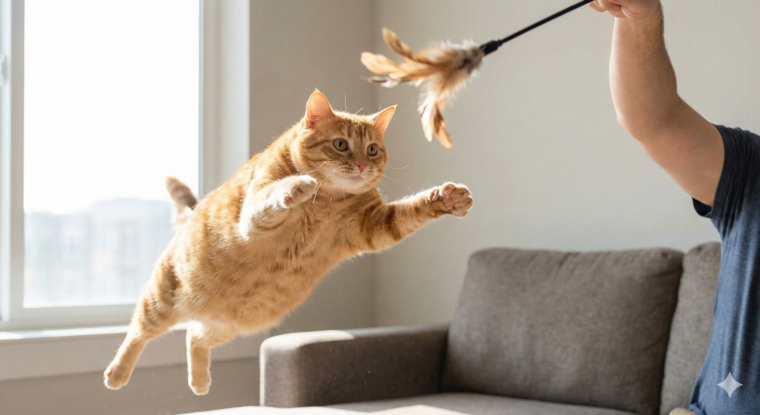
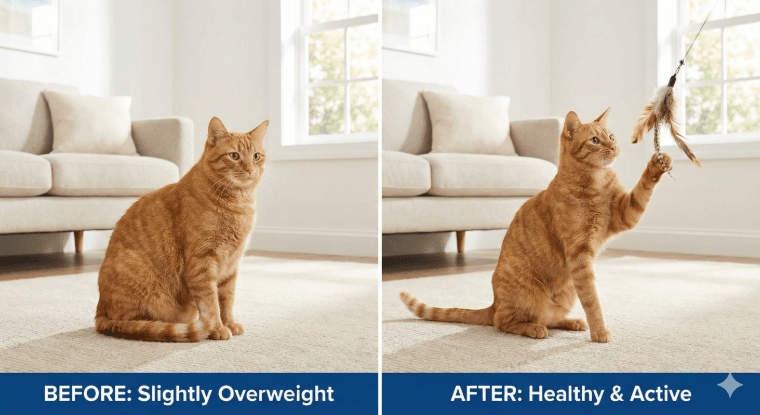
While diet is the primary driver of weight loss, activity is crucial for maintaining muscle mass, boosting metabolism, and improving overall health.
Why Exercise Matters for Indoor Cats
Physical activity:
- Burns additional calories
- Builds and maintains muscle mass (which burns more calories at rest)
- Increases metabolism
- Provides mental stimulation that reduces boredom eating
- Improves mobility and joint health
- Enhances quality of life
Interactive Play Sessions
This is your most powerful tool for increasing activity. Aim for at least 15-20 minutes of active play twice daily, morning and evening.
Best toys for exercise:
- Wand toys with feathers: Mimics birds, engages hunting instinct
- Fishing pole style toys: Allows you to create realistic prey movements
- Laser pointers: Great for running, but always end with a catchable toy
- Balls and mice: For cats who enjoy batting and chasing
Tips for successful play:
- Mimic prey movements (darting, hiding, sudden movements)
- Let your cat “catch” the prey occasionally
- End sessions with a catch and a small meal (simulates hunt-eat-groom-sleep cycle)
- Keep sessions short but intense
- Adjust to your cat’s fitness level, building up gradually
For lazy or reluctant cats:
- Start with just 5 minutes
- Try different toy types to find what excites them
- Use catnip or silvervine to spark interest
- Be patient, some cats take time to engage
Creating a Cat-Friendly Exercise Environment
Your home setup can encourage natural movement throughout the day.
Environmental enrichment:
- Cat trees and shelves: Vertical space encourages climbing
- Window perches: Entertainment through bird-watching
- Multiple levels: Place resources (water, toys) on different floors or heights
- Tunnels and hideaways: Encourage exploration and play
DIY options on a budget:
- Cardboard boxes with holes
- Paper bags (handles removed)
- Crumpled paper balls
- DIY rope scratching posts
- Toilet paper roll puzzle feeders
Food Puzzles and Foraging
Make mealtime an activity! Food puzzles slow down eating, provide mental stimulation, and add physical activity to feeding.
Options:
- Commercial puzzle feeders (various difficulty levels)
- DIY: Toilet paper rolls with ends folded, holes cut in cardboard boxes
- Scatter feeding: Hide small portions around the house
- Foraging mats
- Treat balls that dispense food when rolled
This taps into natural hunting behavior while making meals more satisfying and longer-lasting.
Exercise for Senior or Arthritic Cats
Older cats or those with joint problems need modified activity:
- Shorter, more frequent play sessions (5-10 minutes, 3-4 times daily)
- Low-impact toys (no jumping required)
- Ground-level laser pointer games
- Gentle movements rather than intense running
- Consider joint supplements or pain medication (consult vet)
- Focus on mental enrichment if physical activity is very limited
Never force activity that causes pain or distress.
Indoor Cat Weight Loss Tips at Home: Environmental Strategies
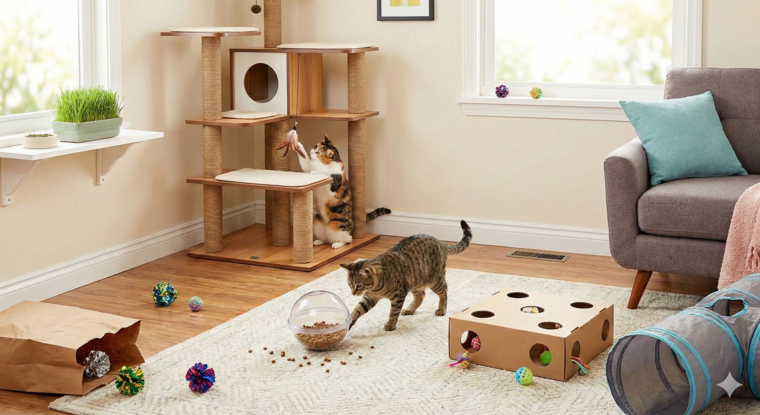
Beyond diet and exercise, environmental management supports weight loss success.
Enrichment for Mental Stimulation
Bored cats often eat out of nothing better to do. Reducing boredom reduces unnecessary eating.
Enrichment ideas:
- Window bird feeders for entertainment
- Cat TV videos (birds, fish, squirrels)
- Rotating toys weekly to maintain novelty
- Catnip or silvervine toys
- Safe supervised outdoor time (catio, leash walking, enclosed outdoor space)
- New climbing structures or rearranging furniture
Multi-Cat Household Challenges
If you have multiple cats with different weights or dietary needs, feeding time requires strategy.
Solutions:
- Feed cats in separate rooms with doors closed
- Use microchip-activated feeders (opens only for designated cat)
- Supervise all feeding times
- Feed overweight cat first, then others
- Elevated feeding stations for normal-weight cats (overweight cat can’t jump up)
It takes extra effort, but it’s essential for successful weight management.
Managing Begging Behavior
Your cat will likely protest reduced food. Steel yourself for this reality.
How to handle begging:
- Never give in, even once undermines everything
- Ensure all family members are on the same page
- Redirect to play instead of food
- Ignore food-seeking meows completely
- Stick to your feeding schedule religiously
- Remember: your cat is not starving, even if they act like it
The begging will eventually decrease if you’re consistent.
Water Intake Enhancement
Adequate hydration supports weight loss and overall health.
Encourage drinking:
- Multiple water bowls throughout the house
- Cat water fountains (many cats prefer running water)
- Wet food provides significant hydration
- Add water to wet food for even more moisture
- Ice cubes in water as enrichment
Well-hydrated cats have better metabolism and kidney function.
Tracking Progress and Staying Motivated
Weight loss is a long journey. Tracking progress keeps you motivated and allows necessary adjustments.
How to Monitor Weight Loss
Weekly or bi-weekly weigh-ins:
- Use a home scale (weigh yourself holding cat, then subtract your weight)
- Or use a pet scale for more accuracy
- Weigh at same time of day
- Record results in a journal or app
Monthly vet visits initially:
- Professional weighing
- Body condition reassessment
- Diet adjustment if needed
- Health monitoring
Other indicators:
- Body condition score changes
- Increased energy and playfulness
- Improved mobility
- Better coat condition
- Easier grooming (they can reach everywhere)
Celebrating Non-Scale Victories
Sometimes the scale doesn’t move but other improvements occur:
- Your cat plays more enthusiastically
- They can jump onto surfaces they couldn’t before
- They groom themselves better
- They’re more social and active
- Their breathing is less labored
These victories matter as much as the number on the scale!
What to Do if Weight Loss Stalls
Plateaus are normal. If weight loss stops for 3-4 weeks:
- Reassess calorie intake (are you measuring accurately?)
- Check for sneaky treats from family members or neighbors
- Increase activity incrementally
- Consult your vet for plan adjustment
- Be patient, sometimes the body just needs time
Don’t drastically cut calories further without veterinary guidance.
Common Mistakes to Avoid
Learning how to help overweight cat lose weight means avoiding these common pitfalls:
Too-Rapid Weight Loss
Never aim to lose weight faster than 1-2% per week. The hepatic lipidosis risk is real and potentially fatal. Gradual weight loss is the only safe option.
Free-Feeding During Weight Loss
Leaving food out all day makes portion control impossible. Transition to meal feeding for weight loss success.
Giving In to Begging
Every time you give in, you reset your progress and teach your cat that persistent begging works. Stay strong. Your cat will not starve.
Not Measuring Food Accurately
Using cups instead of a scale, eyeballing portions, or “just adding a little more” sabotages your efforts. Precision matters.
Assuming Activity = Can Eat More
Don’t fall into the trap of thinking “they played hard today, they can have extra food.” Stick to your calculated portions. Exercise is a bonus for health, not a trade for more calories.
Neglecting Veterinary Follow-Up
Regular check-ins ensure safe progress, allow plan adjustments, and catch any developing health issues. Don’t skip these appointments.
Special Considerations
Some cats require modified approaches based on their circumstances.
Senior Cats and Weight Loss
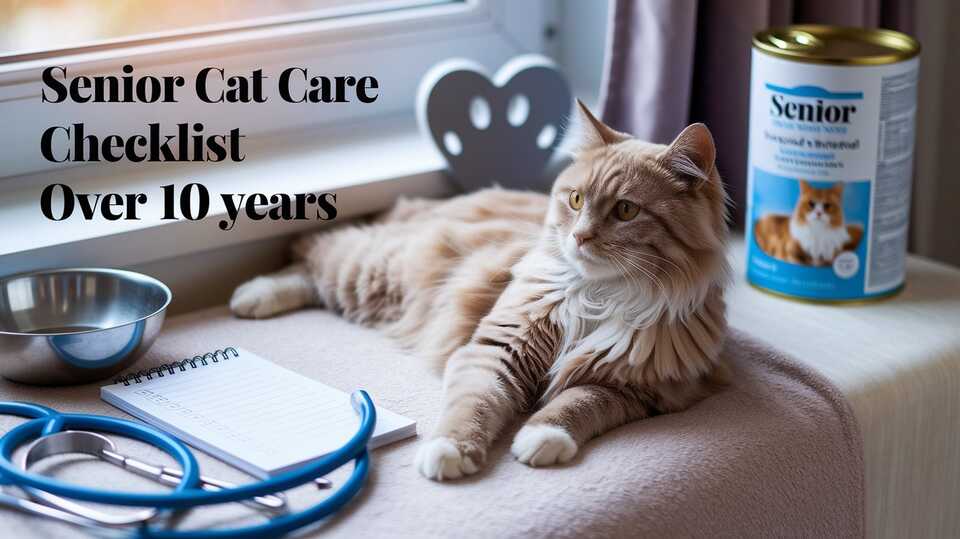
Older cats (11+ years) need special consideration:
- Slower weight loss timeline
- Higher protein to preserve muscle mass
- Gentler exercise adapted to mobility
- More frequent vet monitoring
- Consideration of age-related conditions
Senior cats can successfully lose weight but require extra care and patience.
Cats with Health Conditions
Diabetes: Weight loss often improves or resolves diabetes, but requires careful monitoring of blood sugar and insulin doses.
Kidney disease: Requires special diets; weight loss must be coordinated with kidney disease management.
Arthritis: Joint supplements or pain medication may be needed before increasing activity.
Always work closely with your vet when managing weight loss alongside other health conditions.
After Spaying/Neutering
Altered cats have reduced caloric needs (about 25-30% less). Proactively reduce food portions after surgery to prevent weight gain rather than having to fix obesity later.
Sample Daily Schedule
Here’s what a successful weight loss day might look like:
7:00 AM: Interactive play session (10-15 minutes), followed by measured breakfast
12:00 PM: Small measured lunch + puzzle feeder with portion of daily food
5:00 PM: Intensive play session (15-20 minutes), enrichment activities
9:00 PM: Measured dinner (largest meal of day)
Throughout day: Access to water, puzzle toys, cat tree, window viewing
Total daily food: Whatever your vet calculated (e.g., 220 calories) divided across all meals and enrichment activities
Consistency with this schedule yields results over time.
Conclusion
Implementing effective indoor cat weight loss tips at home requires commitment, but the payoff, a healthier, more active cat with better quality of life and potentially years added to their lifespan, is absolutely worth it. Understanding the best diet for indoor cats to lose weight, combined with increased activity and environmental enrichment, creates a comprehensive approach that works. Remember, learning how to help overweight cat lose weight is a marathon, not a sprint, requiring patience, consistency, and collaboration with your veterinarian.
Your cat is counting on you to help them achieve a healthy weight. With the strategies outlined in this guide, you have everything you need to succeed. Start today, stay consistent, and celebrate every small victory along the way. Your cat’s future health depends on the choices you make now, and they’re worth every bit of effort!
Also Read - Why Does My Cat Follow Me to the Bathroom Every Time?
Frequently Asked Questions
How long does it take for an indoor cat to lose weight safely?
Expect several months for significant weight loss. A cat losing 1% body weight per week (the safe rate) will take about 20-30 weeks to lose 20-30% of their body weight. Patience is essential, this is about long-term health, not quick fixes.
Can I give my cat vegetables or ‘diet’ human food?
Cats are obligate carnivores and don’t need vegetables. Some cats enjoy small amounts of cooked plain vegetables (pumpkin, green beans), but these shouldn’t comprise significant portions of their diet. Never give onions, garlic, grapes, or other toxic foods. Stick to cat-appropriate foods.
My cat acts starving on reduced calories, is this normal?
Yes, very normal! Cats are dramatic and will act like they’re dying of starvation even on appropriate portions. As long as you’re feeding the calories your vet calculated and your cat is losing weight gradually, the “starvation act” is just that, an act. Stay consistent.
Should I switch to a prescription weight loss food?
Prescription diets are formulated for weight loss with ideal protein/fat/carb ratios and portion guidance. They’re convenient but expensive. High-quality commercial foods with proper portion control can also work. Discuss with your vet what makes sense for your budget and cat’s needs.
What if my cat won’t exercise or play?
Some cats are truly couch potatoes. Start with just 3-5 minutes of gentle play daily. Try different toy types, some cats prefer ground prey (mice) vs. aerial prey (birds). Use catnip or silvervine for motivation. Focus heavily on diet since exercise may be limited. Even sedentary cats can lose weight with proper portion control.