
Introduction
You’ve found the perfect cat. You’ve filled out the lengthy adoption application, provided references, and jumped through all the hoops. Then comes the message: “We’d like to schedule a home visit.” Suddenly, you’re looking around your apartment with fresh eyes, wondering if it’s “good enough” and feeling nervous about being judged.
If you’re feeling anxious about an upcoming adoption home visit, you’re not alone. Many prospective cat parents find home inspections intimidating, worrying that their home won’t measure up or that they’ll somehow fail. But here’s the truth: home visits aren’t designed to be gatekeeping exercises or opportunities to judge your lifestyle. They exist to ensure the safety and wellbeing of cats while helping match the right cat to the right home.
This comprehensive cat adoption home visit guide will walk you through exactly what to expect, what rescue groups look for in home visits, and how to prepare your home for a new cat. By the end, you’ll feel confident and ready to ace your home inspection and welcome your new feline friend.
Why Rescue Groups Conduct Home Visits

Before we dive into preparation, let’s understand why these visits happen in the first place.
The Purpose Behind Home Checks
Home visits serve multiple important functions:
Ensuring cat safety: The primary goal is verifying that the environment is safe for a cat, no obvious hazards, secure windows, and proper living conditions.
Verifying information: Rescue groups want to confirm that what you described in your application matches reality. Do you actually have the space you mentioned? Is your landlord truly on board?
Assessing compatibility: A home visit helps determine if a specific cat’s needs match your environment. A shy cat might not thrive in a chaotic household with young kids, while a high-energy cat needs adequate space and enrichment.
Building relationships: This is often your first face-to-face interaction with the rescue. It’s an opportunity for both parties to ask questions, establish trust, and start a supportive relationship.
Providing education: Home visitors often offer valuable advice on cat-proofing, product recommendations, and behavior insights you might not get otherwise.
Here’s what it’s NOT about: Your decorating style, whether your house is perfectly clean, how expensive your furniture is, or whether you’re the “perfect” cat owner. Rescue groups understand that homes are lived-in spaces, and they’re looking for safety and commitment, not perfection.
Benefits for Adopters Too
While it might feel one-sided, home visits actually benefit you as well:
- Get expert, personalized advice on preparing your specific home
- Ask detailed questions about the cat in your actual environment
- Identify potential issues before bringing the cat home
- Receive recommendations tailored to your space and lifestyle
- Build confidence that you’re making the right choice
Think of it less as an inspection and more as a consultation with someone who wants you to succeed.
Types of Home Visits
Not all home visits are the same:
In-person pre-adoption visits: The most thorough option, where someone from the rescue physically tours your home before approving the adoption.
Virtual home tours: Increasingly common post-pandemic, these involve video calls where you show your home via phone or tablet camera.
Post-adoption check-ins: Some rescues do follow-up visits after adoption to ensure the cat has settled in well.
No visit at all: Many municipal shelters and some rescues don’t conduct home visits, relying instead on applications and interviews.
The rigor varies significantly by organization. Small, volunteer-run rescues and breed-specific organizations tend to be most thorough, while larger shelters often lack resources for home visits.
What Rescue Groups Look for in Home Visits: Key Assessment Areas
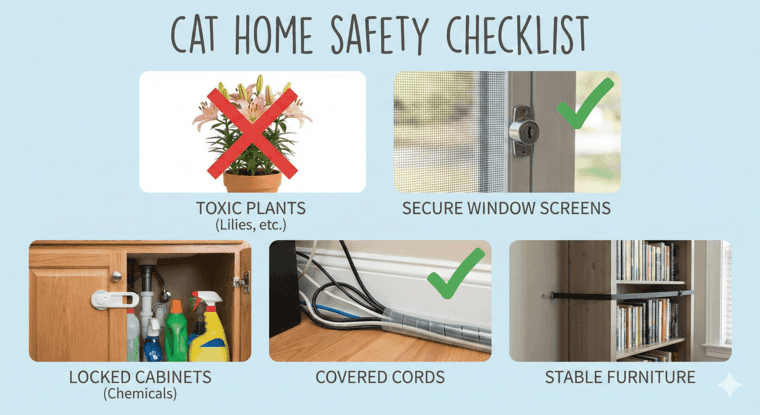
Understanding what assessors are evaluating helps you prepare effectively. Here’s what they’re actually checking.
Safety and Security
This is the number one priority in any cat adoption home visit guide.
Windows and balconies:
- Are window screens intact and secure?
- High-rise apartments: Is there balcony netting or restrictions to prevent falls?
- Can a determined cat push out screens or slip through gaps?
- Are there easy escape routes?
Toxic hazards:
- Toxic plants (lilies are deadly to cats, along with sago palms, azaleas, and others)
- Cleaning products stored accessibly under sinks
- Medications left on counters or nightstands
- Pest control chemicals within reach
- Essential oil diffusers (many are toxic to cats)
Physical hazards:
- Unstable furniture that could tip over
- Exposed electrical cords (chewing hazard)
- Small objects on floors that could be swallowed
- Unsafe hiding spots (behind appliances where cats could get trapped)
- Unprotected fireplaces
Most of these are easy fixes, and assessors often point them out so you can address them before bringing the cat home.
Living Space and Environment
Adequate space: This isn’t about square footage. A small studio apartment can be perfect for a cat with proper enrichment, while a large house can be inadequate if it lacks cat-friendly features. Assessors look for:
- Room for litter box(es) away from food/water
- Space for scratching posts and play
- Quiet areas where cats can retreat
- Potential for vertical territory (shelves, cat trees)
Climate control: Is your home adequately heated in winter and cooled in summer? Extreme temperatures are a concern, especially for senior cats or certain breeds.
Household activity level: They’ll assess whether your home’s energy matches the cat’s temperament. A calm, quiet apartment suits a shy cat, while a busy household might be perfect for a social, playful feline.
Existing Pets
If you have other cats or dogs, assessors will ask about:
- Temperament and socialization of current pets
- Vaccination and health status
- History of accepting new animals
- Space for proper introductions (separate rooms initially)
- Sufficient resources (litter boxes, food bowls, territory)
They’re not looking for perfect angels, just assessing compatibility and ensuring you understand proper introduction protocols.
Lifestyle Compatibility
Work schedules: Most people work full-time, and that’s perfectly acceptable. Assessors want to know:
- How many hours daily the cat will be alone
- Your plan for enrichment during those hours
- Whether someone can check in if you work very long shifts
Travel frequency: Occasional vacations are fine. Regular, extended absences may require discussion about care arrangements.
Long-term stability: While no one can predict the future, assessors look for reasonable stability in housing, relationships, and finances. They want confidence you’ll still be able to care for the cat in five, ten, or fifteen years.
Financial readiness: Can you afford routine veterinary care, unexpected emergencies, quality food, and supplies? You don’t need to be wealthy, but you need realistic understanding of costs.
Commitment Indicators
Assessors are gauging your understanding and commitment through:
- How well you understand cat behavior and needs
- Whether expectations are realistic (cats scratch, sometimes knock things over, aren’t perfectly obedient)
- Your plan for behavioral challenges
- Whether all household members genuinely want the cat
- Understanding of the 15-20 year commitment
The best thing you can bring to a home visit? Genuine enthusiasm, realistic expectations, and demonstrated willingness to learn.
Preparing Home for New Cat: Room-by-Room Checklist

Now let’s get practical. Here’s how to prepare your space before the home visit.
General Home Preparation
Before diving into specific rooms:
- Do a light cleaning (not deep scrubbing, lived-in is fine)
- Walk through your home from a cat’s perspective (get down low, look for hazards)
- Secure or remove obvious dangers
- Set up basic supplies in their designated spots
Kitchen
- Trash: Use a can with a secure lid or store under sink with childproof lock
- Cabinets: Install locks on any cabinets containing cleaning supplies, chemicals, or toxic foods
- Counters: Remove toxic foods (onions, garlic, chocolate, grapes)
- Under sink: This is where most people store hazardous cleaners, secure it
- Appliances: Keep dishwasher and oven closed when not actively using
Bathroom
- Medications: Move to locked cabinet or high shelf
- Toilet: Keep lid down (some cats drink from toilets, risking chemical exposure if you use cleaners)
- Cleaners: Secure or remove toxic products
- Small items: Remove hair ties, cotton swabs, dental floss (choking/obstruction hazards)
- Escape prevention: Ensure cats can’t get trapped in cabinets
Living Areas
- Plants: Remove or elevate any toxic species, or replace with cat-safe alternatives
- Blind cords: Secure or cut loops (serious strangulation hazard)
- Fragile items: Temporarily relocate precious items, cats will test surfaces
- Scratching posts: Place at least one in main living area
- Cat tree or shelves: Set up vertical territory if possible
- Feeding station: Designate and set up food/water area away from litter box
Bedrooms
- Floor hazards: Pick up small items (rubber bands, buttons, jewelry)
- Furniture: Secure dressers and bookcases to walls if they could tip
- Closets: Ensure doors stay open or fully closed (cats trapped in closing doors can panic)
- Hiding spots: Create safe spaces under beds or in closets where cats can retreat
- Litter box: If placing in bedroom, set up in designated corner
Laundry and Utility Areas
- Washer/dryer: Always check before using, cats love napping in warm, dark spaces
- Chemicals: Lock away detergents, bleach, fabric softeners
- Vents: Cover floor vents or ensure they’re secure
- Water heaters: Ensure cats can’t access dangerous equipment
Outdoor Spaces
If you have a yard or balcony:
- Fencing: Check for gaps where cats could escape
- Toxic plants: Remove or restrict access to dangerous outdoor plants
- Gates: Ensure they close securely
- Balcony: Consider netting for high-rise apartments
- Catio: If you’ve built enclosed outdoor space, show it off!
Remember: You don’t need to be perfect. If an assessor identifies an issue, simply address it before bringing the cat home.
Essential Supplies to Have Ready

Having supplies ready shows you’re prepared and committed. Here’s what matters for your cat adoption home visit guide preparation.
Must-Have Items Before Home Visit
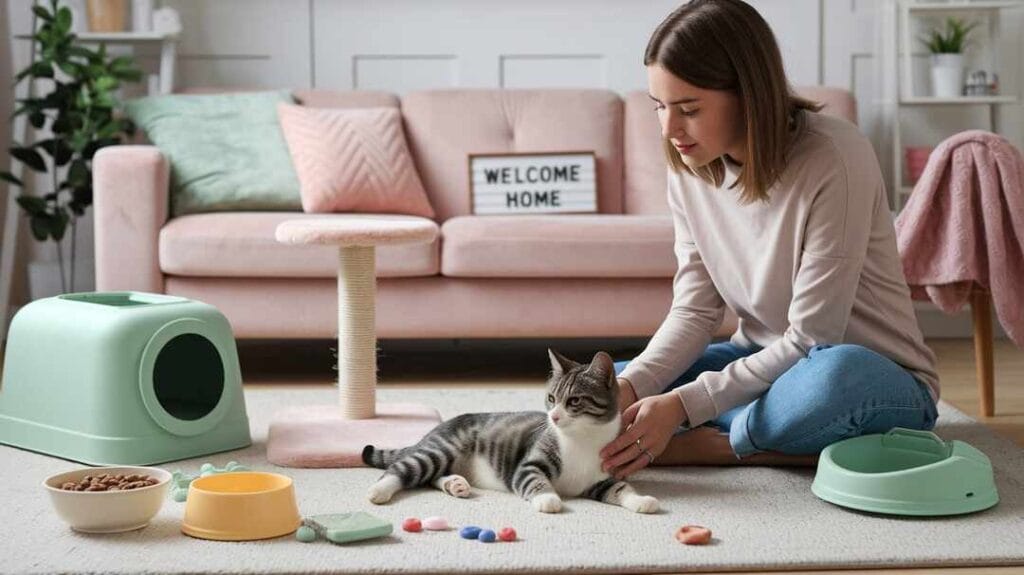
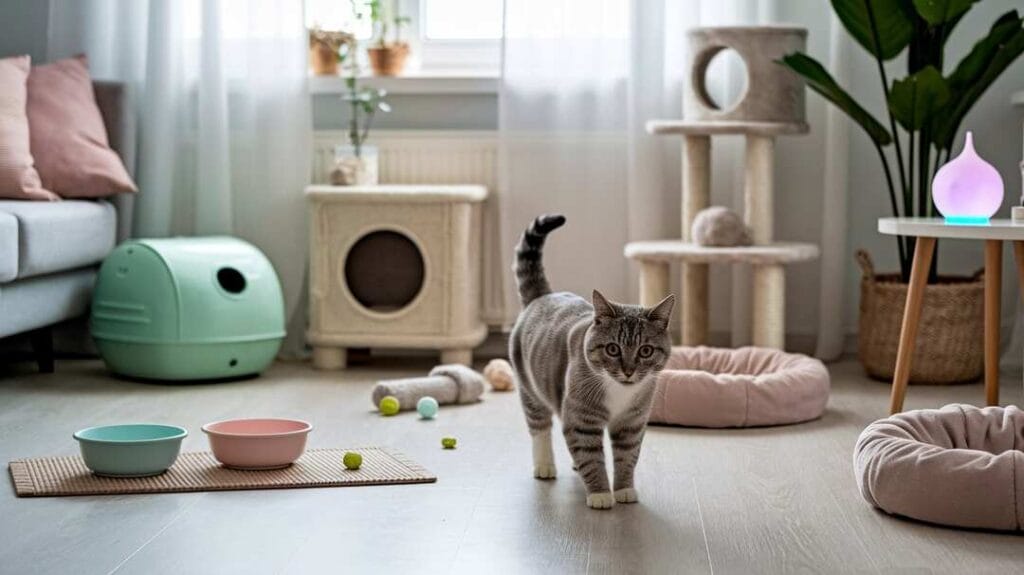
Litter boxes: At minimum, one box. Ideally, two if space allows (rule of thumb: one per cat plus one extra).
Litter: Unscented, clumping litter is most popular. Have at least one bag.
Food and water bowls: Ceramic or stainless steel preferred (plastic can harbor bacteria and cause chin acne).
Cat food: Ask the rescue what the cat currently eats, and have a supply ready for consistency.
Scratching posts: Multiple scratching surfaces (vertical and horizontal, different materials).
Carrier: Essential for bringing the cat home and future vet visits. Hard-sided is most secure.
ID collar with tag: Even indoor cats need identification in case they escape.
Basic toys: A few different types (wand toys, balls, mice) to discover preferences.
Hiding spots: A box, cat bed, or tunnel where the cat can feel secure.
First aid kit: Basic supplies including the rescue’s contact info and nearest emergency vet.
Nice to Have
- Cat tree or climbing furniture
- Window perches
- Puzzle feeders for enrichment
- Nail trimmers
- Grooming brush
- Cat-safe cleaning supplies (enzyme cleaners for accidents)
What You Don’t Need Yet
Don’t stress about having everything. You don’t need:
- Twenty different toys (start simple, add later)
- Expensive cat furniture (can upgrade once you know preferences)
- Specialty items until you know your cat’s needs
The basics show you’re prepared; you can add to your collection based on your individual cat’s personality.
The Home Visit Day: What Actually Happens
Let’s walk through a typical home visit so there are no surprises.
Before the Visit
Light tidying: Clean litter boxes if they’re set up, do dishes, vacuum if needed. But don’t stress about perfection, assessors understand that people live in their homes.
Make supplies visible: Don’t hide everything in closets. Having litter box, scratching post, and bowls visible shows you’re ready.
Prep family members: Ensure everyone knows the visit is happening and is available to meet the assessor.
Prepare questions: Write down questions you want to ask about the specific cat.
During the Visit: Step-by-Step
1. Introduction (5-10 minutes): The assessor arrives, you chat briefly, they explain what the visit will entail. This helps everyone relax and sets expectations.
2. Home tour (15-30 minutes): You’ll walk through your home together, usually hitting main living areas, where litter box and food will be located, and any areas where the cat will spend time. The assessor is checking for:
- Safety hazards
- Adequate space and resources
- Whether setup matches what you described
- Suitability for the specific cat
3. Discussion (15-30 minutes): Sit down for conversation covering:
- Why you want this cat
- Your experience with cats
- Daily routine and who cares for the cat
- Plans for veterinary care
- How you’ll handle challenges
- Questions about the cat’s personality, health, needs
4. Meeting household members: If you have kids, other pets, or roommates, the assessor will want to meet them and assess everyone’s readiness.
5. Wrap-up (5-10 minutes): Review of next steps, timeline for decision, any follow-up needed.
Total time typically ranges from 45 minutes to 90 minutes, depending on the organization and complexity of your situation.
Questions You Might Be Asked
Expect questions like:
- What appeals to you about adopting this particular cat?
- Have you owned cats before? What happened to them?
- Who will be the primary caregiver?
- What’s your budget for veterinary care?
- How will you handle scratching or litter box issues?
- What happens if your circumstances change (moving, new job, baby)?
- Is everyone in the household on board with adopting?
- Do you plan to declaw? (The correct answer is no, it’s harmful and many rescues won’t adopt to people who plan to declaw)
Be honest and thoughtful. There are no “trick” questions, they’re genuinely trying to understand your commitment and preparedness.
What to Ask Them
Your turn to interview them! Ask about:
- The cat’s medical history and any ongoing needs
- Behavioral quirks, fears, or preferences
- Current diet and feeding schedule
- Integration tips for your specific home
- What support the rescue offers post-adoption
- Return or rehoming policy if it doesn’t work out
- Whether there’s a trial period
Good rescues want you to succeed and will be happy to answer thoroughly.
Common Concerns That Usually Aren’t Deal-Breakers
Let’s address worries that keep people up at night but rarely prevent adoptions.
Things That Worry Adopters But Are Usually Fine
Renting instead of owning: Totally normal! Just provide a letter from your landlord confirming pets are allowed and any restrictions (weight, number, deposit).
Small apartment: Absolutely acceptable. Many cats thrive in apartments with proper enrichment. It’s about quality of space, not quantity.
Working full-time: Almost everyone works! As long as the cat won’t be alone 12+ hours daily and you provide enrichment, this is standard.
First-time cat owner: Willingness to learn matters more than experience. Rescues often prefer placing cats with eager learners over experienced but complacent owners.
Having other pets: Often preferred! Many cats benefit from companionship, and responsible multi-pet households are great adopters.
Young children: Depends on the cat and child’s age/training, but many families with kids successfully adopt. It’s about matching the right cat to the right family.
Actual Red Flags
Things that DO concern rescues:
- Stating you plan to declaw
- Wanting to let the cat roam outdoors unsupervised
- Resistance to veterinary care or vaccinations
- Adopting as a “gift” without the recipient’s involvement
- Major inconsistencies between application and reality
- Genuinely dangerous living conditions
- Household members vocally opposed to the cat
- Completely unrealistic expectations
If you’re reading this article and genuinely care about providing a good home, you’re probably not raising any red flags.
Virtual Home Visits: The Digital Alternative
Post-pandemic, many rescues now offer virtual options, making this cat adoption home visit guide relevant for digital tours too.
How Virtual Visits Work
You’ll schedule a video call (Zoom, FaceTime, Google Meet) and walk through your home with your phone or tablet, showing:
- Main living areas
- Where litter box, food, and water will be
- Potential hazards or concerns
- Your prepared supplies
- Any household members or pets
The assessor asks similar questions to an in-person visit and may request you zoom in on specific areas or show particular details.
Preparing for Virtual Visits
- Test your technology beforehand to avoid fumbling during the call
- Ensure good lighting in all areas you’ll show
- Have supplies visible and accessible to show on camera
- Charge your device fully or keep it plugged in
- Have everyone available who lives in the home
Making a Good Virtual Impression
- Be organized and prepared (have notes ready)
- Give clear camera views of important areas
- Speak clearly and address questions directly
- Show enthusiasm and preparedness
- Follow up with photos if anything was unclear on video
Virtual visits are often faster (30-45 minutes) and less invasive, though they sacrifice some detail of in-person assessment.
Tips for a Successful Home Visit
Let’s talk strategy for acing your visit.
Do’s
✓ Be honest about your lifestyle, schedule, and experience
✓ Show genuine enthusiasm for this specific cat
✓ Ask thoughtful questions that show you’ve done research
✓ Demonstrate preparedness with visible supplies
✓ Include all household members in the visit
✓ Be open to feedback and suggestions
✓ Take notes on advice given
✓ Follow up promptly with any requested information
Don’ts
✗ Hide information or gloss over concerns
✗ Make promises you can’t keep
✗ Get defensive about constructive criticism
✗ Exclude household members from the process
✗ Stage an unrealistic setup you won’t maintain
✗ Argue with rescue policies
✗ Expect immediate approval on the spot
Making a Great Impression
The best impression comes from:
- Genuine care: Show you truly care about cat welfare, not just wanting any cat
- Thoughtful preparation: Having researched and prepared demonstrates commitment
- Teachability: Being open to learning shows you’ll adapt to the cat’s needs
- Realistic expectations: Understanding cats aren’t perfect and have needs
- Financial responsibility: Showing you’ve budgeted for cat care
- Long-term thinking: Discussing plans for the cat’s entire lifespan
Authenticity wins. Be yourself, show your enthusiasm, and demonstrate you’re committed to this cat’s wellbeing for years to come.
Conclusion
A cat adoption home visit guide like this one exists to demystify a process that intimidates many prospective cat parents. Understanding what rescue groups look for in home visits, safety, compatibility, and genuine commitment, helps you prepare confidently. Preparing home for new cat isn’t about achieving perfection but rather creating a safe, welcoming environment where your new companion can thrive. Remember, rescue organizations want you to succeed. Home visits are collaborative consultations, not tests designed to fail you.
The vast majority of prepared, enthusiastic adopters pass their home visits with flying colors, often receiving valuable advice and building relationships with rescues that support them long after adoption. Your nervousness shows you care about doing this right, which is exactly the attitude that makes a wonderful cat parent. Take a deep breath, follow this guide, and get ready to welcome your new feline family member home. The love and companionship you’ll receive in return for providing a safe, caring home make every step of the adoption process worthwhile.
Also Read - Why Does My Cat Meow at Night? Causes & Solutions
Frequently Asked Questions
How clean does my house need to be for the home visit?
Your home should be reasonably tidy but doesn’t need to be spotless. Think “company is coming over” clean, not “selling the house” clean. Assessors understand that people live in their homes. They’re checking for safety hazards and adequate space, not judging your housekeeping. A bit of clutter is fine; serious safety hazards are not.
What if I rent and my landlord is unsure about pets?
Get written permission from your landlord before the home visit, this is non-negotiable for renters. If your landlord is hesitant, offer to pay a pet deposit, provide references from previous landlords about responsible pet ownership, or show proof of renter’s insurance that covers pet damage. Most rescues won’t proceed without clear landlord approval.
Can I still adopt if I work long hours?
Yes! Most adopters work full-time. The key is providing adequate enrichment (toys, puzzles, window perches), ensuring the cat won’t be alone 12+ hours regularly, and committing to quality interaction when home. Some rescues actually prefer placing pairs of cats with people who work, as the cats keep each other company.
What if the rescue finds something wrong during the visit?
Minor issues can usually be fixed before bringing the cat home. The assessor will point out concerns and give you time to address them, such as installing window screens, removing toxic plants, and securing a cabinet. Major issues might delay adoption until resolved. True deal-breakers are rare if you’ve been honest on your application and genuinely prepared.
How long does a typical home visit take?
In-person visits usually last 45-90 minutes, depending on the organization and your situation. Virtual visits tend to be shorter, around 30-45 minutes. Complex situations (multiple pets, special needs cats, or multiple family members) may take longer. Budget at least an hour to avoid feeling rushed, and don’t schedule anything immediately after.