Introduction
You walk into your living room and freeze. Your cat is sitting completely still, eyes locked on the blank wall in front of them. They’re not moving, not blinking, just… staring. You call their name, nothing. You wave your hand, no response. The intensity of their focus is almost eerie, and you can’t help but wonder: what on earth are they looking at? Is this normal cat weirdness, or should you be worried?
If you’ve experienced your cat staring at wall for seemingly no reason, you’re definitely not alone. This behavior is surprisingly common and can range from completely harmless (and actually pretty fascinating when you understand what’s happening) to potentially concerning depending on the circumstances. The challenge is knowing which scenario you’re dealing with. Cats are mysterious creatures with sensory abilities far beyond our own, so what looks like staring at nothing might actually be your cat detecting something very real that you simply can’t perceive.
On the other hand, persistent wall staring can sometimes indicate medical or neurological issues that need attention. In this comprehensive guide, we’ll explore both the normal and concerning reasons behind this behavior, help you assess what’s happening with your cat, and give you clear guidelines on when it’s time to call your veterinarian. Let’s decode this mysterious feline behavior together!
Understanding Normal Cat Staring Behavior
Before we dive into potential problems, let’s appreciate just how different your cat’s sensory experience of the world is from yours.
Cats Have Superior Senses
Your cat isn’t just a small, furry person, they’re a highly specialized predator with senses evolved for hunting. Understanding these abilities helps explain why they might fixate on things you can’t detect:
Hearing capabilities: Cats can hear frequencies up to 64,000 Hz (humans max out around 20,000 Hz). This means they detect ultrasonic sounds made by rodents, insects, and even some electronics that are completely inaudible to you. When your cat staring at wall, they might be tracking sounds of mice scratching inside your walls, pipes vibrating, or electrical currents humming through wiring.
Vision differences: While cats can’t see fine detail as well as humans, they’re exceptional at detecting movement, especially in low light. They can see about six times better in dim conditions than we can. A dust particle floating through a sunbeam, a tiny spider crawling, or subtle shadow movements are all highly visible to your cat and might trigger their hunting instincts.
Vibration sensitivity: Cats can sense vibrations through their paws and whiskers. They might detect structural vibrations from settling houses, plumbing, or even outdoor activity that travels through your home’s framework.
All of this means your cat processes environmental information you’re completely unaware of. That “blank” wall might be broadcasting a whole symphony of sounds and movements to your cat.
What Cats Might Actually Be Sensing
When you see your cat fixated on a wall, consider these very real possibilities:
- Pests: Mice, rats, or insects living in your walls create sounds and movements cats easily detect
- Plumbing: Water moving through pipes produces sounds and vibrations
- House settling: Buildings expand, contract, and shift, creating subtle noises
- Electrical systems: Wiring can produce high-frequency sounds, especially when malfunctioning
- Temperature changes: Warm or cold air moving through walls creates subtle movements
- Outside activity: Sounds from neighbors or wildlife traveling through shared walls
- Light phenomena: Reflections, shadows, or light patterns you barely notice
Your cat isn’t necessarily seeing “nothing”—they’re likely engaged with very real stimuli.
The “Zoning Out” Phenomenon
Just like humans daydream or zone out while staring into space, cats have moments of mental processing where they appear to stare at nothing. This is normal cognitive behavior where your cat is:
- Processing information from earlier in the day
- Mentally resting while physically alert
- Engaging in what we might call “thinking” or daydreaming
- Experiencing a brief mental pause
These episodes are usually short (a few seconds to a couple of minutes) and your cat can easily be redirected with a sound, treat, or touch. This is completely different from concerning medical staring, which tends to be prolonged and resistant to interruption.
Common Normal Reasons for Cat Staring at Wall
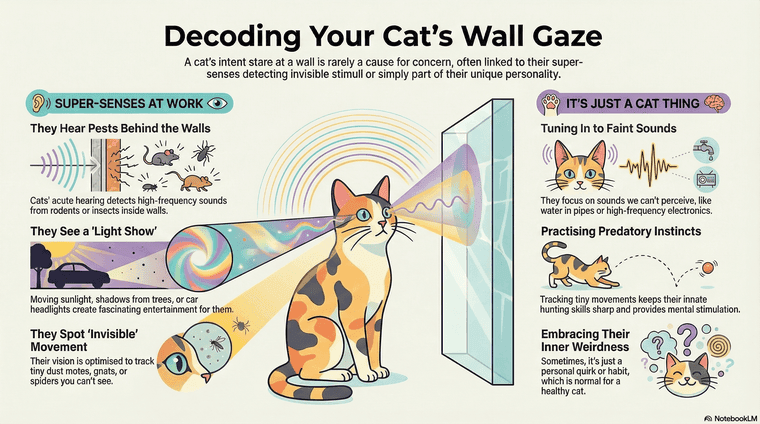
Let’s explore the most common, harmless explanations for this behavior.
Detecting Pests Behind Walls
This is probably the most common reason for cat staring at wall behavior. Your cat’s hearing is so acute that they can detect rodents or insects you have no idea exist. Signs this is what’s happening:
- Staring accompanied by head tilting (adjusting to pinpoint sound location)
- Moving along the wall, tracking something
- Occasional pawing at the wall
- Chattering or making hunting sounds
- Dilated pupils indicating hunting mode
- Happening primarily at night (when rodents are most active)
If you suspect pests, it’s worth investigating. Your cat is basically providing free pest detection services! Check for droppings, holes, or other signs of infestation. Even if you don’t find evidence, trust your cat—they’re right more often than not.
Fascination with Light and Shadows
Cats are mesmerized by movement, and walls can display surprisingly dynamic light shows throughout the day:
- Sunlight moving as the day progresses
- Shadows from trees swaying outside
- Car headlights reflecting through windows at night
- Light from electronic devices
- Reflections from shiny objects in the room
Your cat might be watching these subtle changes with the same intensity we might watch a captivating movie. To them, it’s entertainment and mental stimulation.
Observing Dust Particles or Small Insects
Cat vision is optimized for detecting tiny movements. What you see as empty air, your cat sees as:
- Dust motes dancing in sunbeams
- Nearly invisible gnats or fruit flies
- Tiny spiders climbing
- Floating debris from vents
This is hunting behavior practice. Even well-fed indoor cats maintain their predatory instincts, and tracking small prey keeps these skills sharp. It’s completely normal and actually healthy mental stimulation.
Listening to Sounds We Can’t Hear
Your cat might be sitting motionless because they’re focused entirely on audio information:
- Rodent ultrasonic communication in walls
- High-frequency electronic hums
- Neighbors’ activities transmitted through walls
- HVAC system sounds traveling through ductwork
- Wildlife outside (birds in walls, squirrels on roof)
- Water moving through pipes
The stillness and focus help your cat locate and identify these sounds. It’s like when you freeze and cock your head to hear a faint sound better—your cat is doing the same thing, just with sounds you physically cannot perceive.
Just Being Weird (Normal Cat Behavior)
Sometimes cats do inexplicable things simply because they’re cats. Individual cats have quirks and personalities just like people do. Some cats:
- Find certain spots visually interesting for reasons only they understand
- Develop habits of sitting in specific locations at specific times
- Engage in behaviors that seem purposeless but provide them satisfaction
- Display breed-specific quirks (some breeds are quirkier than others)
If your cat is otherwise healthy, eating normally, using the litter box, playing, and interacting normally, occasional odd staring might just be part of their unique personality. Cats are weird, and that’s part of why we love them!
When Cat Staring at Wall Becomes Concerning
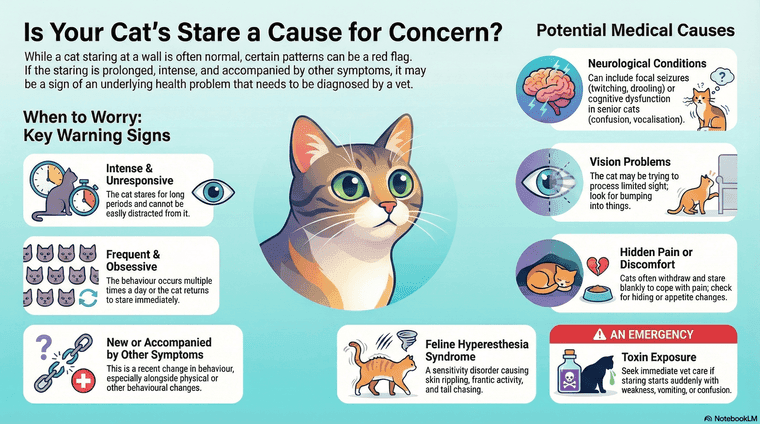
While most wall staring is harmless, certain patterns and accompanying symptoms can indicate medical or behavioral problems that need professional attention.
Warning Signs to Watch For
Normal staring is brief, occasional, and your cat can be easily redirected. Concerning staring involves:
- Duration: Staring for hours at a time, not minutes
- Frequency: Multiple times daily, every day
- Intensity: Unable to redirect their attention at all
- Obsession: Returning to stare immediately after being moved
- Change: This is new behavior that wasn’t present before
- Accompaniment: Other behavioral or physical symptoms present
If you’re seeing these patterns, it’s time to dig deeper.
Neurological Concerns
Several neurological conditions can manifest as unusual staring behavior.
Seizure Activity: Not all seizures look like the dramatic convulsions we typically imagine. Focal seizures can present as:
- Fixed staring (sometimes called “absence seizures”)
- Slight facial twitching
- Drooling
- Dilated pupils
- Confusion afterward
- Loss of awareness
If you suspect seizures, video the behavior and contact your vet immediately. Seizures require medical management.
Feline Cognitive Dysfunction (Cat Dementia): Senior cats (typically 11+) can develop cognitive decline similar to Alzheimer’s in humans. Symptoms include:
- Staring into space or at walls for extended periods
- Getting lost in familiar places
- Forgetting where litter box is located
- Excessive vocalization, especially at night
- Changes in sleep-wake cycles
- Decreased interaction with family
- Confusion or disorientation
This condition is progressive but manageable with veterinary support, environmental modifications, and sometimes medication.
Brain Tumors or Lesions: While rare, brain tumors can cause behavioral changes including staring, personality shifts, circling, loss of coordination, and seizures. These require advanced diagnostics like MRI or CT scans.
Vision Problems
Cats experiencing vision loss might stare at light sources or appear to stare at walls when they’re actually trying to make sense of their limited visual input. Signs of vision problems:
- Bumping into furniture or walls
- Hesitation before jumping
- Dilated pupils that don’t respond to light
- Cloudiness in eyes
- Reluctance to move in dim lighting
- Staring toward bright windows or lights
Senior cats are particularly prone to vision changes. Your vet can assess vision during a physical exam.
Feline Hyperesthesia Syndrome
This neurological condition, sometimes called “rippling skin disease,” can involve staring episodes along with:
- Skin rippling along the back
- Sudden bursts of frantic activity
- Tail chasing or attacking own tail
- Extreme sensitivity to touch
- Vocalization during episodes
- Dilated pupils
The exact cause is unclear, but it can be managed with medications, stress reduction, and environmental modifications.
Pain or Discomfort
Cats in pain sometimes withdraw and stare blankly. Other pain indicators include:
- Decreased appetite
- Hiding more than usual
- Changes in grooming (either excessive or neglecting)
- Altered litter box habits
- Vocalization when touched
- Hunched posture
- Reluctance to jump or move
Pain requires veterinary diagnosis and treatment. Never assume your cat isn’t in pain just because they’re not crying out—cats instinctively hide pain.
Toxin Exposure
If your cat suddenly starts staring blankly along with confusion, weakness, vomiting, or seizures, consider toxin exposure. Common household toxins include:
- Antifreeze
- Certain plants (lilies, sago palms)
- Human medications
- Cleaning products
- Essential oils
- Rodent poisons
Toxin exposure is a medical emergency. Contact your vet or pet poison helpline immediately.
Age-Related Differences in Wall Staring
Age provides important context for interpreting this behavior.
Kittens and Young Cats
In kittens and cats under three years old, wall staring is almost always normal:
- Play behavior and curiosity drive exploration
- They’re learning about their environment
- Practicing hunting skills on anything that moves
- Attention spans are short—staring is brief
Unless accompanied by clear illness symptoms, young cat staring is rarely concerning.
Adult Cats
Adult cats (3-10 years) typically have the most explainable wall staring—usually sensing actual environmental stimuli. Concerning signs in adults include:
- Sudden onset of obsessive staring
- Complete personality changes
- Physical symptoms accompanying the behavior
- Inability to maintain normal routines
Senior Cats (11+ years)
In senior cats, cat staring at wall warrants closer attention because:
- Cognitive dysfunction becomes more common
- Neurological issues increase with age
- Vision and hearing changes affect behavior
- Multiple health conditions may develop
Any new, persistent behavior in a senior cat should be evaluated by a veterinarian. Early intervention can significantly improve quality of life.
How to Assess Your Cat’s Wall Staring
Here’s how to evaluate whether your cat’s behavior is normal or needs veterinary attention.
Duration and Frequency
Track the behavior for several days:
- Normal: Occasional staring lasting seconds to a few minutes, easily interrupted
- Concerning: Daily staring lasting 30 minutes to hours, resistant to interruption
Keep a log noting when it happens, how long it lasts, and what (if anything) breaks their focus.
Can You Redirect Their Attention?
This is one of the most important diagnostic tests you can do at home:
Try these interruptions:
- Call your cat’s name
- Shake a treat bag
- Make a clicking or kissing sound
- Gently touch them
- Wave a toy in their peripheral vision
Normal response: Your cat looks at you, walks away, or shows awareness of the interruption even if they return to staring shortly after.
Concerning response: Your cat doesn’t respond at all, or responds very slowly and seems confused or disoriented.
Overall Behavior Changes
Consider the complete picture:
- Appetite: Eating normally or decreased?
- Water intake: Normal or increased/decreased?
- Litter box: Any changes in urination or defecation?
- Sleep: Sleeping normally or disrupted patterns?
- Social: Interacting normally or withdrawn?
- Activity: Normal energy or lethargic/hyperactive?
- Grooming: Maintaining cleanliness or neglecting appearance?
Changes in multiple areas alongside wall staring are more concerning than staring alone.
Physical Symptoms to Check
Examine your cat during and after staring episodes:
- Are their eyes tracking normally or fixed and glassy?
- Is their body posture normal or strange?
- Do they seem aware of their surroundings?
- Is their balance steady?
- Are they responsive to touch?
What to Do When Your Cat Stares at Walls
Your response should match the severity and context of the behavior.
For Normal, Brief Staring
If your cat’s staring seems harmless:
- Observe without interfering: Let them do their thing
- Check for pests: Investigate if you suspect wall inhabitants
- Provide enrichment: Ensure your cat has plenty of toys and stimulation
- Don’t punish: Never scold or frighten your cat for this behavior
- Enjoy the quirk: Appreciate your cat’s unique personality
When to Call Your Veterinarian
Schedule a vet visit if your cat experiences:
- Staring episodes lasting more than 15-30 minutes
- Complete inability to redirect their attention
- Daily occurrences of prolonged staring
- New behavior in a senior cat
- Staring accompanied by other symptoms (lethargy, appetite loss, confusion)
- Any seizure-like activity
- Sudden personality or behavior changes
Don’t wait if your gut tells you something is wrong. You know your cat best.
What to Document for Your Vet
Help your veterinarian by providing detailed information:
- Video: Record the staring behavior
- Log: Track frequency, duration, time of day
- Timeline: When did this start? Any triggering events?
- Symptoms: Note any other changes you’ve observed
- Response: Document how your cat responds to interruption
This information helps your vet determine whether diagnostics are needed and what types.
Emergency Warning Signs
Seek immediate veterinary care if you observe:
- Head pressing: Pressing forehead firmly against wall (THIS IS DIFFERENT from staring and is always a medical emergency)
- Seizures: Convulsions, loss of consciousness, or uncontrollable trembling
- Inability to walk or stand: Loss of coordination or balance
- Severe disorientation: Appears completely unaware of surroundings
- Collapse or unresponsiveness
- Known or suspected toxin exposure
These symptoms require emergency intervention, not waiting for a regular appointment.
Head Pressing vs. Wall Staring: Critical Distinction
It’s crucial to understand the difference between these two behaviors because one is an emergency.
What is Head Pressing?
Head pressing involves physically pressing the forehead against a wall, furniture, or other solid object and holding that position. The cat is making firm contact and applying pressure, often for extended periods.
Head pressing always indicates serious neurological problems and requires immediate veterinary attention. Causes include:
- Liver disease (hepatic encephalopathy)
- Kidney failure
- Brain tumors
- Stroke
- Head trauma
- Severe infections
- Toxin exposure
Visual Differences
Wall staring: Cat sits or stands facing the wall, looking at it, but not making physical contact with their head. They may be close to the wall but aren’t pressing against it.
Head pressing: Cat’s forehead is firmly pressed against the wall or object, and they maintain this contact, sometimes for many minutes. This is a compulsive behavior driven by neurological dysfunction.
If you see head pressing, go to an emergency vet immediately. Don’t wait.
Living with a Wall-Staring Cat
If your cat’s staring is harmless, here’s how to coexist peacefully with this quirk.
When It’s Just a Quirk
Many cats stare at walls occasionally throughout their lives without any underlying problem. If your vet has cleared your cat of medical issues:
- Accept this as part of your cat’s personality
- Find humor in their odd behavior (it’s pretty funny when you think about it)
- Share the quirk with other cat owners—you’ll find you’re not alone
- Take videos for your own entertainment
- Trust that your cat is engaging with something interesting to them, even if you can’t perceive it
Managing Chronic Conditions
If your cat has been diagnosed with cognitive dysfunction or another manageable condition:
- Follow your vet’s treatment recommendations
- Make environmental modifications (nightlights, easy access to resources)
- Maintain consistent routines
- Provide extra comfort and patience
- Monitor quality of life and communicate with your vet about changes
- Connect with support groups for owners of cats with similar conditions
Your cat can still have a good quality of life with proper management.
Conclusion
Understanding when your cat staring at wall is normal versus concerning comes down to context, duration, and overall behavior. In most cases, this behavior is completely harmless—your cat is using their superior senses to detect pests, observe tiny movements, or listen to sounds you can’t hear. Occasionally, they’re just zoning out or being adorably weird, which is part of normal feline behavior. However, prolonged, obsessive staring that can’t be interrupted, especially in senior cats or when accompanied by other symptoms, can indicate neurological issues, vision problems, pain, or cognitive dysfunction that need veterinary attention.
The key is knowing your cat’s baseline behavior and recognizing when something changes. Brief, occasional wall staring where your cat can be easily redirected is rarely a concern. Extended staring sessions where your cat seems unaware of their surroundings or doesn’t respond to you warrant a veterinary visit. Trust your instincts—you know your cat better than anyone. When in doubt, a vet check provides peace of mind and ensures any potential issues are caught early. Most of the time, though, your cat is simply being a cat, engaging with a rich sensory world we can only imagine!
Also Read - Cat Chattering at Birds: The Science Behind This Hunting Behavior
Frequently Asked Questions
How long is too long for a cat to stare at a wall?
Brief staring (a few seconds to a few minutes) is normal, especially if your cat can be easily redirected. Concerning duration is 15-30 minutes or longer, particularly if your cat can’t be interrupted or seems unaware of their surroundings. Occasional 5-10 minute episodes are usually fine if your cat is otherwise normal and can eventually be redirected. If staring regularly exceeds 30 minutes or happens multiple times daily, consult your veterinarian.
Is my cat seeing ghosts or something supernatural when they stare at walls?
While it’s fun to imagine, the reality is much more mundane—your cat is detecting real, physical stimuli with their superior senses. They might be hearing mice in the walls, tracking tiny insects, watching dust particles, listening to ultrasonic sounds from electronics, or observing subtle light and shadow movements. Cats don’t have supernatural abilities, but their hearing and vision are so much better than ours that it can seem that way. What looks like “nothing” to you is often something very real to your cat.
Should I try to stop my cat from staring at walls?
If the staring is brief and your cat is otherwise healthy, no—this is normal behavior and doesn’t need correction. Never punish or frighten your cat for staring. However, if you suspect pests or want to redirect their attention, you can offer toys, play, treats, or other enrichment. If the staring is prolonged and concerning, address the underlying medical issue with your vet rather than trying to stop the symptom. For normal staring, let your cat do their thing—they’re just being a cat.
Can stress cause my cat to stare at walls?
Yes, stress and anxiety can manifest as various behavioral changes, including blank staring or zoning out. However, stress-related staring is usually accompanied by other signs like hiding, decreased appetite, changes in litter box habits, excessive grooming, or aggression. If you suspect stress, identify and address the stressor (new pet, move, schedule changes, etc.), provide safe spaces, use pheromone diffusers, and ensure your cat has adequate enrichment. If stress behaviors don’t improve or worsen, consult your vet or a veterinary behaviorist.
What’s the difference between normal staring and head pressing?
This is crucial: staring means your cat is looking at the wall without physical contact—they’re sitting or standing near it but not touching it with their head. Head pressing means your cat is physically pressing their forehead firmly against the wall and holding that position. Head pressing is ALWAYS a medical emergency indicating serious neurological problems (liver disease, brain issues, toxins, etc.) and requires immediate veterinary care. Staring can be completely normal. If you ever see head pressing, go to an emergency vet right away—this is never normal.