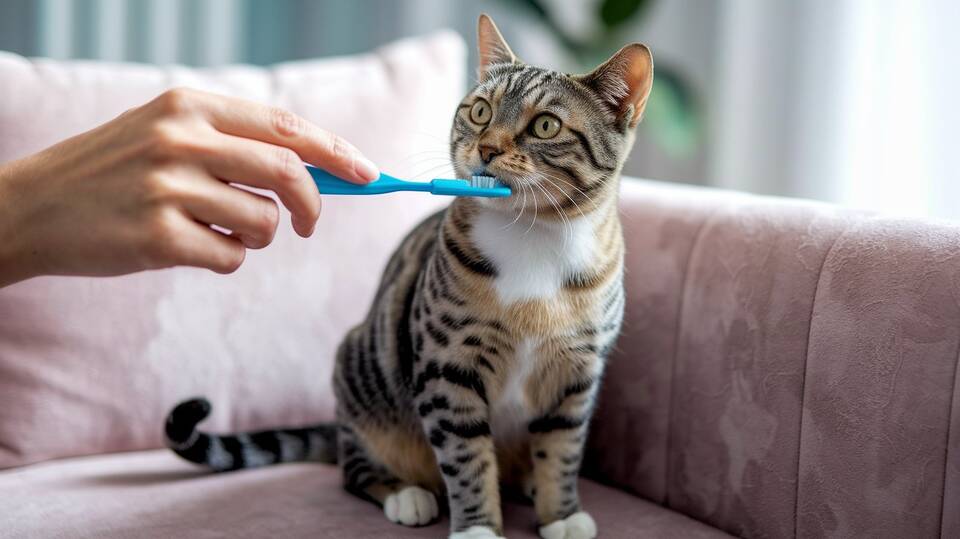
Introduction
Picture this: You’ve read that you should brush your cat’s teeth. You buy a cute little cat toothbrush and special toothpaste. Armed with enthusiasm and good intentions, you approach your cat. Within three seconds, you’re dealing with a hissing, squirming ball of fur, and you’ve got scratch marks to show for your efforts. Sound familiar?
If the idea of brushing your cat’s teeth sounds about as easy as giving a lion a bath, you’re not alone. Most cat parents never brush their cats’ teeth, often because they assume it’s impossible or that their cat will never tolerate it. But here’s the truth: learning how to brush a cat’s teeth without stress is absolutely achievable with the right approach, patience, and techniques.
In this comprehensive guide, we’ll walk you through everything you need to know about cat dental care at home, from choosing the best toothpaste for cats to step-by-step training methods that actually work. Your cat’s dental health is crucial to their overall wellbeing, and with these strategies, you’ll be able to protect their teeth, and your relationship with them, at the same time.
Why Cat Dental Care at Home Matters
Before we dive into the “how,” let’s talk about the “why.” Understanding the importance of dental care can motivate you through the training process.
Common Dental Problems in Cats
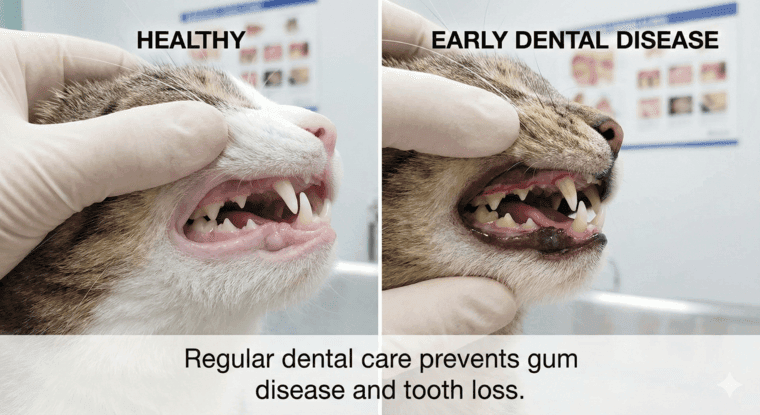
Dental disease is incredibly common in cats. In fact, studies show that over 70% of cats develop some form of periodontal disease by the age of three. Common dental issues include:
- Periodontal disease: Infection and inflammation of the tissues surrounding teeth
- Gingivitis: Red, swollen, bleeding gums
- Tooth resorption: Painful lesions where teeth break down
- Plaque and tartar buildup: Hard deposits on teeth harboring bacteria
- Tooth loss: Advanced disease leading to missing teeth
- Stomatitis: Severe inflammation of the entire mouth
These conditions don’t just affect your cat’s mouth, they impact their entire body and quality of life.
Health Consequences of Poor Dental Care
Dental disease isn’t just about bad breath or discolored teeth. The consequences can be serious:
- Systemic infections: Bacteria from infected gums can enter the bloodstream and affect vital organs
- Heart, kidney, and liver damage: Chronic dental infections strain these organs
- Chronic pain: Many cats suffer silently with painful mouths
- Difficulty eating: Dental pain can cause weight loss and nutritional deficiencies
- Behavioral changes: Pain can make cats irritable or withdrawn
- Expensive treatments: Professional dental cleanings under anesthesia can cost $300-$1,500
Regular home dental care can prevent or minimize these issues, saving your cat from pain and saving you from hefty vet bills.
Benefits of Regular Teeth Brushing
When done consistently, brushing your cat’s teeth offers tremendous benefits:
- Prevents buildup of plaque and tartar
- Reduces risk of periodontal disease by up to 70%
- Minimizes or eliminates bad breath
- Extends time between professional cleanings
- Can save thousands of dollars over your cat’s lifetime
- Improves overall health and potentially extends lifespan
- Creates a bonding routine between you and your cat
How Often Should You Brush?
Ideally, you should brush your cat’s teeth daily. However, brushing 3-4 times per week still provides significant benefits. The key is consistency, regular brushing is far more effective than occasional attempts. Don’t let perfect be the enemy of good; if you can only manage twice a week, that’s still infinitely better than never.
Before You Start: What You’ll Need
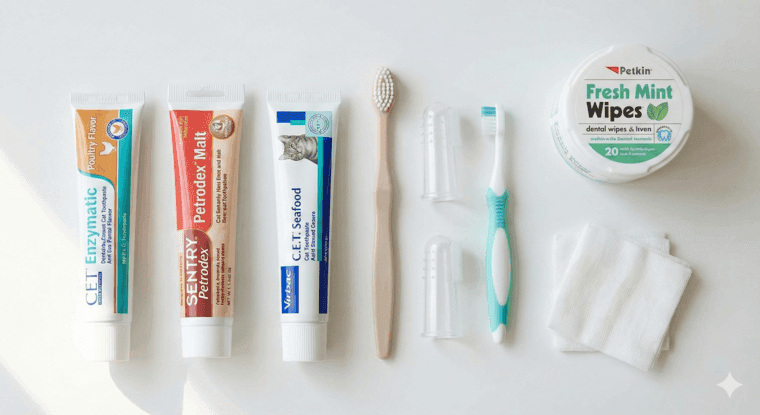
Success in how to brush a cat’s teeth without stress starts with having the right tools and setup.
Best Toothpaste for Cats
First and most important: Never use human toothpaste on cats. Human toothpaste contains ingredients like fluoride and xylitol that are toxic to cats. Always use toothpaste specifically formulated for cats.
What makes cat toothpaste safe:
- Formulated to be swallowed (no rinsing needed)
- Contains enzymes that break down plaque
- Available in flavors cats actually enjoy
- Free from harmful chemicals
Popular and effective options:
- Virbac CET Enzymatic Toothpaste: Poultry or seafood flavors, highly rated
- Petrodex Enzymatic Toothpaste: Poultry flavor, budget-friendly
- Vetoquinol Enzadent: Multiple flavors including malt
- Sentry Petrodex: Widely available, good for beginners
Most cats prefer poultry or seafood flavors. You might need to try a couple to find your cat’s favorite, and yes, cats can be picky even about toothpaste!
Choosing the Right Toothbrush
The best toothbrush depends on your cat’s tolerance and your comfort level:
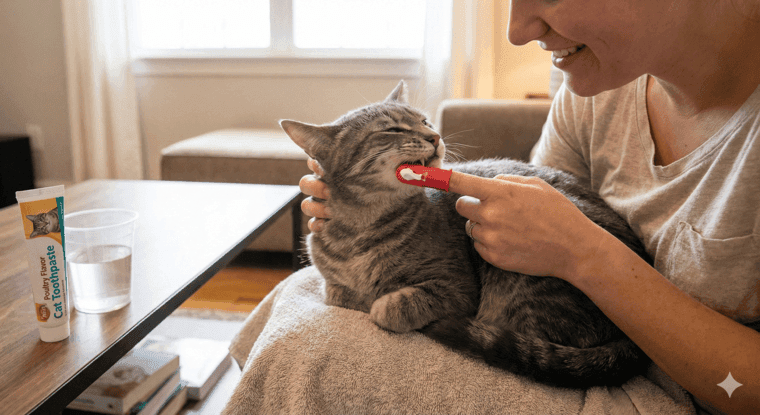
Finger brushes: Silicone brushes that slip over your finger. Great for beginners because you have better control and can feel what you’re doing. Many cats tolerate these better initially.
Small cat toothbrushes: Soft bristles, small head designed for cat mouths. Good once your cat is accustomed to the process.
Infant toothbrushes: Human baby toothbrushes work well, soft bristles and appropriately sized.
Gauze pads: Wrap around your finger for the simplest approach. Not as effective as brushes but better than nothing.
Dental wipes: Pre-moistened wipes for cats who absolutely won’t tolerate brushes.
Start with whatever feels most manageable for you and least threatening for your cat. You can always upgrade tools later.
Setting Up Your Space
Create an environment that sets both you and your cat up for success:
- Choose a quiet location with minimal distractions
- Good lighting so you can see what you’re doing
- Comfortable spot where your cat feels secure
- Non-slip surface (towel or mat)
- Have treats ready for immediate rewards
- Pick timing when your cat is naturally calm (after eating or play, not when they’re hyper)
The Gradual Introduction Method: Building Positive Associations
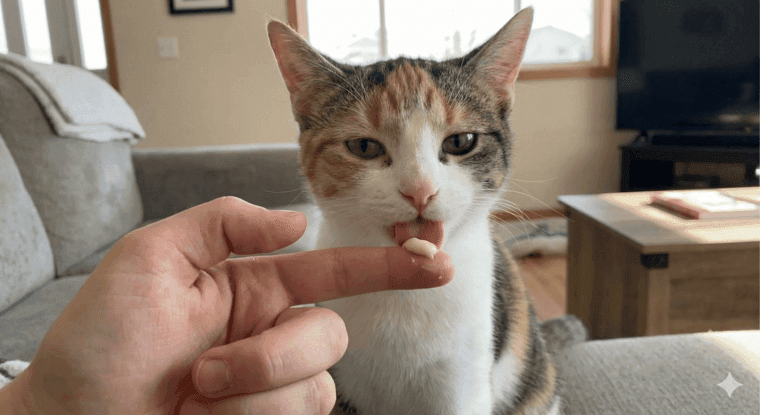
This is the secret to how to brush a cat’s teeth without stress: never force the process. Gradual desensitization and positive associations are everything.
Why Going Slow is Crucial
Cats are creatures of habit who hate having things forced on them. If you try to jump straight to brushing, you’ll create negative associations that make future attempts nearly impossible. Taking time to build positive associations might take weeks, but it results in a lifetime of cooperation.
Think of it this way: You’re not just brushing teeth, you’re training your cat to accept and even enjoy this new routine.
Week 1: Just the Toothpaste
Don’t even think about brushing yet. This week is all about making toothpaste the best thing ever.
What to do:
- Let your cat smell the toothpaste
- Put a tiny dab on your finger
- Let your cat lick it off
- Praise enthusiastically
- Repeat daily
Many cats actually like the taste of cat toothpaste, it’s formulated to be appealing. If your cat loves it right away, you’re off to a great start. If they’re suspicious, be patient. Offer it at treat time or before meals when they’re more food-motivated.
Week 2: Touching the Mouth
Now we add gentle mouth touching while maintaining that positive association with the toothpaste.
What to do:
- Give your cat a lick of toothpaste from your finger
- Gently lift one side of their lip with your other hand
- Touch a finger (with or without toothpaste) to their front teeth and gums
- Do this for just 5-10 seconds
- Release, praise, and give a treat
- Repeat daily, gradually touching more teeth
The goal is getting your cat comfortable with you handling their mouth. Keep sessions short and positive.
Week 3: Introduction to the Brush
Time to introduce the tool without actually using it yet.
What to do:
- Let your cat investigate the toothbrush
- Touch the brush (dry) to the outside of their mouth
- Apply toothpaste to the brush and let them lick it off
- Touch the bristles to their teeth very briefly
- Lots of praise and rewards
- Keep the brush visible between sessions (don’t hide it away)
You’re building familiarity so the brush becomes just another normal object, not a scary torture device.
Week 4: First Gentle Brushing Attempts
Finally, actual brushing, but just barely.
What to do:
- Apply toothpaste to brush
- Let your cat lick some off
- Lift their lip and brush 1-2 teeth with gentle circular motions
- 5-10 seconds maximum
- Release immediately, praise, treat
- Gradually increase to more teeth over subsequent days
Resist the urge to do more just because it’s going well. End on a positive note every time.
Adjusting the Timeline for Your Cat
This four-week timeline is a guideline, not a rule. Some cats progress faster; others need more time at each stage. Signs you can move forward:
- Your cat seems relaxed during current step
- They don’t try to escape
- They willingly approach when they see the toothpaste/brush
- No signs of stress (ears back, tail thrashing, growling)
If your cat resists at any stage, simply spend more time at the previous comfortable step. There’s no rush. The goal is success, not speed.
How to Brush a Cat’s Teeth Without Stress: Step-by-Step Guide

Once your cat is comfortable with the introduction process, here’s the complete brushing technique.
Positioning Your Cat
Choose whatever position works best for your cat’s comfort:
Sitting on your lap: Have your cat sit on your lap facing away from you. This gives you good access to their mouth while they feel secure.
On a counter or table: Non-slip surface at a comfortable height for you. Some cats prefer being up high.
Gentle towel wrap: If your cat is squirmy, a loose towel wrap (leaving head exposed) can help. Never wrap so tight they feel trapped.
Partner assistance: For difficult cats, one person can gently hold while the other brushes.
The key is that your cat doesn’t feel restrained or panicked. If a position causes stress, try another.
The Brushing Technique
Step 1: Approach calmly
Don’t chase your cat around the house. Wait for a moment when they’re naturally calm and approachable. Have everything ready before you start. Use a soothing, upbeat voice, your energy matters.
Step 2: Lift the lip gently
Using your non-dominant hand, gently lift your cat’s lip from the side (not the front). You don’t need to open their mouth, you’re just exposing the outer surfaces of teeth. Start with the front teeth since they’re easiest to reach.
Step 3: Brush in circular motions
Hold the brush at a 45-degree angle to the gumline. Use small, gentle circular motions, focusing on the area where tooth meets gum (where plaque accumulates). Apply very light pressure, you’re not scrubbing pots and pans.
Step 4: Focus on outer surfaces
Good news: You only need to brush the outside surfaces of teeth! Your cat’s tongue naturally cleans the inside surfaces. This cuts your work in half.
Step 5: Work systematically
- Start with front incisors (easiest)
- Move to the large canine teeth
- Progress to premolars and molars in back
- Do both upper and lower teeth
- Work on both sides of the mouth
Initially, you might only reach a few teeth per session. That’s fine! Gradually work up to covering all teeth.
Step 6: Keep sessions short
Start with 30 seconds total. Gradually build up to 2-3 minutes once your cat is fully comfortable. Better to do a thorough job on half the teeth than rush through all teeth and stress your cat out.
Step 7: End positively
Always end before your cat gets agitated. Immediate reward, treat, play, or affection, creates a positive association. Your cat should think “That wasn’t so bad, and I got something great after!”
What to Do if Your Cat Resists
Resistance happens. Here’s how to handle it:
- Stop immediately: Forcing it will create lasting negative associations
- Return to earlier step: Go back to whatever they were comfortable with
- Take a break: Skip a day or two if needed
- Try different timing: Maybe morning works better than evening
- Use higher-value rewards: Find what really motivates your cat
- Consider alternative tools: Maybe a finger brush works better than a standard brush
- Stay calm: Your frustration will stress your cat more
Remember, you’re building a lifelong habit. Setbacks are temporary if you stay patient.
Signs Your Cat is Getting Stressed
Learn to recognize when your cat has had enough:
- Ears flattened back against head
- Tail thrashing or puffed up
- Pupils dilating
- Body tensing or trying to escape
- Growling, hissing, or yowling
- Turning head away repeatedly
- Attempting to bite or scratch
If you see these signs, stop the session. Pushing through stress damages trust and makes future attempts harder.
Alternative Cat Dental Care at Home Methods
What if your cat absolutely won’t tolerate brushing despite your best efforts? Don’t give up on dental care, there are alternatives.
Dental Wipes
Pre-moistened dental wipes are easier for some cats to tolerate. You wrap one around your finger and wipe teeth and gums. While not as effective as brushing, they do remove some plaque and are better than nothing.
Dental Gels
Some gels can be applied directly to gums where enzymes do the work. You don’t even have to rub, just apply and the gel spreads itself. Products like TropiClean Fresh Breath Gel work this way.
Dental Treats and Chews
Look for products approved by the Veterinary Oral Health Council (VOHC). Options include:
- Greenies Feline Dental Treats
- Purina Pro Plan DentaLife
- Feline Greenies Smartbites
These work through mechanical action (chewing) and sometimes contain plaque-reducing ingredients. However, treats are supplements, not replacements for brushing.
Water Additives
Products added to drinking water that reduce bacteria and freshen breath. Very easy to use but less effective than brushing. Good as an additional measure but not a standalone solution.
Dental Diets
Prescription foods like Hill’s t/d have larger, specially textured kibble that provides a scrubbing action when chewed. Your vet can recommend if appropriate for your cat.
While these alternatives help, nothing beats actual brushing for effectiveness in preventing dental disease.
Troubleshooting Common Problems
Let’s address the most common challenges in cat dental care at home.
“My Cat Bites When I Try to Brush”
This usually means you’ve moved too fast or the experience has become negative.
Solutions:
- Go back several steps in the training process
- Use a finger brush for better control
- Keep sessions even shorter (15-20 seconds)
- Try immediately after play when they’re tired and calm
- Ensure you’re not hurting them (too much pressure, catching gums)
- Have your vet check for existing dental pain
“My Cat Runs Away When They See the Toothbrush”
The toothbrush has become a negative trigger.
Solutions:
- Leave the toothbrush out where your cat can see it regularly (normalization)
- Place treats near the toothbrush without using it
- Go back to just offering toothpaste on your finger
- Consider switching to a completely different tool
- Practice holding the brush near your cat while giving treats (no brushing)
“I Can Only Reach a Few Front Teeth”
Guess what? That’s still valuable! Front teeth are visible and prone to tartar buildup.
Solutions:
- Accept that something is better than nothing
- Consistency with front teeth still provides benefits
- Gradually work toward more access over weeks or months
- Focus on being thorough with what you can reach
- Use supplemental dental products for back teeth
“I Have Multiple Cats, How Do I Manage?”
Each cat needs their own toothbrush (don’t share!) and their own training timeline.
Solutions:
- Dedicate specific times to each cat
- Some cats can be done together if both are cooperative
- Different locations if cats get competitive
- Start with most cooperative cat (others may become curious and interested)
- Don’t expect all cats to progress at same pace
Special Considerations
Different situations require modified approaches.
Starting with Kittens
If you have a kitten, you’ve hit the jackpot! Starting young (8-12 weeks) makes the process exponentially easier.
- Kittens are more adaptable to new experiences
- They learn that mouth handling is normal
- Positive associations form quickly
- Results in a lifetime of easier dental care
- Use extra-soft brushes appropriate for their small mouths
Even if your kitten doesn’t have many teeth yet, the training is invaluable.
Senior Cats and Existing Dental Disease
Older cats often have existing dental problems that make brushing uncomfortable or painful.
Important steps:
- Get a thorough veterinary dental exam first
- Address existing disease before starting home care
- Your vet may recommend professional cleaning first
- Be extra gentle, senior gums are more sensitive
- Extra patience required as they’re set in their ways
- May need pain medication if arthritis makes positioning difficult
Cats with Dental Pain
If your cat already has dental disease, brushing might be painful. Signs include:
- Pulling away when you touch certain areas
- Excessive drooling
- Pawing at mouth
- Difficulty eating
- Bad breath
Schedule a vet visit before attempting dental care. Treatment of existing problems might be necessary before home care can begin.
Making It a Positive Routine
Long-term success in how to brush a cat’s teeth without stress comes from establishing a consistent, positive routine.
Consistency is Key
- Choose the same time daily (cats love routines)
- Make it part of your existing routine (before bed, after breakfast)
- Same location if possible
- Predictability reduces anxiety
Creating Lasting Positive Associations
- Always follow brushing with something your cat loves
- Keep your tone upbeat and encouraging
- Never show frustration or impatience (cats pick up on emotions)
- Celebrate small successes, even attempting is progress
- Track progress in a journal for your own motivation
Long-Term Success Tips
- Don’t skip the gradual introduction steps, they’re crucial
- Accept your cat’s individual pace
- Some resistance, especially initially, is completely normal
- Improvement happens gradually over weeks and months
- Don’t compare your cat to others, every cat is different
Monitoring Your Cat’s Dental Health
Even with excellent home care, monitor for problems and maintain regular vet checkups.
Signs of Dental Problems
Watch for these warning signs:
- Bad breath: Not normal in healthy cats
- Red, swollen, or bleeding gums
- Visible tartar (brown/yellow buildup on teeth)
- Difficulty eating or dropping food
- Pawing at mouth or face
- Excessive drooling
- Changes in chewing patterns
- Weight loss due to eating difficulties
If you notice any of these, schedule a vet appointment promptly.
Regular Veterinary Care
Home dental care doesn’t replace professional care:
- Annual dental exams as part of wellness checkups
- Professional cleanings when needed (typically every 1-3 years depending on cat)
- Early intervention if problems develop
- X-rays to check below the gumline
Think of it this way: You brush your teeth daily but still see the dentist regularly. Same principle for cats.
Conclusion
Learning how to brush a cat’s teeth without stress is absolutely achievable with the right approach, tools, and mindset. By investing time in proper cat dental care at home and using the best toothpaste for cats designed for feline safety and palatability, you’re giving your cat the gift of better health and potentially more years with you. The gradual introduction method, patience, and consistency transform what seems impossible into a manageable routine that protects your cat from painful dental disease.
Remember that every cat progresses at their own pace, and even small efforts make a difference in your cat’s dental health. Whether you achieve full daily brushing or settle for dental wipes and treats, you’re doing more than most cat parents and significantly improving your cat’s quality of life. Start today, celebrate small victories, and know that your commitment to your cat’s dental care is one of the most important things you can do for their long-term wellbeing!
Also Read - Why Does My Cat Lick My Face When I Sleep: Understanding Nighttime Grooming and Affection Behavior
Frequently Asked Questions
How long does it take to get my cat used to tooth brushing?
Most cats need 3-6 weeks of gradual introduction before accepting full brushing sessions. However, every cat is different, some adapt in 2 weeks, others need 2-3 months. The key is not rushing the process. Patience during training results in years of easier brushing.
Can I use a human toothbrush and toothpaste?
Never use human toothpaste, it contains fluoride and other ingredients toxic to cats. Human toothbrushes can work if they’re soft-bristled and small (infant toothbrushes), but cat-specific brushes are ideal. Always use toothpaste formulated specifically for cats that’s safe to swallow.
What if my cat absolutely refuses no matter what I try?
Some cats truly won’t tolerate brushing despite best efforts. Don’t despair! Use alternative dental care methods: dental wipes, gels, VOHC-approved treats, water additives, and dental diets. Also ensure regular professional cleanings. Something is always better than nothing when it comes to dental care.
Is dry food enough to keep my cat’s teeth clean?
No. While some dental diets provide mild benefits through chewing action, regular dry food doesn’t significantly prevent dental disease. Many cats swallow kibble whole or barely chew it. Active dental care, brushing, dental treats, or professional cleanings, is necessary for good dental health.
At what age should I start brushing my cat’s teeth?
The younger the better! Ideally, start between 8-12 weeks old when kittens are most adaptable. However, it’s never too late to start. Adult and even senior cats can learn to accept tooth brushing with patience and proper training. Older cats just require more time and gentleness during the introduction process.